Welcome to Curio Wiki
Curio Wiki is a community-built encyclopedia documenting the history of Curio Cards, Mad Bitcoins, the World Crypto Network, The Bitcoin Group, and the people and projects that shaped early cryptocurrency media and NFT history.
| 123 articles | 98,617 words | 30/30 Curio cards | 7/7 artists | 11 ecosystem projects | 51 people | 9 shows |
Start here
- Curio Cards — The first art NFT collection on Ethereum, launched May 9, 2017. 30 cards by 7 artists. Sold at Christie's for $1.27 million.
- Thomas Hunt — Filmmaker, historian, and crypto media pioneer known as "Mad Bitcoins." Co-founder of Curio Cards and the World Crypto Network.
- World Crypto Network — Independent media collective broadcasting Bitcoin education since 2014. Hub for The Bitcoin Group, Mad Bitcoins, and 40+ shows.
- The Bitcoin Group — 485-episode flagship roundtable show. Weekly news debate with rotating panel of Bitcoiners since 2014.
- Rhett Creighton — Former child actor (Crocodile Dundee II), MIT-educated nuclear engineer, programmer behind the Curio Cards smart contracts.
- Adam McBride — NFT archaeologist who rediscovered Curio Cards in March 2021 — kicking off the auction at Christie's and the modern Curio era.
Browse by category
Curio Cards (#1–#30)
A wiki page for every card in the 30-card series. Each page covers artwork, supply mechanics, market history, and place in the collection.
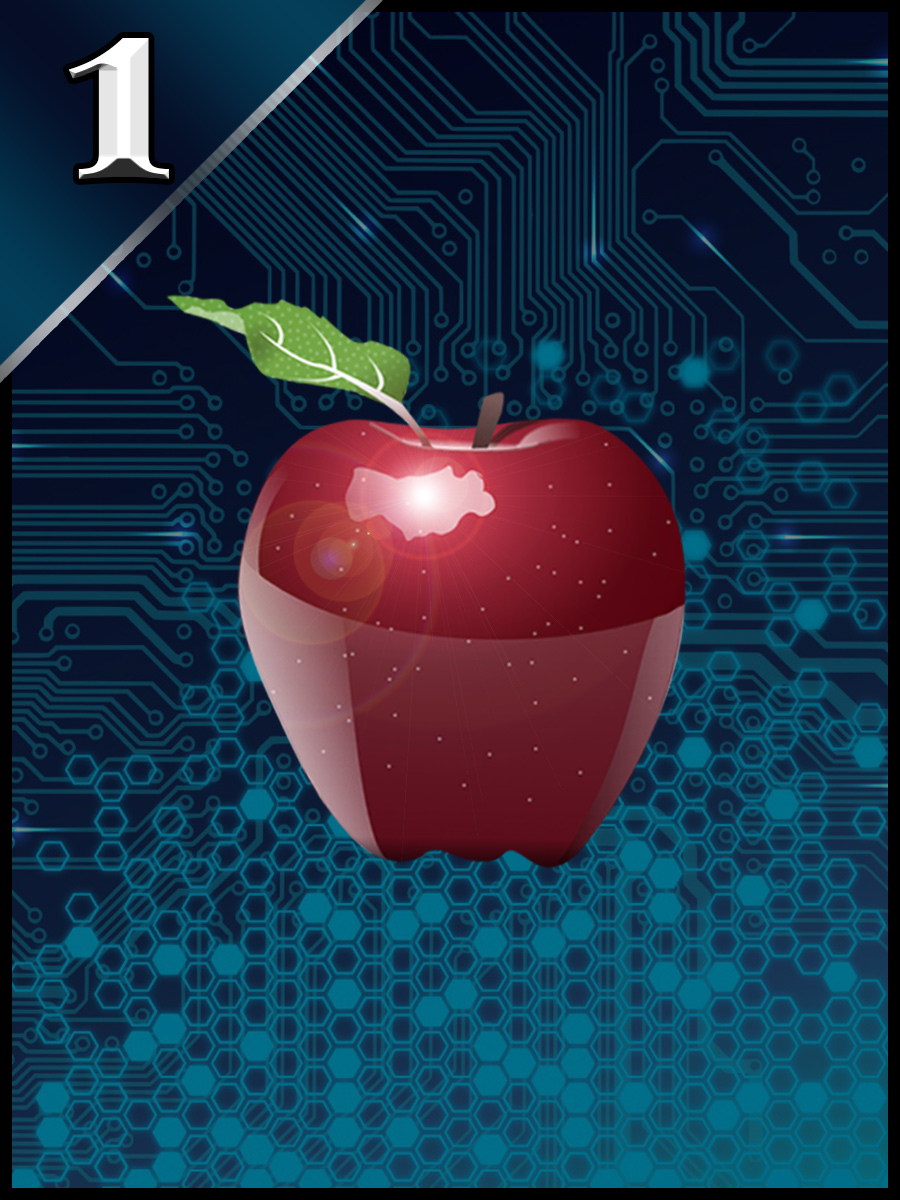
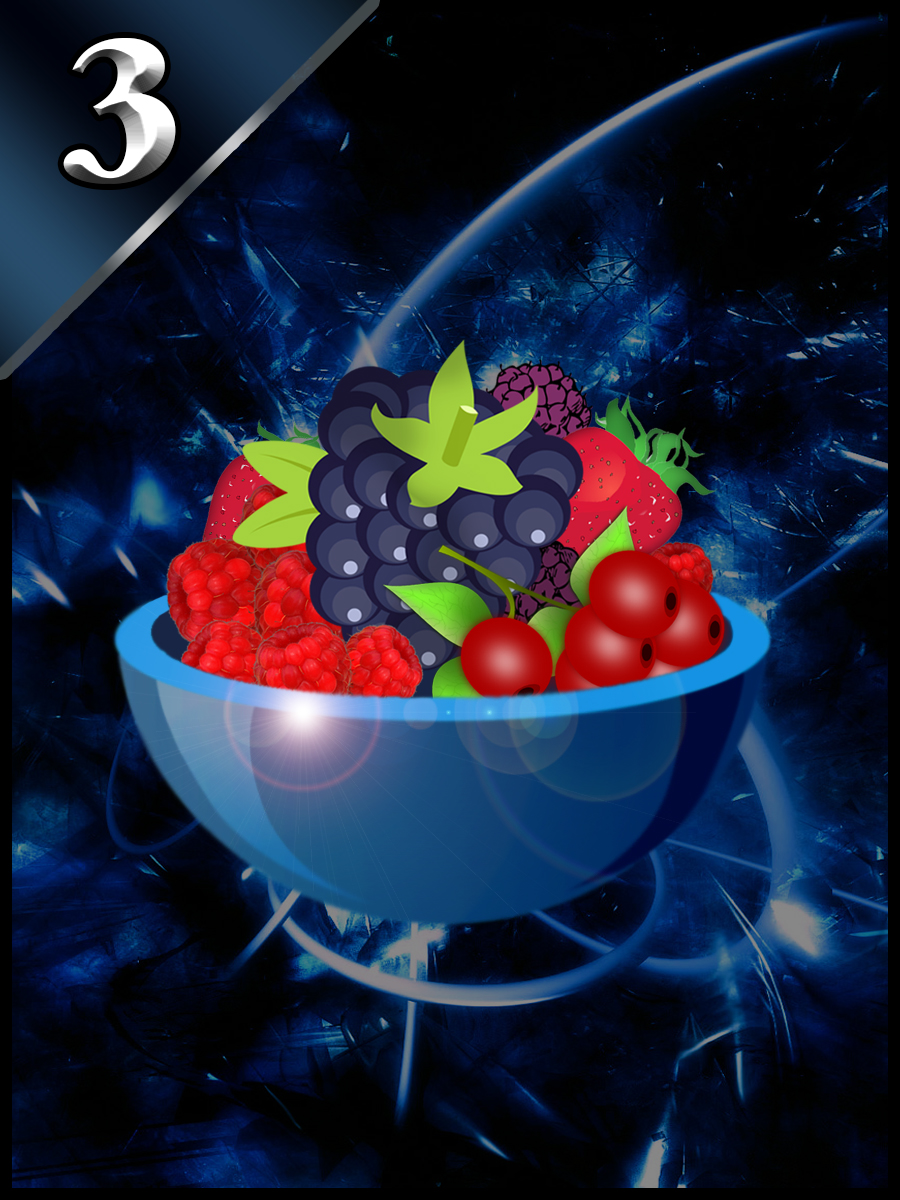
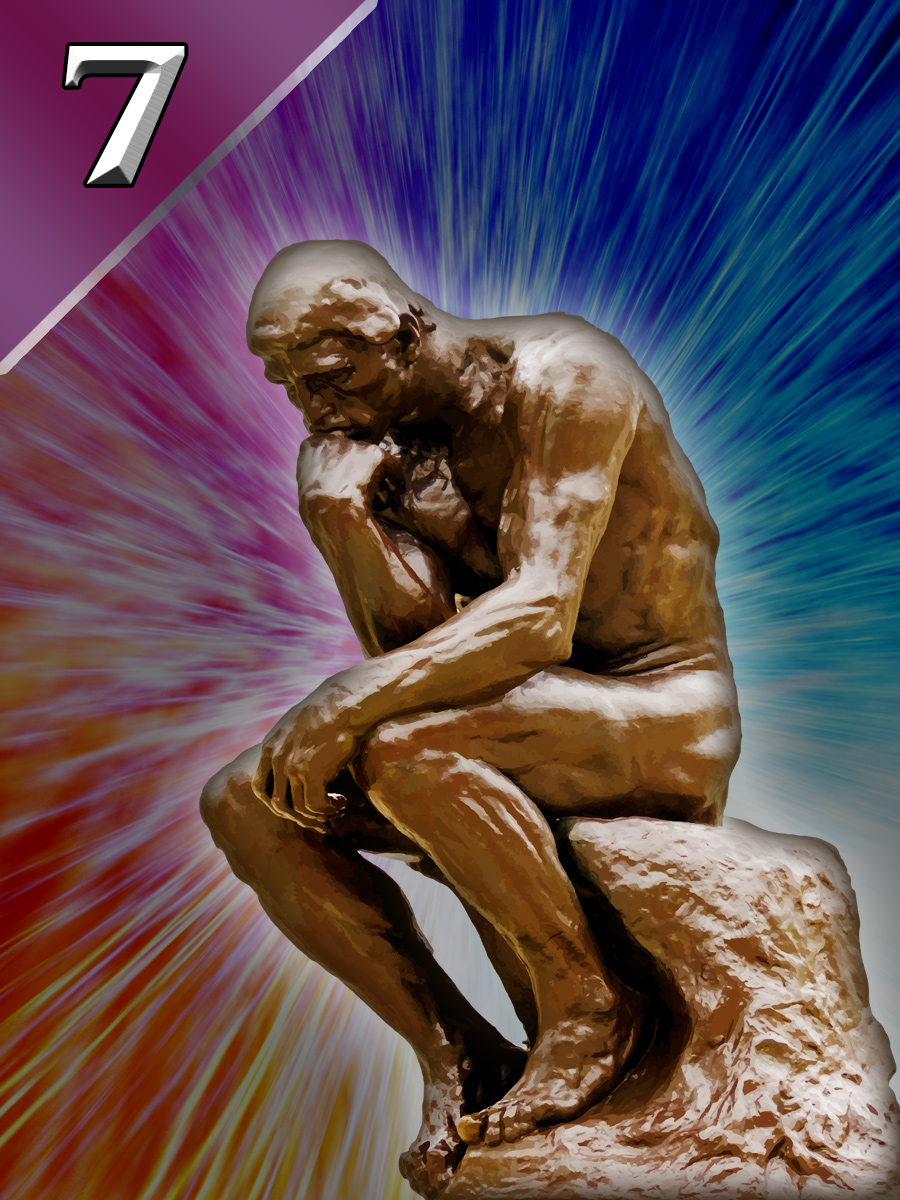
Curio Card #1 — Apples · Curio Card #2 — Nuts · Curio Card #3 — Berries · Curio Card #4 — Clay · Curio Card #5 — Paint · Curio Card #6 — Ink · Curio Card #7 — Sculpture · Curio Card #8 — Painting (+22 more in sidebar)
Curio Ecosystem (1n2.org Toolkit)
Thomas Hunt's suite of Curio Cards web tools — data dashboards, price trackers, briefing engines, and identity services.
CurioQuant · CurioCharts · CurioMap · CurioPrices · CurioMedia · CurioOracle · CurioArchive · CurioAtlas (+3 more in sidebar)
Artists
The seven artists who created the original 30 Curio Cards in 2017.
Phneep · Robek World · Cryptograffiti · Cryptopop (Luis Buenaventura) · Daniel Friedman · Marisol Vengas (Max Infeld) · Thoros of Myr
Shows & Programs
Programs that aired on WCN, Mad Bitcoins, and The Bitcoin Group networks since 2014.
World Crypto Network · Mad Bitcoins · The Bitcoin Group · Today in Bitcoin · Adventures in NFTs · Dark News · The Flipside Bits · This Week in Cryptos (+1 more in sidebar)
Thomas Hunt Films, Games & Conferences
Thomas Hunt's creative portfolio beyond the shows — film projects, game series, conferences, and daily writing.
Thomas Hunt Films · Mad Patrol · Bitcoin 2026 · Daily Thunt
Projects & Organizations
Bitcoin and crypto projects covered or co-created across the WCN ecosystem.
Tallycoin · Protip · Bitcoinal · Bitcoin Not Bombs
Recently expanded
| Article | Status | Notes |
|---|---|---|
| Adam McBride | ★ Expanded | expanded to 1.4K words — the NFT archaeologist who rediscovered Curio Cards in March 2021 |
| Today in Bitcoin | ★ Expanded | expanded to 1.2K words — the daily news show |
| The Flipside Bits | ★ Expanded | expanded to 1.2K words — DJ Booth's early WCN show |
| Paige Peterson | ★ Expanded | expanded to 1K words — privacy advocate, MaidSafe |
| Jeremy Gardner | ★ Expanded | 1.2K words — Augur co-founder on the day Ethereum launched (TBG #74) |
| Jeffery Jones | ★ Expanded | 1.3K words — 26-episode TBG regular |
New articles are generated nightly by Claude from TBG transcripts, 2-3 per day on weekdays, 3 on weekends. Quality gate: 400-word minimum.
How this wiki is built
Articles are sourced from primary materials: 486 TBG episode transcripts, World Crypto Network and Mad Bitcoins YouTube archives, the @thuntnet Twitter archive (91K tweets), and the CurioStories long-form essay series. Where transcripts speak to a person or topic directly, quotes are cited inline with episode references. The Curio Cards per-card articles draw on the CurioQuant market data feed for live supply/holder/floor metrics.
This wiki covers a niche history — early Bitcoin media (2014–present), the 30-card Curio Cards NFT collection (2017), and the people, shows, projects, and conferences orbiting Thomas Hunt's 1n2.org ecosystem. If you'd rather start with one of the broader topics, the Curio Cards article is the deepest entry point; Thomas Hunt covers the central figure; World Crypto Network explains the network that ties most of it together.
Curio Cards
| Curio Cards | |
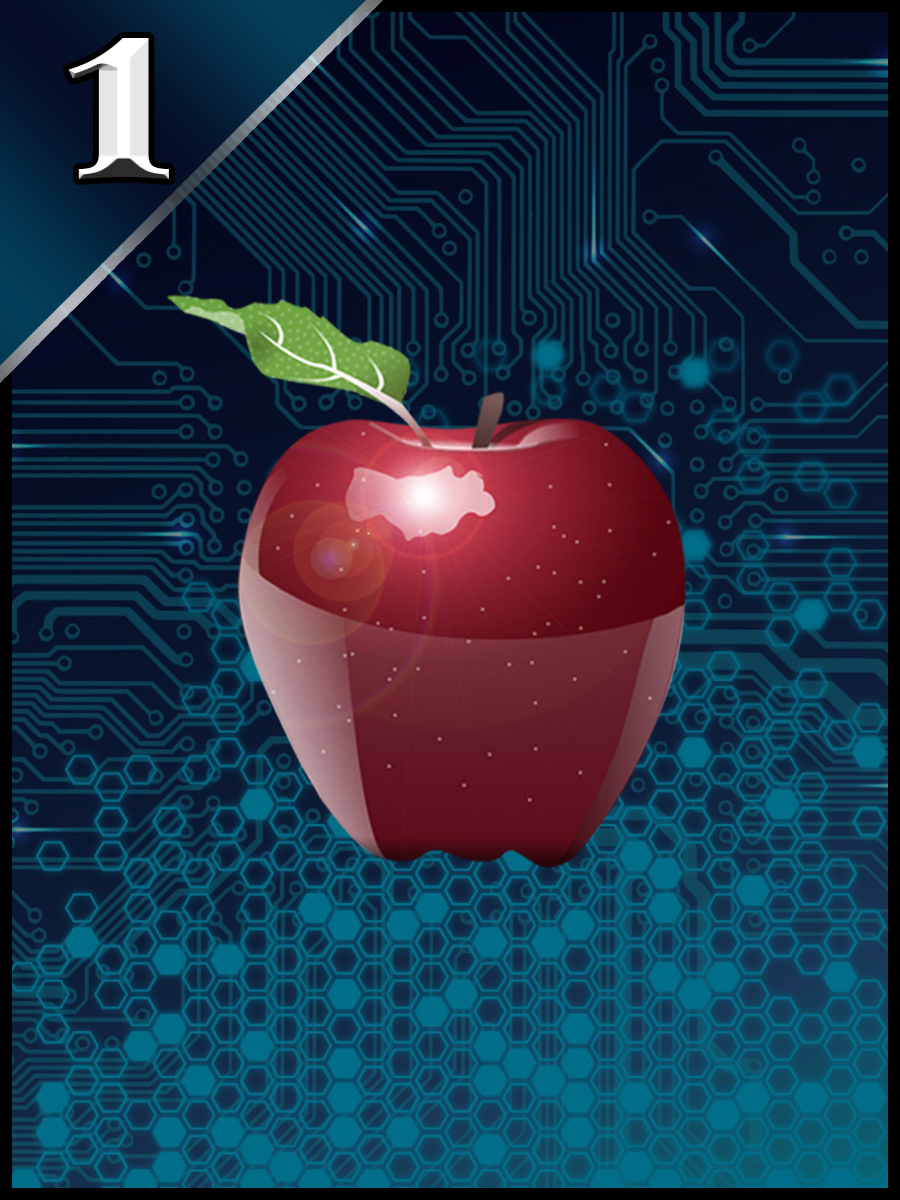 Card #1 "Apples" by Phneep — the first art NFT minted on Ethereum | |
| Type | NFT art collection |
|---|---|
| Blockchain | Ethereum |
| Launched | May 9, 2017 |
| Founders | Thomas Hunt, Travis Uhrig, Rhett Creighton |
| Artists | 7 |
| Cards | 30 (+1 misprint) |
| Total supply | 29,700 |
| Contract | Modified ERC-20 |
| Website | curio.cards |
Curio Cards are non-fungible tokens on the Ethereum blockchain. Created in 2017 as an online art gallery, the project is recognized as the first collection of NFT artworks on Ethereum.[1] Curio Cards were developed by Thomas Hunt, Travis Uhrig, and Rhett Creighton, and launched on May 9, 2017.[2] The collection features 30 unique digital images by seven different artists, with a total supply of 29,700 cards.
In October 2021, a complete set including the digital misprint "17b" was sold at Christie's Post-War to Present auction for $1,267,320 (393 ETH), purchased by Taylor Gerring, an early contributor to the Ethereum project.[3]
History
The concept for Curio Cards emerged from the San Francisco Bitcoin meetup scene in early 2017. Thomas Hunt, a Bitcoin content creator known as Mad Bitcoins, had long been a collector of baseball cards and Magic: The Gathering cards. In a 2017 interview with Bitcoin.com, Hunt explained: "I've always been a collector... I thought, why not combine my love for cryptocurrency with my love for collecting and make something fun."[4]
Hunt and software developer Travis Uhrig recognized that Rare Pepes, a meme-NFT project on Counterparty (built atop Bitcoin), had technical limitations and was associated with controversial imagery. They envisioned a platform for legitimate digital art on Ethereum. To build the smart contracts, they recruited Rhett Creighton, a former child actor and MIT-educated nuclear engineer whom they had met through the San Francisco Bitcoin meetup group.[5]
Creighton initially proposed creating a dedicated Ethereum fork for the cards, but Uhrig argued this would leave the project "orphaned" on its own chain. They remained on the public Ethereum blockchain, a decision that would prove crucial to the project's long-term significance.[6]
The "Three Parents"
In a 2021 interview, Travis Uhrig described Curio Cards as having "three parents" — three distinct influences that shaped the project's DNA:
- Rare Pepe — The early collectible art project on Bitcoin's Counterparty platform provided the direct inspiration for creating art-based blockchain collectibles and demonstrated that artists could monetize digital work through tokens.
- Bitcoin Art Shows — Uhrig and his colleagues had organized Bitcoin art shows and a Bitcoin craft show prior to Curio Cards, establishing a community of artists creating crypto-themed work and demonstrating demand for art tied to cryptocurrency culture.
- Doge — The Dogecoin community's irreverent, fun-first philosophy shaped the project's tone. Uhrig wanted Curio Cards to be "very low stress, very chill," in deliberate contrast to the serious, stock-certificate-like aesthetic of contemporary ICO projects. The original website was built on Blogger to keep things simple, and the project's mascot was Curio the raccoon with an infinity symbol around its eyes.
This combination — collectible art mechanics from Rare Pepe, community from the art shows, and playfulness from Doge — produced a project modeled on baseball cards and trading card games rather than financial instruments.[12]
Technical innovations
Curio Cards introduced several technical innovations that later became foundational to the NFT ecosystem. Because no NFT standards (such as ERC-721 or ERC-1155) existed in May 2017, Creighton hand-coded the smart contracts using a modified ERC-20 token structure. Each card series functioned as its own fungible token contract with a finite supply, creating what the founders called "digital prints."[7]
Key innovations included: purchasing artwork directly from a smart contract (the "vending machine" model); embedding IPFS hashes into the contract for decentralized image storage; and using non-divisible tokens in finite supply. According to NFT historian Adam McBride, Curio Cards was the first project to use IPFS for NFT storage, and the links remained active four years later when the cards were rediscovered.[6]
Curio Cards is directly referenced in the ERC-721 EIP specification, the standard that would later define how NFTs work on Ethereum. The two most popular NFT standards (ERC-721 and ERC-1155) share many design elements with Curio Cards.[7]
The 17b misprint
During deployment, something went wrong while Creighton was creating the contract for Card #17, requiring him to reissue the card. The original became known as "17b," a digital misprint that was briefly available before the contract was disabled. A small number of 17b cards were acquired by early users, making it one of the rarest items in the collection.[6]
The wrapper
Because Curio Cards pre-dated modern NFT standards, they could not be listed on platforms like OpenSea. In March 2021, a "wrapper" was developed to make the old ERC-20 contracts compatible with the ERC-1155 standard. The first rushed third-party wrapper had a fatal bug: tokens sent to it became permanently stuck ("permawrapped"), making Card #26 the rarest tradeable card with only 105 remaining in circulation.[6]
Artists and cards
The original 30-card set featured work from seven artists, each bringing a distinct visual style:
- Phneep — Created Cards 1–9 and 17, including the iconic "Apples" (Card #1) and the "Art Story Set" (Cards 7–9) depicting the evolution of art from prehistoric forms to masterworks. Phneep collaborated extensively with Hunt on the conceptual framework.
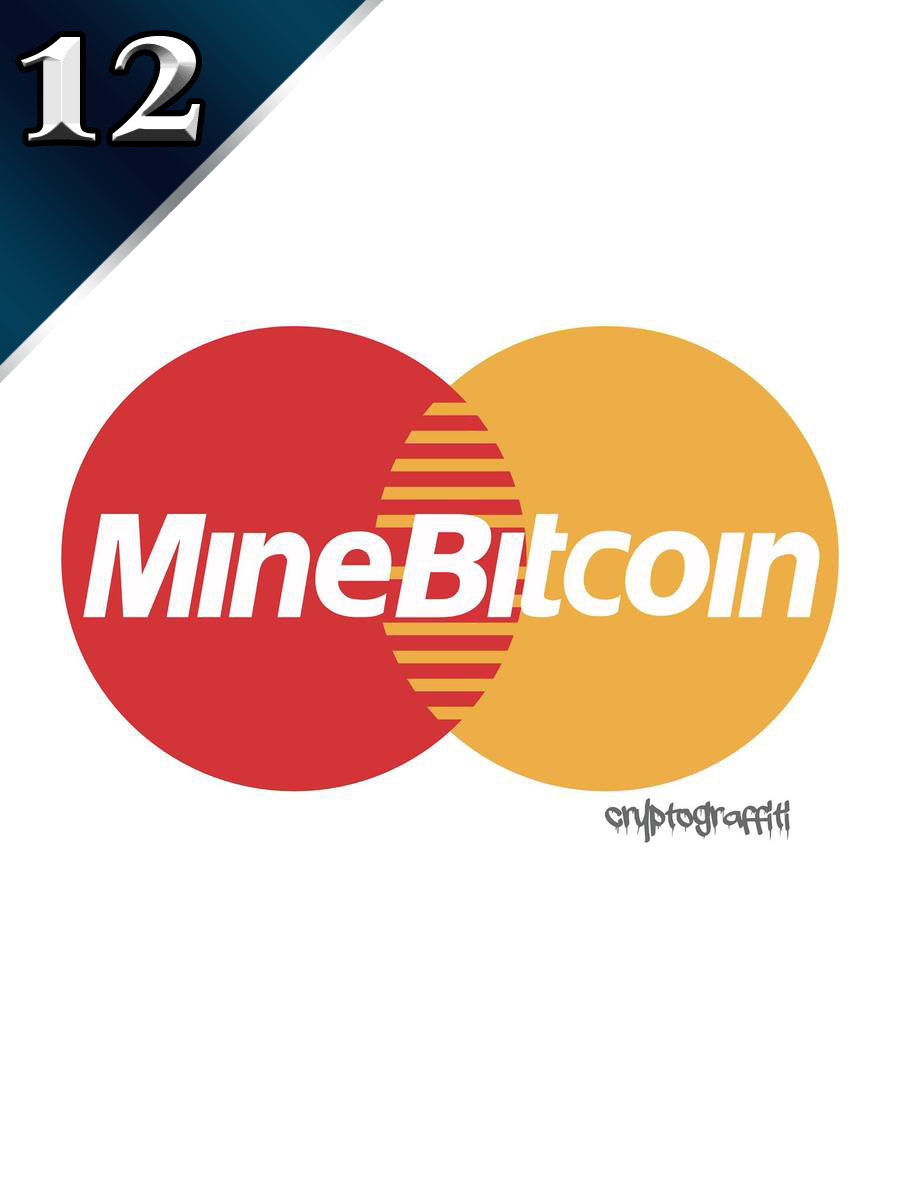
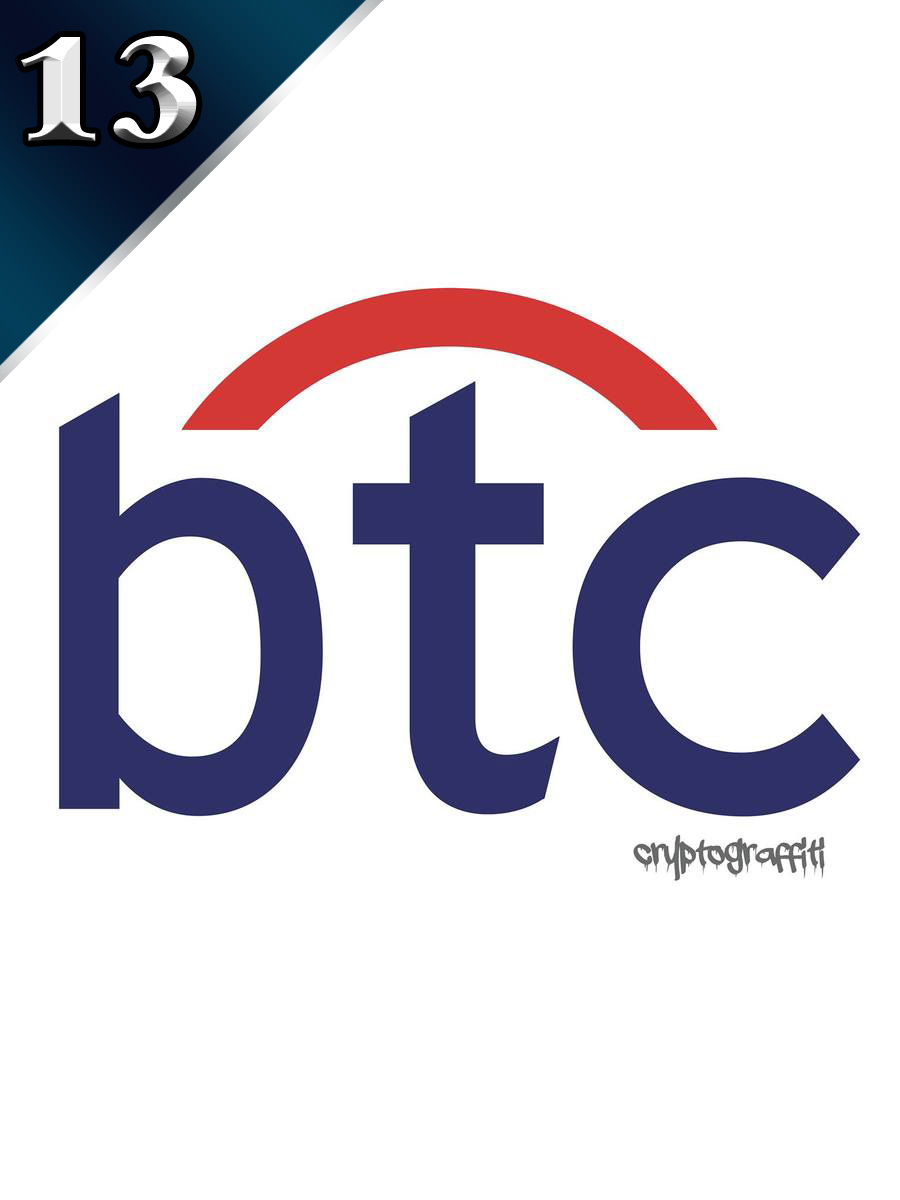
- Cryptograffiti — A pioneer in Bitcoin-themed street art. Created Cards 10–13, bridging physical crypto art culture with digital collectibles.
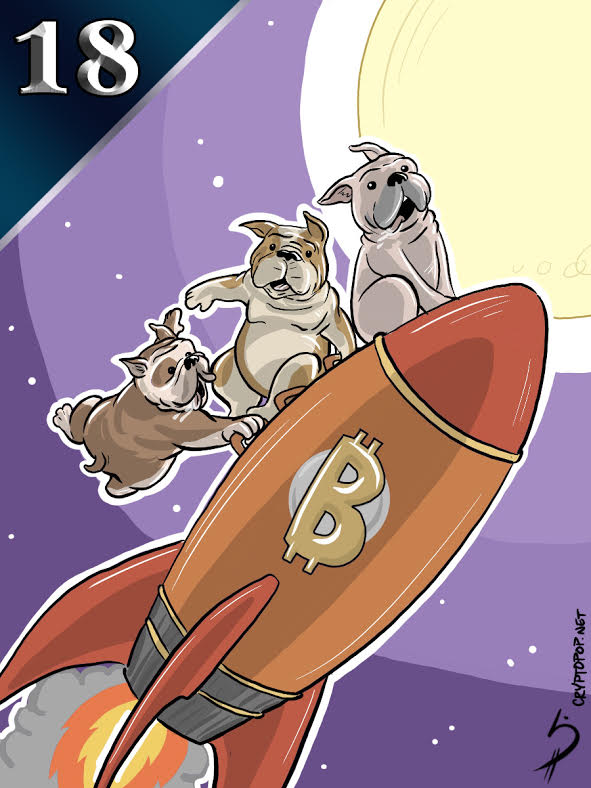
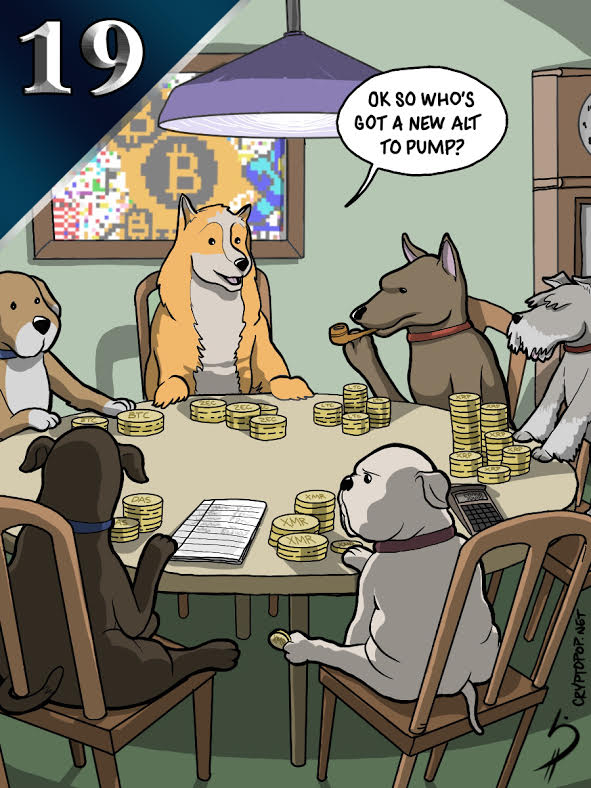
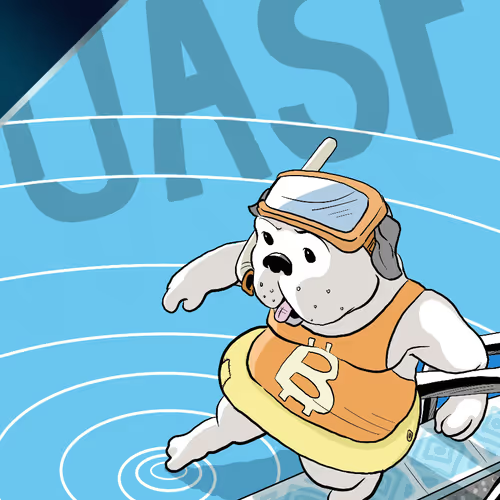
- Cryptopop (Luis Buenaventura) — Created Cards 17–19, collectively featuring crypto culture themes. Card #17 (UASF) marked Bitcoin's User Activated Soft Fork, Card #18 (Dogs Trading) depicted dogs playing poker with hidden cryptocurrency references, and Card #19 (To The Moon) captured the iconic crypto phrase. Buenaventura's style brought meme sensibility to on-chain art.
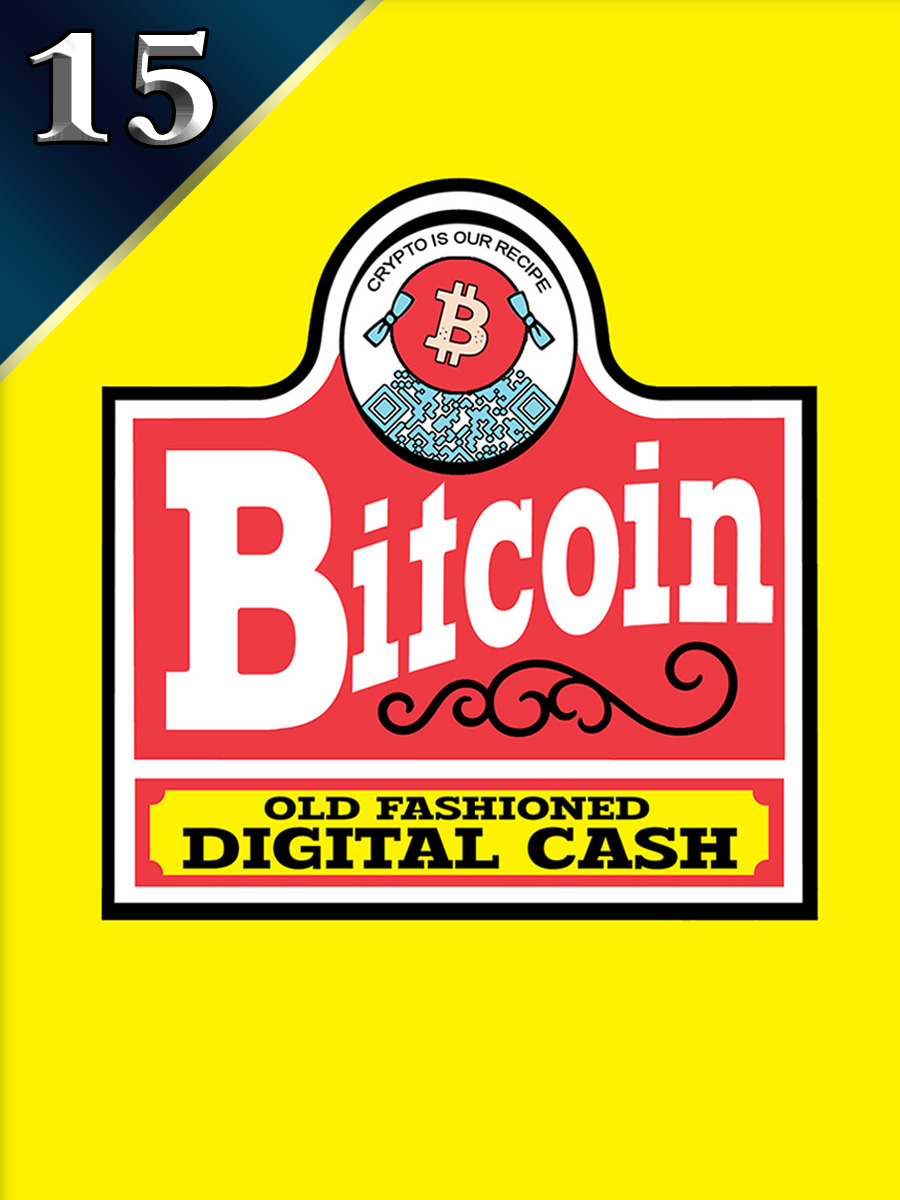
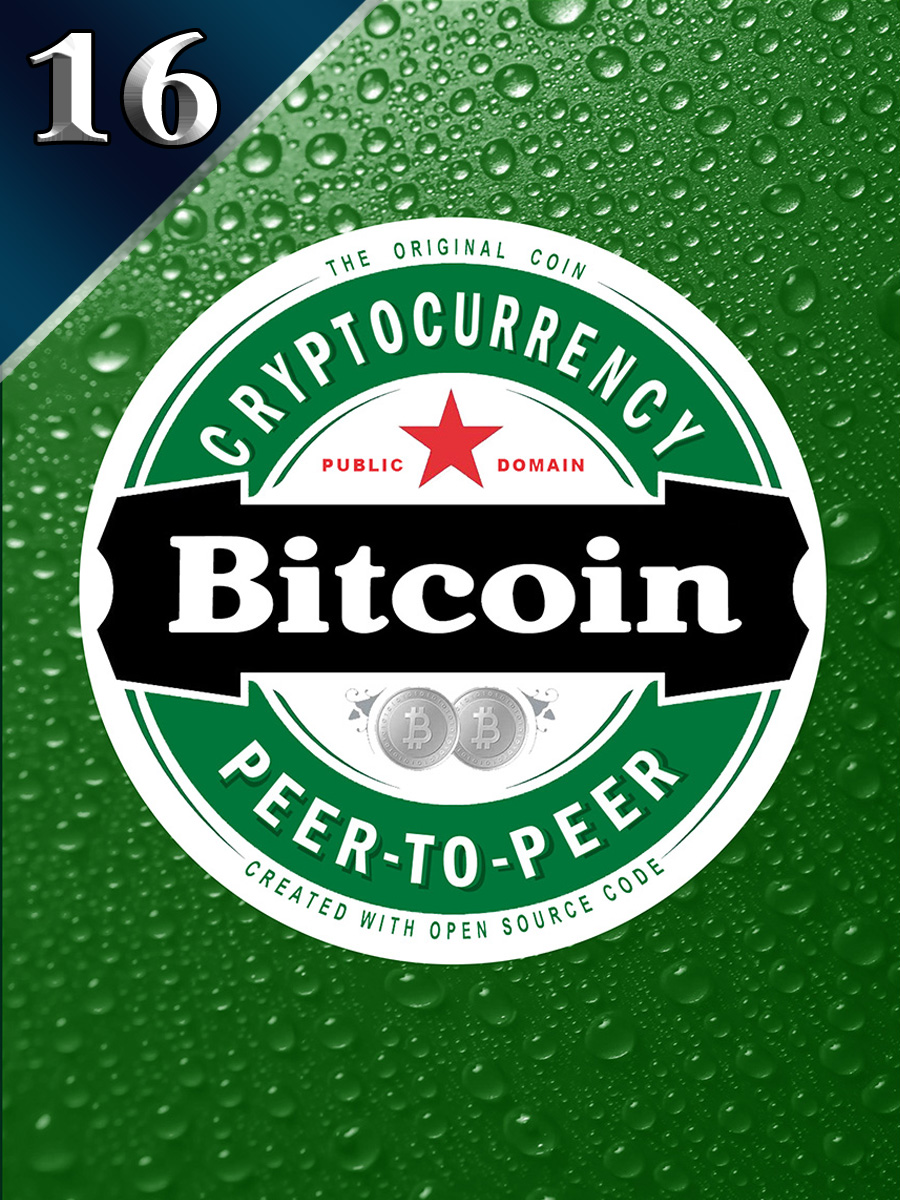
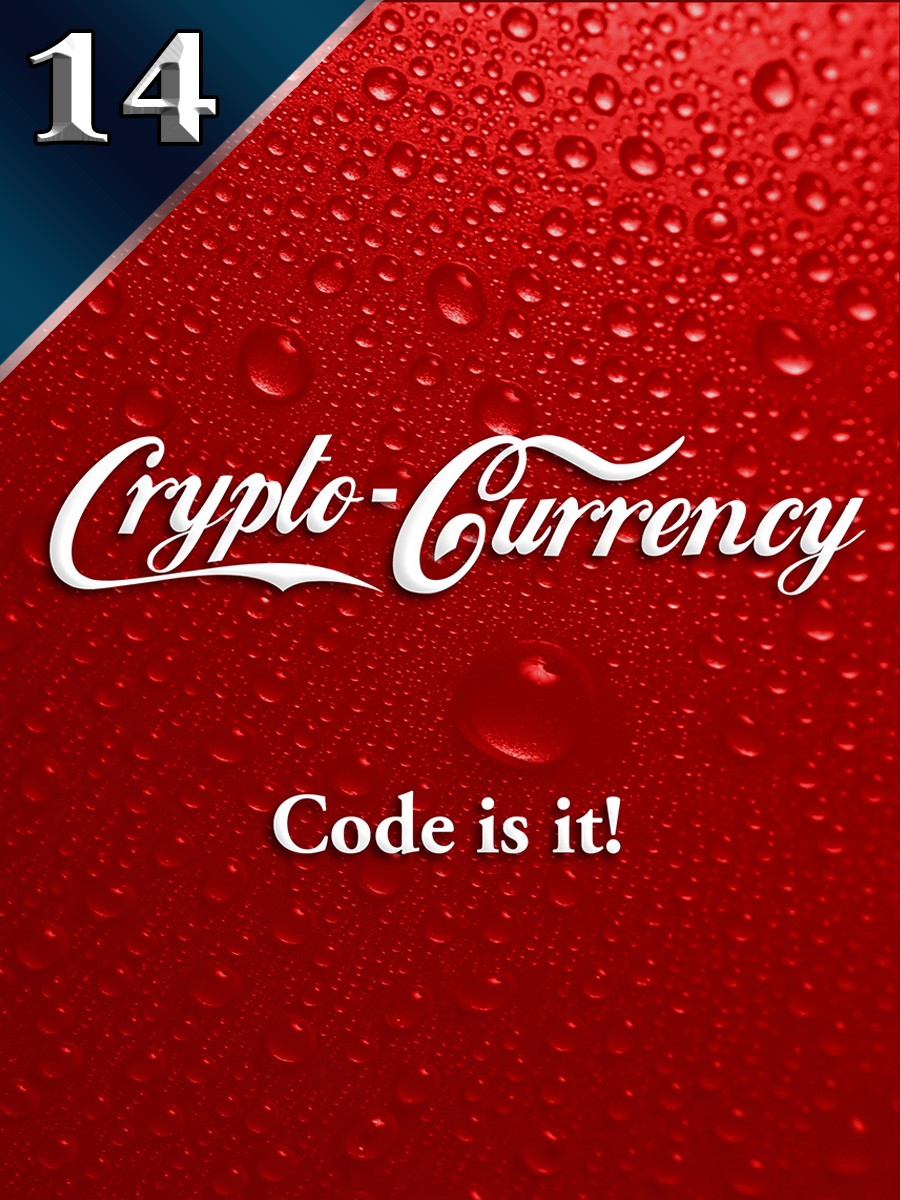
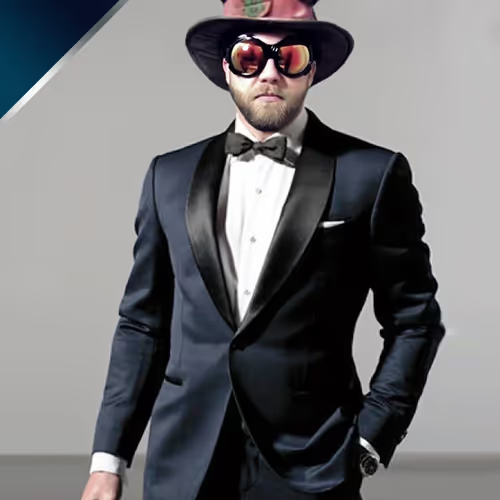
- Phneep — Also created Cards 14–16 (the corporate logo mashup series: CryptoCurrency, DigitalCash, OriginalCoin) and Card #20 (Mad Bitcoins), a portrait of Thomas Hunt as James Bond — the first portrait on Ethereum and a Patreon-style creator funding experiment.
- Robek World — Created Cards 21–23: The Wizard (#21, representing Thomas Hunt), The Bard (#22, representing Travis Uhrig — the only card with the number on the right side), and The Barbarian (#23, representing Rhett Creighton — possibly the first animated NFT, limited to a 2-frame GIF due to 2017 technical constraints). Robek originally proposed pixel art with a holographic overlay but was told the technology could not support it. His cards were the first to sell out, and he created the only promotional commercial ever made for Curio Cards — a Gauntlet-style RPG video that may now be lost.[9]
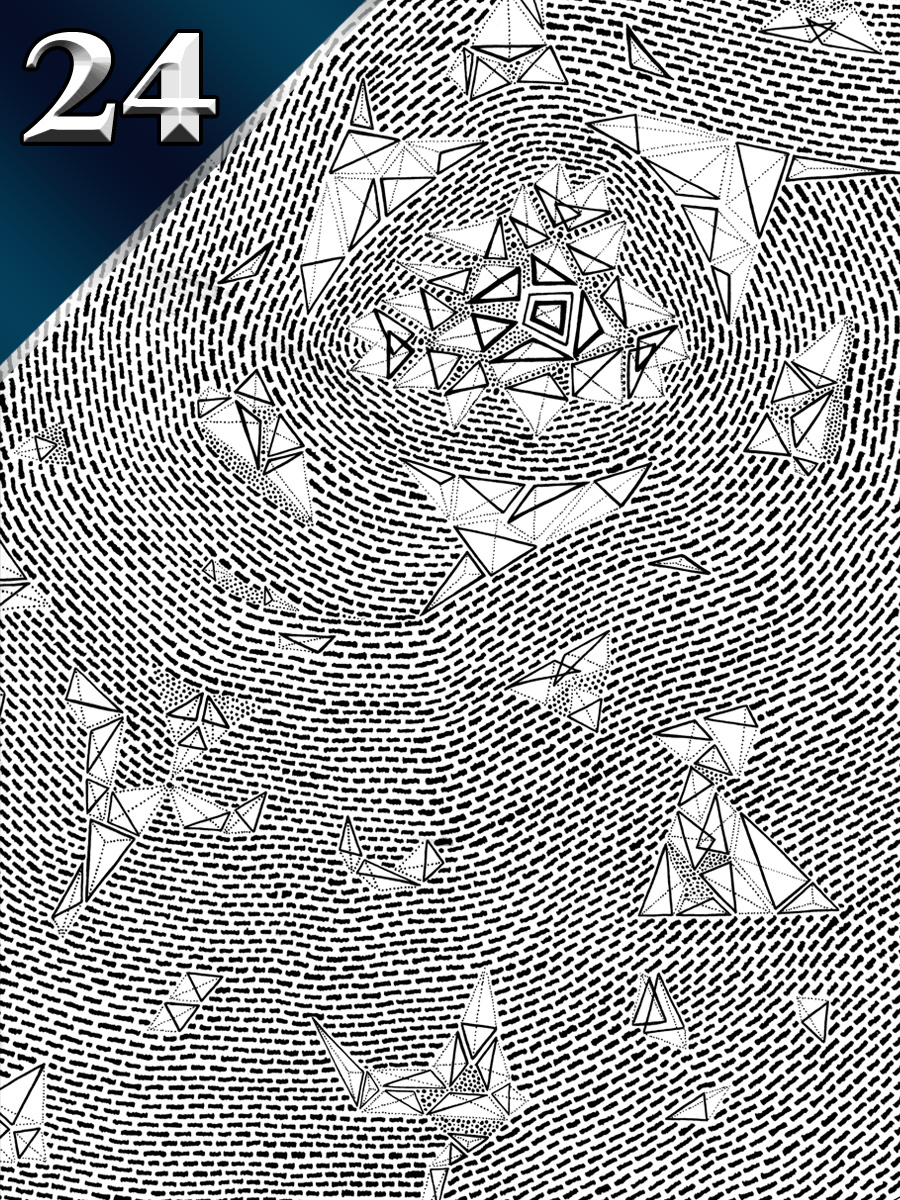
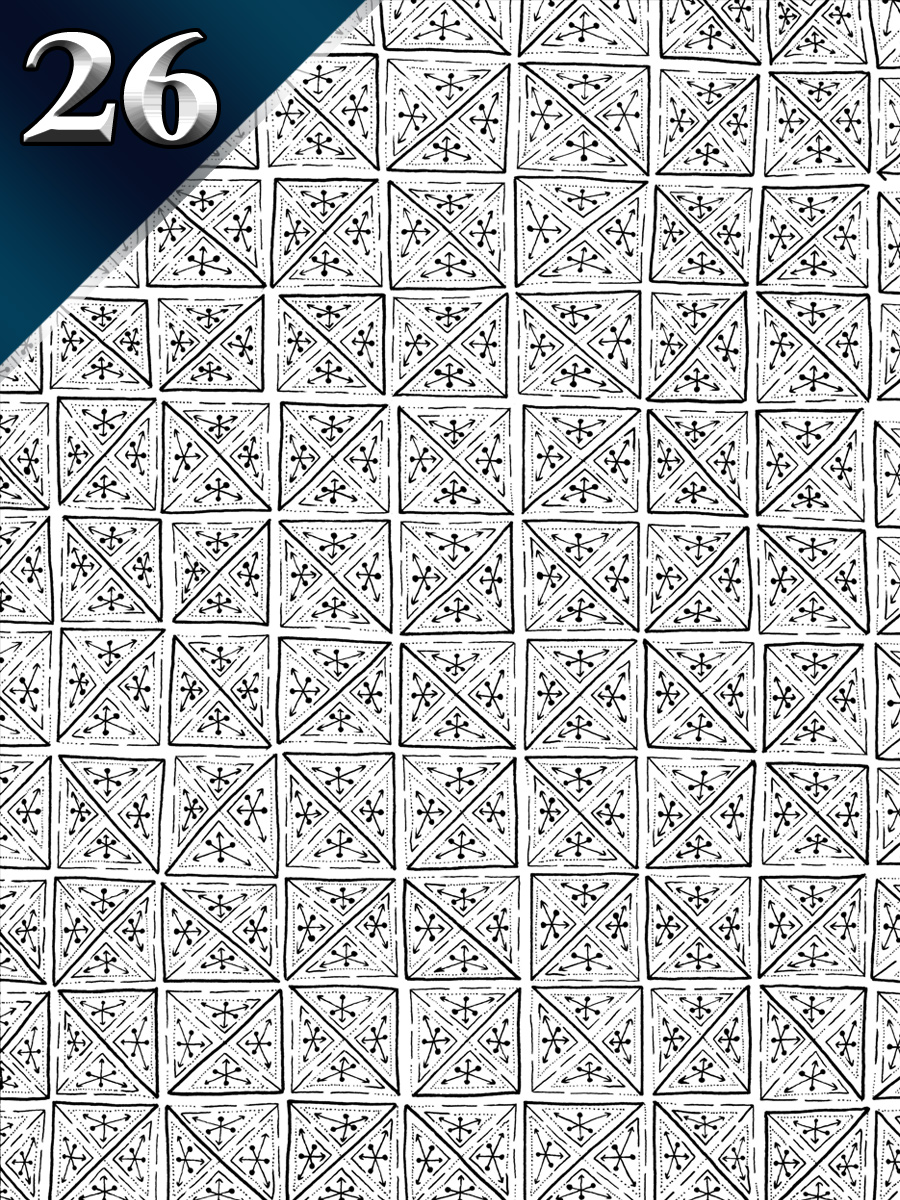
- Daniel Friedman — A researcher in entomology whose hand-drawn physical artwork was shared via Flickr before being discovered by the founders. Created Cards 24–26 (Complexity, Passion, Education) with deliberately decreasing supply: 333, 222, and 111. Card #26 Education is the rarest card in the collection, with only 106 copies actively circulating.[10]
- Marisol Vengas (Max Infeld) — A pseudonym for Chico, California-based artist Max Infeld, whose identity was revealed during the 2021 rediscovery. Created Cards 27–29 (Blue, Pink, Yellow) as a collectively-produced fine art series. Real photographs of buildings overlaid with foliage, created through a community algorithm at local coffee shops where strangers collaborated on the physical artwork. The original physical Yellow piece received a private offer of over $1 million.[11]
- Thoros of Myr — The pseudonymous artist of Card #30 ("Eclipse"), the final card in the set.
Card gallery
#1 Apples

#10 Future
#17 UASF
#20 MadBitcoins
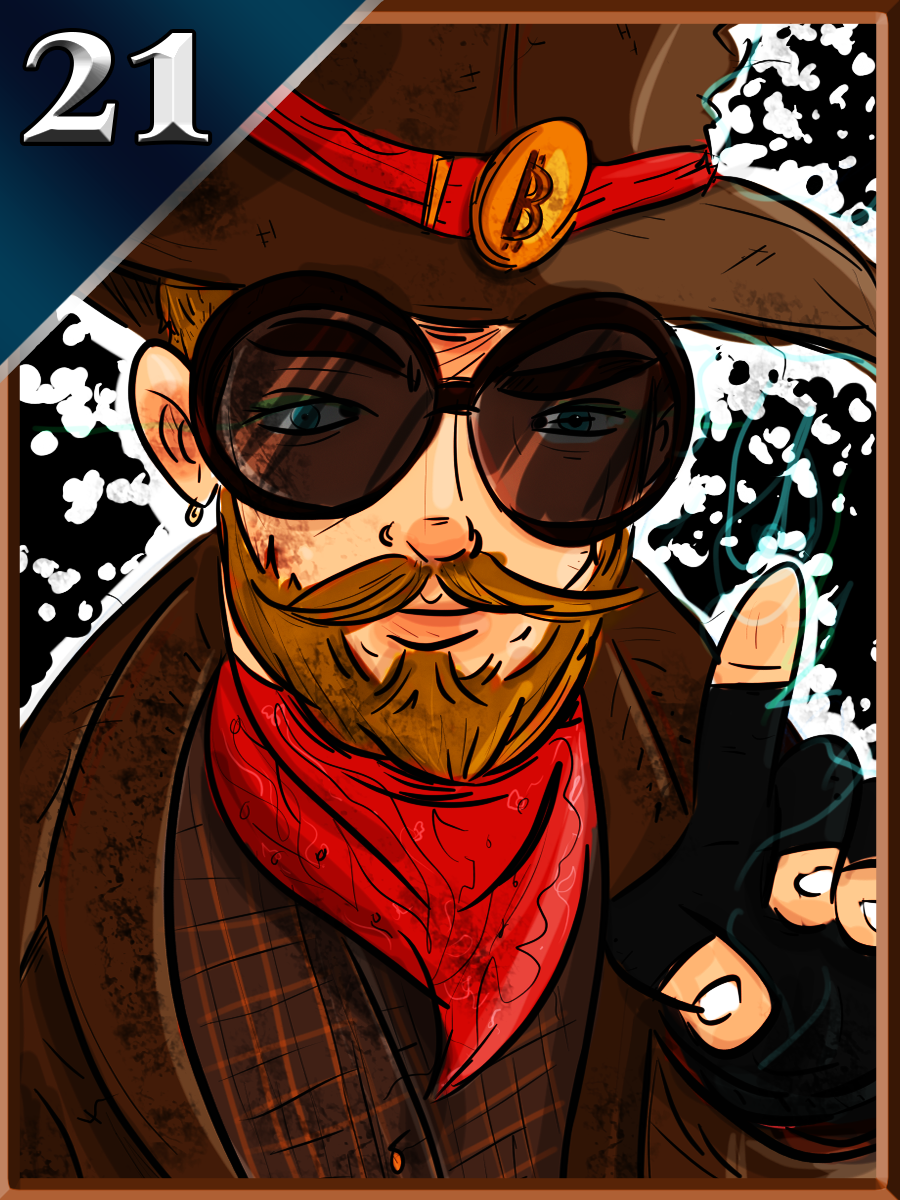
#21 The Wizard
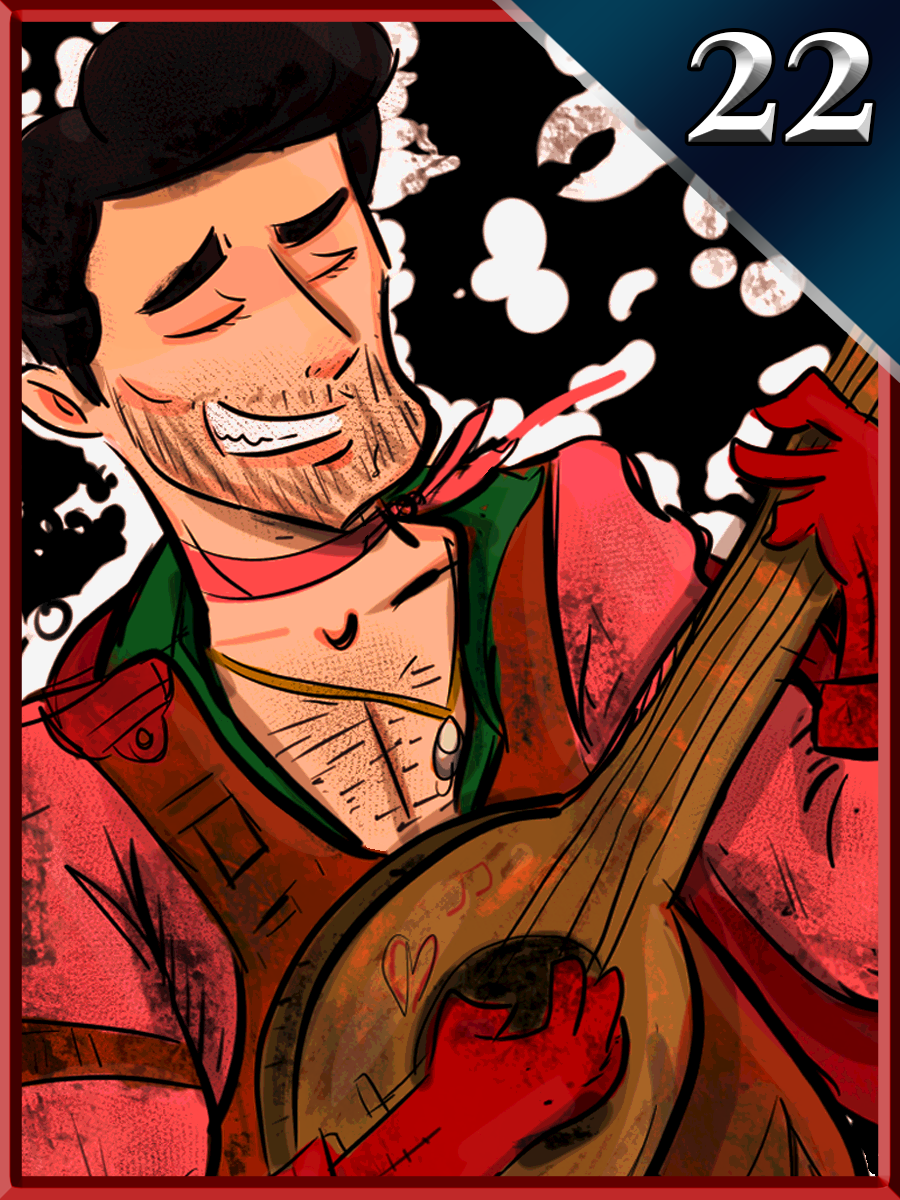
#22 The Bard
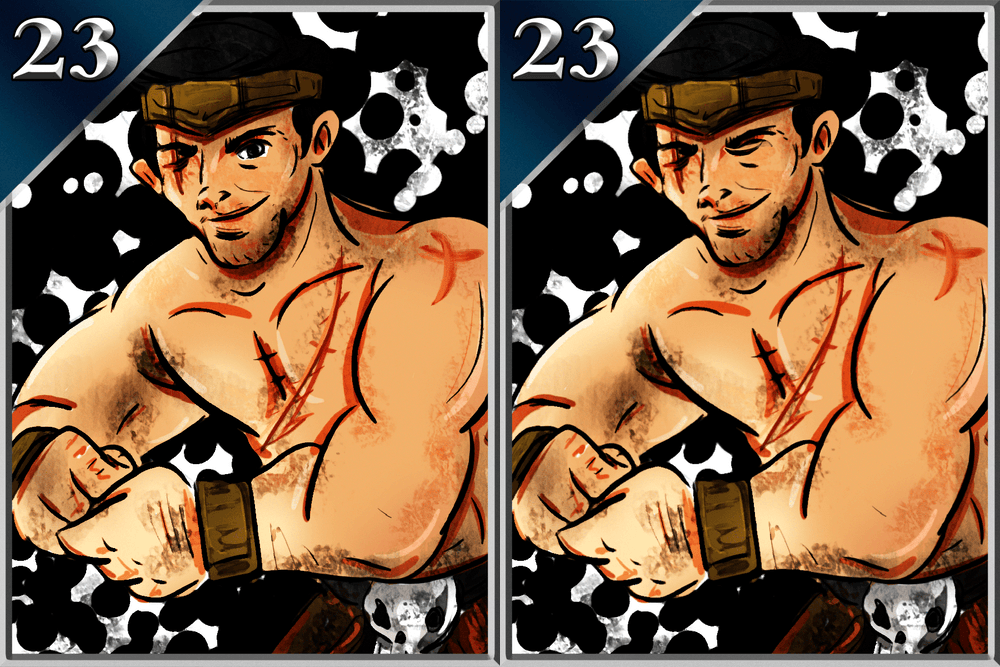
#23 Barbarian

#30 Eclipse
Rediscovery and NFT boom
After the 2017 cryptocurrency crash, Curio Cards was largely forgotten. The founders tried to run it as a startup business, but as Uhrig later recalled, he "could barely give the virtual cards away on a Discord channel."[6] The smart contracts holding the cards sat dormant on the blockchain for nearly four years.
In March 2021, as the NFT market exploded, a group of "NFT archaeologists" — collectors searching for the oldest tokens on Ethereum — rediscovered Curio Cards. Critical to the verification process were timestamped video archives from the World Crypto Network, where Hunt had interviewed the founders during the 2017 launch week. These videos served as definitive proof that Curio Cards predated CryptoPunks (launched June 23, 2017) as an art NFT project.[2]
Adam McBride, one of the key archaeologists, described the experience: "The idea of having a failed business and then magically four years later it becomes successful is just impossible. And it actually happened to these guys."[2]
Christie's auction
On October 1, 2021, a complete collection of 31 Curio Cards (including the 17b misprint) was sold at Christie's Post-War to Present auction in New York for $1,267,320 (393 ETH). The buyer was Taylor Gerring, an early contributor to the Ethereum project.[3] The sale represented a milestone for both the project and the broader NFT art market, establishing Curio Cards as a "blue-chip" historical asset alongside CryptoPunks and Autoglyphs.
Arctic preservation
As part of the GitHub Arctic Code Vault program, the open-source code for the Curio Cards smart contracts was included in a snapshot taken on February 2, 2020. This data was written onto 186 reels of digital photosensitive silver halide film and deposited 250 meters deep into the permafrost of a decommissioned coal mine in Svalbard, Norway, within the Arctic World Archive. The foundational code for all 30 Curio Cards, including Card #21 (Mad Bitcoins), is now preserved alongside works from the Vatican Library, intended to survive for at least 1,000 years.[8]
References
- Curio Cards — Wikipedia
- Howcroft, E. (2021). "A 'historic' NFT collection is on sale at Christie's." Quartz.
- Christie's Post-War to Present Auction, October 2021.
- Thomas Hunt Interview — Bitcoin.com, 2017.
- "The Story Behind the First Art NFT" — Start With NFTs.
- Castor, A. (2022). "The early history of NFTs, part 3: Curio Cards." Amy Castor.
- Curio Cards Documentation — Official docs.
- GitHub Archive Program — Arctic Code Vault.
- Curio DAO on Medium — Founder profiles and history.
- Curio Cards — IQ.wiki.
- "Exploring the Rarest and Most Popular Curio Cards" — nft now.
- Travis Uhrig (2021). "Adventures in NFTs #2: Travis Uhrig Interview". World Crypto Network.
Thomas Hunt
Thomas Hunt, widely known by his online identity associated with Mad Bitcoins, is an American Bitcoin commentator, media personality, and one of the founding voices of the World Crypto Network (WCN). He is best known as the host and moderator of The Bitcoin Group (TBG), a long-running panel discussion program covering cryptocurrency news and analysis. Hunt appeared in 480 episodes of TBG, from episode 2 through episode 485, making him the most consistently present figure in the show's history.
Background and Mad Bitcoins
Hunt introduced himself on TBG's earliest episodes as representing Mad Bitcoins, the platform and identity under which he built his early presence in the Bitcoin media space. The exact founding date of Mad Bitcoins is not documented in available sources, but by the time of TBG #2 — one of the show's earliest recorded episodes — Hunt was already operating as a recognizable commentator in Bitcoin media circles, alongside figures such as Andreas Antonopoulos of Let's Talk Bitcoin.
Role on The Bitcoin Group
As host of The Bitcoin Group, Hunt served primarily as moderator and discussion architect. Each episode followed a structured format of numbered issues — typically four per episode — on which Hunt would solicit panelist opinions before offering his own commentary and posing exit questions. His approach was conversational and Socratic, frequently building on panelists' points, offering counterarguments, or synthesizing disparate views to move discussion forward.
In TBG #2, Hunt assembled a panel including Antonopoulos, Dovey Barker of Bitcoin.bombs.com, and Derek J. Freeman of PeaceNewsNow.com to address topics including Bitcoin price volatility, the role of China in Bitcoin adoption, the question of which nation might first adopt Bitcoin as a currency, and the potential of Bitcoin to assist the homeless and unbanked.
By TBG #47, Hunt was convening panels that included Bryce Weiner of BlockTech, Kristoff Atlis of Anonymous Bitcoin Book, Will Pangman of Topiki, and Victoria Van Eyck of Bitcoin Strategy Group, demonstrating the expanding roster of WCN contributors that coalesced around the program.
Views and Commentary
Bitcoin Price and Market Volatility
In the earliest episodes, Hunt engaged substantively with questions of Bitcoin price dynamics. During TBG #2's discussion of Bitcoin's surge past $200, he framed ongoing price oscillations as a structural feature of a maturing market, agreeing with Antonopoulos's characterization while also endorsing Derek J. Freeman's observation that Bitcoin's volatility resembled that of a penny stock due to its then-small market capitalization. He credited Dovey Barker's argument against the term "bubble" as a meaningful contribution, observing that the framing of "mania" or "craze" better captured what was occurring in the market at the time (TBG #2).
Geopolitics and Bitcoin Adoption
Hunt demonstrated a keen interest in the geopolitical dimensions of Bitcoin, particularly with respect to China and state-level currency competition. After Antonopoulos argued in TBG #2 that Chinese state television's favorable Bitcoin documentaries represented a deliberate strategic endorsement from the top of government — aimed at undermining U.S. dollar hegemony — Hunt described the analysis as a "really great point" and extended the line of inquiry to Russia, asking whether a new "currency Cold War" might be emerging. He was also receptive to Barker's caution against assuming all governments react immediately and overreact, noting the importance of distinguishing different governmental styles (TBG #2).
The NSA and Bitcoin Origins
In TBG #47, during a lengthy panel discussion prompted by the hacking of Satoshi Nakamoto's email account, Hunt offered a measured skepticism toward theories that Bitcoin was an NSA creation. He stated: "It's hard for me to believe that there would be someone working for the government who would have the ingenuity to come up with Bitcoin... not only just the technical understanding but the economic understanding behind Bitcoin as well, that would have such poor foresight to understand what effect Bitcoin is going to have on their future job. It just doesn't make any sense to me whatsoever that you would have this team of NSA people that are like, yeah, let's come up with an invention that's going to remove the device that allows us to be employed by the US government." (TBG #47). Hunt went on to note that any institution dependent on petro-dollar funding could not logically benefit from Bitcoin's success, lending an economic rather than purely technical dimension to his skepticism.
Satoshi Nakamoto's Identity
During TBG #47's extended discussion of the Satoshi email hack, Hunt put forward a notable claim regarding the disposition of Satoshi's early-mined Bitcoin holdings. He stated: "I have it on good authority that the private keys are burned" (TBG #47), suggesting those coins were made permanently inaccessible. He noted this would likely disturb people upon discovery, but characterized it as the "smartest thing to do" for the health of the currency. Hunt also raised the point that the size and prominence of Bitcoin had grown to the point where Satoshi had even more reason to remain anonymous than at the project's outset, and expressed some retrospective doubt about whether the "I am not Dorian Satoshi Nakamoto" statement had genuinely originated from Satoshi, given that it was not cryptographically signed (TBG #47).
Bitcoin, the Unbanked, and the Homeless
Hunt engaged seriously with humanitarian dimensions of Bitcoin during TBG #2, moderating a discussion on whether Bitcoin could assist homeless and unbanked populations. He observed that Bitcoin ATM infrastructure remained insufficient to support a practical "begging to Bitcoin" economic strategy at the time, and endorsed Antonopoulos's framing of first-world homeless populations as a test case for whether Bitcoin could eventually serve the global unbanked. He highlighted access to documentation as a particular barrier, noting that homeless individuals frequently lacked the paperwork required to open a traditional bank account — a gap Bitcoin wallets could bypass (TBG #2).
Relationships with Panelists
Hunt maintained an engaged, collegial dynamic with the rotating roster of TBG panelists. He showed particular intellectual affinity with the analyses of Andreas Antonopoulos, frequently amplifying or building upon his points during early episodes. He credited Dovey Barker on multiple occasions for nuanced framings of economic terminology. His moderating style — issuing structured exit questions and synthesizing disagreements — positioned him as a consistent unifying presence across the program's diverse guest roster. By TBG #47, Hunt was also facilitating appearances by WCN contributors including Blake Anderson, whose introduction to the panel Hunt personally orchestrated mid-episode.
Key Quotes
On Bitcoin's volatility and trajectory: "I think that Bitcoin would look quite different if it was invented by some aspect of the government and put out there into the population." (TBG #47)
On Satoshi's early coins: "I have it on good authority that the private keys are burned... That's the smartest thing to do. It helps the currency." (TBG #47)
On the NSA-Bitcoin theory: "I don't think that if they were [capable of inventing Bitcoin] they would want to put themselves out of work." (TBG #47)
World Crypto Network
Hunt was a central pillar of the World Crypto Network, the broader media collective under which The Bitcoin Group was produced and distributed. During TBG #47, the program featured a promotional segment encouraging viewers to explore other WCN programming, including the beta show, Bitcoin Rush, and Midas Marty's Dark News, with the invitation extended via the worldcrypto-network.com domain. Hunt's near-complete presence across 480 episodes — from episode 2 through episode 485 — reflects his foundational role in the network's identity and longevity.
References
- The Bitcoin Group #2. World Crypto Network. Thomas Hunt, Andreas Antonopoulos, Dovey Barker, Derek J. Freeman. Issues: Bitcoin Bubble; Bitcoin in China; Bitcoin Island; Bitcoin and the Homeless.
- The Bitcoin Group #47. World Crypto Network. Thomas Hunt, Bryce Weiner, Kristoff Atlis, Will Pangman, Victoria Van Eyck, Blake Anderson. Issues: Satoshi Nakamoto's Email Hacked; Apple Pay; PayPal and Bitcoin; Overstock and Coinbase Go International.
Rhett Creighton
| Rhett Creighton | |
Card #23 "The Barbarian" depicting Rhett Creighton, by Robek World (2017) | |
| Born | John Everett Creighton IV |
|---|---|
| Education | MIT — B.S. Physics, M.S. Nuclear Engineering |
| Occupation | Actor, engineer, blockchain developer |
| Known for | Crocodile Dundee II, Curio Cards |
| IMDb | nm0187311 |
Rhett Creighton (born John Everett Creighton IV) is an American actor, nuclear engineer, and blockchain developer. He is best known in popular culture for his childhood acting roles in Crocodile Dundee II (1988), War and Remembrance (1988), and True Blood (1989), and within the cryptocurrency community for hand-coding the smart contracts that powered Curio Cards, widely recognized as the first art NFT collection on Ethereum. A recurring figure in the World Crypto Network (WCN) ecosystem, Creighton has appeared as a panelist on The Bitcoin Group and has been a collaborator and close associate of Thomas Hunt since the early days of the San Francisco Bitcoin meetup scene.[1]
Early life and acting career
Creighton began acting at age four, appearing in national television commercials, movies, and theatrical productions. His most prominent screen role was as "Park Boy" in the 1988 blockbuster sequel Crocodile Dundee II, starring alongside Paul Hogan. That same year he appeared in the epic miniseries War and Remembrance, where he played the character Louis Henry. His early television work extended into 1989 with a role in True Blood.[1]
Education and engineering
After his childhood acting career, Creighton left high school early to attend the Massachusetts Institute of Technology (MIT), where he earned a Bachelor of Science in Physics and a Master's Degree in Nuclear Engineering. His engineering aptitude was evident beyond the classroom: during his time at MIT he won the institute's annual autonomous robot competition, known as 6.270. He also starred in an episode of TLC's Junkyard Wars, a challenge his team won by constructing functional sand yachts from salvaged scrap parts.[2]
Thomas Hunt, speaking on a 2021 episode of World Crypto Network, recalled first being pointed toward Creighton by mutual acquaintances in the San Francisco startup world: "Rick and Ryan both suggest that I meet Rhett Creighton... What's so great about Rhett is that Rhett, especially when he's — you give it to you as a resume — Rhett is a nuclear engineer trained at MIT. So if you're looking to be impressed by a little..."[4] Hunt's account underscores how Creighton's uncommon combination of scientific training and practical engineering skill distinguished him within Bitcoin's early developer community.
Entry into Bitcoin and WCN
Creighton became involved in Bitcoin through the San Francisco meetup scene, where he was present for the first public presentation of the Lightning Network proposal. He contributed to Bitcoin Core's RPC test suite, establishing technical credibility before his association with Thomas Hunt and Travis Uhrig deepened into a collaborative partnership. His relationship with Hunt and the broader WCN community grew organically out of shared interest in Bitcoin's underlying technology rather than its speculative dimension.
Creighton appeared on a March 2017 episode of Mad Bitcoins alongside another guest, the two working through points of agreement and disagreement on fundamental Bitcoin properties — including its 21-million-unit supply — in what was framed as a structured debate format.[5]
The Bitcoin Group appearances
Beyond Curio Cards, Creighton became a recurring panelist on The Bitcoin Group, WCN's flagship weekly roundtable. His appearances spanned a wide range of topics reflecting the evolving cryptocurrency landscape. In episode TBG-192, he weighed in on Samsung's announcement of the blockchain keystore feature in the Galaxy S10, describing it as a significant development for putting secure key storage into the hands of mainstream users.[6] In TBG-194, he offered analysis of Facebook's plans for a private coin, discussing the implications of a floating-value internal currency operated by a technology platform.[7]
His contributions to the show were valued for their technical depth. As a trained nuclear engineer and hands-on developer, Creighton brought a grounded engineering perspective to discussions that often veered between speculation and advocacy.
Curio Cards
Creighton's most consequential contribution to the cryptocurrency world was the technical architecture of Curio Cards, an art NFT project he co-created in 2017 with Thomas Hunt and Travis Uhrig. Working without any established NFT standard — the ERC-721 specification did not yet exist — Creighton hand-coded the project's smart contracts in Solidity from scratch. He deployed the first "vending machine" contract on May 9, 2017, and each of the 30 card contracts was manually deployed to the Ethereum blockchain individually.
Thomas Hunt later praised the technical execution in episode TBG-462: "The Kerio card contract that my friends and I released in 2017 has been audited. And so far, there seems to be no problems. Shout out to Rhett Creighton who coded the Kerio cards contract seemingly flawlessly on the first attempt."[8] In episode TBG-250, Hunt credited Creighton alongside Uhrig as co-inventors of the NFT art format: "My friends Rhett Creighton and Travis Urigh and I pretty much invented NFTs. We were the first art-based NFT on Ethereum."[9]
Curio Cards launched quietly and the project lay dormant for roughly four years. It was rediscovered by NFT archaeologists who found the cards still available in the original vending machine contract. The project subsequently attracted significant mainstream attention: in episode TBG-277, Hunt reported that Christie's auction house was offering a set of Curio Cards — described as among the oldest NFTs on the Ethereum blockchain — with an estimated sale range of $900,000 to $1.2 million.[10]
Creighton is personally depicted on Card #23, titled "The Barbarian," illustrated by artist Robek World in 2017. The card stands as an enduring token of his foundational role in the project.
Bitcoin Private
In early 2018, Creighton was involved as one of the programmers on the Bitcoin Private project, a privacy-focused cryptocurrency that proposed to merge Bitcoin's UTXO set with ZClassic. Thomas Hunt noted the involvement on a March 2018 episode of World Crypto Network, while tempering enthusiasm: "Bitcoin private partially run by my friend, Rhett Creighton, he's one of the programmers over there. I don't want to say anything bad about it, Rhett, but it does sound like another altcoin with a lot of hype behind it, if you like hype."[3] The project attracted significant speculative interest around the time of its launch, driven in part by the surge in ZClassic's price among holders anticipating the fork-based distribution of Bitcoin Private tokens.
Legacy and standing in the WCN ecosystem
Rhett Creighton occupies a singular position within the World Crypto Network ecosystem as a technical authority whose engineering work produced one of the most historically significant artifacts in the early history of NFTs. His Curio Cards contract, written without templates or precedent and audited years after deployment without reported vulnerabilities, is a testament to his precision as a developer. Within WCN programming, he is consistently described by Thomas Hunt as a personal friend and trusted collaborator, and his perspective on technical matters — from hardware wallet security to altcoin architecture — has been a regular feature of The Bitcoin Group panel discussions.
As of a January 2026 Mad Bitcoins episode, Curio Cards remained an active reference point in WCN content, with Hunt highlighting ongoing coverage of the project — including profiles of Creighton — produced by members of the NFT collector and historian community.[11]
References
- Rhett Creighton — IMDb
- Curio Cards Founders — Rhett Creighton — Medium
- World Crypto Network, episode WCN_20180302 — Thomas Hunt on Bitcoin Private and Rhett Creighton
- World Crypto Network, episode WCN_20210603 — Thomas Hunt on meeting Rhett Creighton
- Mad Bitcoins, episode MB_20170323 — Rhett Creighton panel appearance
- The Bitcoin Group, episode TBG-192 — Samsung S10 blockchain keystore discussion
- The Bitcoin Group, episode TBG-194 — Facebook private coin discussion
- The Bitcoin Group, episode TBG-462 — Thomas Hunt on Curio Cards contract audit
- The Bitcoin Group, episode TBG-250 — Thomas Hunt on co-inventing NFTs with Creighton and Uhrig
- The Bitcoin Group, episode TBG-277 — Christie's auction of Curio Cards
- Mad Bitcoins, episode MB_20260102 — Curio Cards coverage featuring Rhett Creighton
- The early history of NFTs: Curio Cards — Amy Castor
Travis Uhrig
| Travis Uhrig | |
Card #22 "The Bard" depicting Travis Uhrig, by Robek World (2017) | |
| Occupation | Software developer, entrepreneur |
|---|---|
| Known for | Curio Cards |
Travis Uhrig is an American software developer and entrepreneur best known as a co-founder of Curio Cards, one of the earliest curated NFT art projects on the Ethereum blockchain. He co-founded the project alongside Thomas Hunt — host of Mad Bitcoins and The Bitcoin Group on the World Crypto Network — and developer Rhett Creighton. Within the project, Uhrig served as the business development lead, taking primary responsibility for pitching the concept to venture capitalists, forging relationships with contributing artists, and shaping the project's commercial and strategic direction.
Background and Introduction to the Bitcoin Community
Uhrig became acquainted with both Thomas Hunt and Rhett Creighton through the San Francisco Bitcoin meetup group, a gathering that served as a social and intellectual hub for early cryptocurrency enthusiasts in the Bay Area. These in-person connections within the local Bitcoin community formed the personal foundation on which the Curio Cards project was later built. Uhrig's professional background in software development and entrepreneurship made him a natural fit for the business-facing role he would come to occupy within the founding team.
His entry into the cryptocurrency space reflected a broader pattern common among early adopters of the era: technical curiosity intersecting with entrepreneurial ambition, brought into focus by community engagement at the grassroots level. The San Francisco meetup scene was particularly fertile ground during this period, regularly producing collaborations that would go on to have significant impact on the emerging blockchain ecosystem.
Role in Founding Curio Cards
Uhrig's conceptual contribution to Curio Cards was substantial. He recognized the potential of leveraging Ethereum's smart contract functionality to establish what he described as a "Patreon model" for digital art patronage — a structure in which collectors could financially support artists directly through the acquisition of tokenized digital works. This framing helped articulate the project's value proposition not merely as a speculative asset class but as a mechanism for sustainable creative patronage on the blockchain.
One of Uhrig's most consequential interventions came during the early planning stages of the project, when the question arose of whether to build Curio Cards on the existing Ethereum mainnet or to fork Ethereum and operate on a separate chain. Uhrig argued forcefully against forking, contending that deploying the cards on a bespoke chain would leave them "orphaned" — cut off from the liquidity, tooling, and user base that the established Ethereum network provided. His persuasion of Rhett Creighton on this point proved pivotal: Curio Cards launched on Ethereum mainnet in 2017, a decision that would later allow the project to be recognized as among the earliest NFT collections on the network.[1]
As business development lead, Uhrig was also the team member most directly engaged in outreach to the venture capital community, attempting to secure institutional interest in what was at the time an entirely novel asset category. His artist relations work was equally foundational, as the project's identity depended on recruiting a diverse roster of visual artists — each contributing a unique card to the set of thirty numbered works that constitute the complete Curio Cards collection.
Card #22 — "The Bard"
Each of the three co-founders of Curio Cards is depicted in the collection. Uhrig is immortalized as Card #22, titled "The Bard," created by artist Robek World. The card's descriptive text characterizes Uhrig as a "song-singing leader," a designation that speaks to his role as the project's outward-facing advocate and communicator. Card #22 holds a minor distinction within the set: it is the only card whose number is printed on the right side rather than the conventional left, a subtle typographic anomaly that has been noted by collectors and cataloguers of the series.[2]
The choice of the bard archetype to represent Uhrig is notable in the context of how the founding team was portrayed collectively. Where technical and visionary roles were embodied by other members of the team, the bard — historically a figure of oral tradition, persuasion, and cultural transmission — aligns closely with the business development and storytelling function Uhrig performed for the project. Robek World's rendering of this archetype reflects both the playful aesthetic of the broader Curio Cards collection and a considered mapping of character to contributor.
Connection to the World Crypto Network
Uhrig's relationship with Thomas Hunt extended into the media sphere of the World Crypto Network (WCN), the YouTube-based cryptocurrency broadcasting network Hunt operated. Uhrig appeared as a guest on WCN programming, bringing the Curio Cards project to the attention of an audience already familiar with Hunt's work on Mad Bitcoins and The Bitcoin Group. These appearances situated Curio Cards within the broader WCN ecosystem and helped introduce the concept of tokenized digital art to a community of Bitcoin and Ethereum enthusiasts who had been following Hunt's commentary for years. (WCN episodes featuring Travis Uhrig)
Legacy
Curio Cards launched in May 2017, predating the broader public awareness of NFTs by several years. The project's 2021 appearance at Christie's auction house — one of the world's most prestigious traditional art institutions — brought renewed attention to the collection and to the individuals responsible for creating it.[1] Uhrig's early advocacy for building on Ethereum mainnet, rather than a forked chain, was directly responsible for ensuring the collection's compatibility with the infrastructure that would later underpin the global NFT market. In this respect, a decision he made in 2017 had lasting consequences for the project's continued relevance and collectibility.
As one of three founders of a project now recognized as a landmark in NFT history, Uhrig occupies a significant if often understated position in the early history of blockchain-based digital art. His depiction as Card #22 ensures that his connection to the project is encoded permanently within the collection itself.
References
- Curio Cards at Christie's — Early NFT Collection Makes Its Debut — Quartz
- Breaking Down Curio Cards — Start With NFTs
World Crypto Network
| World Crypto Network | |
 World Crypto Network YouTube channel logo | |
| Type | Independent media collective |
|---|---|
| Founded | 2014 |
| Founder | Thomas Hunt |
| Focus | Bitcoin news, education |
| Videos | 1,500+ |
| Website | worldcryptonetwork.com |
| YouTube | WorldCryptoNetwork |
| Podcast | Apple Podcasts |
The World Crypto Network (WCN) is a veteran independent media organization and podcast network dedicated to Bitcoin and cryptocurrency education. Founded by Thomas Hunt (Mad Bitcoins) in 2014, WCN has archived over 1,500 videos documenting the evolution of the cryptocurrency ecosystem. The Financial Times described it as "a YouTube channel that covers cryptocurrencies such as Bitcoin" (November 28, 2014).
Programming
WCN operates as a hub-and-spoke model with Thomas Hunt as the central node. Over its history, the network has hosted dozens of shows across news, education, interviews, technical deep-dives, and unconventional formats. Major programs include:
Flagship Shows
- The Bitcoin Group — The network's longest-running show (312+ episodes). A roundtable debate featuring Hunt and rotating panelists. (YouTube · WCN)
- Today in Bitcoin — Daily news show (266+ episodes) hosted by rotating WCN members. (YouTube · WCN)
- THS — Thomas Hunt Show — Solo show hosted by Thomas Hunt (95+ episodes). (YouTube)
- Adventures in NFTs — Covering the NFT ecosystem, including the history of Curio Cards. (WCN)
Interview & Deep Dive Shows
- Proof of Work — In-depth interviews with people in the Bitcoin space (55 episodes). (WCN)
- Bitcoin Op Tech Newsletter — Technical coverage of the Bitcoin Optech newsletter (48 episodes).
- One-on-One — Interview format show (47 episodes).
- Bitcoin Talk Show — Weekly Wednesday call-in show co-hosted by Thomas Hunt and Derrick J. Freeman (199 episodes). Believed to be the first call-in Bitcoin show. (WCN)
- You, Me, and BTC — Conversational Bitcoin show (67 episodes).
News & Commentary Shows
- The Bitcoin News Show — Hosted by Vortex (83 episodes). (WCN)
- Bitcoin Headlines — Quick news roundups. (WCN)
- Sunday Recap — Weekly news summary.
- Bitcoin to the Max — Commentary show (64 videos).
- Transmission — Bitcoin commentary (54 videos).
- FutureRant — Opinionated takes (8 videos).
Technical & Educational Shows
- Lightning Hacksprint — Technical deep dives into Lightning Network. (WCN)
- BTCIOT — Bitcoin and Internet of Things coverage (40+ videos). (WCN)
- Bitcoin Developer's Mailing List — Coverage of the bitcoin-dev mailing list (13 videos).
- Read Rothbard ~ Use Bitcoin — Economic reading group with Max Hillebrand (18 episodes).
- Future Money — Economic education with Max Hillebrand.
- Open Source Everything — Open-source advocacy with Max Hillebrand.
- The Ethics of Money Production — Economic reading series (14 videos).
- What Has Government Done to Our Money? — Murray Rothbard reading series (13 videos).
Product & Tool Coverage
- Wasabi Wallet — Tutorials, interviews, and the Zero Link Framework reading (33+ videos).
- Cold Card — Hardware wallet tutorials.
- nodl — Bitcoin Full Node — Full node setup guides (16 videos).
- Bisq Decentralized Exchange — DEX coverage (17 videos).
- LNbits — Lightning wallet/accounts tool coverage (15 videos).
- GPG + Yubikey — Security tool tutorials (9 videos).
- Purism — Privacy hardware coverage.
- DIY Hardware Wallets — Build-your-own tutorials (4 videos).
- NOSTR — Decentralized social protocol coverage.
Early & International Shows
- Dark News — Privacy and anti-censorship, hosted by Kristov Atlas (27 videos). (WCN)
- The Flipside — Early WCN show hosted by DJ Booth (19 videos).
- This Week in Cryptos — Puppet-hosted weekly crypto news recap from Indonesia, a Mad Bitcoins homage (18 videos).
- Bitcoin Rush — Early news show (39 videos).
- Blocktalk — Discussion show (21 videos).
- Mad Potcoins — Cannabis-meets-crypto show (41 videos).
- MidasMarni — Commentary show (22 videos).
- Crypto Audio Blog — Audio essays (39 episodes).
- Off Chain — Off-topic discussions (10 videos).
- Crypto Convos — Conversations with crypto figures (9 videos).
- Chris Before Coffee — Morning show hosted by Chris Ellis (11 videos).
- Hi Everybody with Mike Dupree — Talk show format (4 videos).
- Let's Meet with Margaryta DeCrypt — Interview show (6 videos).
- Jamie Nelson — Solo show (8 videos).
- Joesmoe Show — Commentary show (9 episodes).
WCN Spotlight Series
Curated playlists of appearances by major Bitcoin figures:
- Vitalik Buterin (3 videos) · Andreas Antonopoulos (10 videos) · Adam Back (3 videos) · Peter Todd (12 videos) · Eric Lombrozo (3 videos)
Conferences Covered
WCN has covered Bitcoin and cryptocurrency conferences worldwide, often as the only independent media present. Conference coverage playlists include:
- Unconfiscatable Bitcoin Conference (Las Vegas, 2020) — 25 episodes
- Hacker's Congress at Paralelni Polis (Prague, 2017 & 2019) — 25+ episodes
- BitBrum (Birmingham, 2019) — 9 episodes
- Working Man's Bitcoin Cruise (Mexico, 2019) — 5 videos
- Transylvania Crypto Conference (Romania, 2019) — 13 videos
- The Lightning Conference (Berlin, 2019) — 34 episodes
- Unchain Convention (Berlin, 2019) — 9 episodes
- Blockchain Hotel (Essen, 2019) — 6 videos
- Lightning Hack Day (Berlin, 2019) — 15 videos
- Bitcoin Trading Conference (Barcelona, 2019) — 15 videos
- Understanding Bitcoin Conference (Malta, 2019)
- Malta Blockchain Summit (Malta, 2018) — 13 videos
- East-West CryptoBridge (Frankfurt, 2018) — 2 videos
- Hayek Summer Workshop (Leipzig, 2018)
- Mises University (Vienna, 2018)
- Inside Bitcoins Conference (Berlin, 2015) — 9 videos
- Money 20/20 Conference (Las Vegas, 2015) — 10 videos
- MadBitcoins' Poolside YachtChain Interviews (Las Vegas)
- Bitcoin Halving (Halvening) Shows (2016, 2020, 2024)
- Occupy Hong Kong (2014) — 42 videos documenting the protests
- San Francisco Bitcoin Meetup — Ongoing (74 videos)
- Silicon Valley Bitcoin Meetup — Ongoing (3 videos)
Notable guests
WCN has hosted over 130 guests across its history. (Complete guest list) Notable guests include:
- Jimmy Song — Bitcoin developer and educator (episodes)
- Peter Todd — Bitcoin Core developer (episodes)
- Jameson Lopp — Co-founder of Casa (episodes)
- Samson Mow — CEO of JAN3 (episodes)
- Jack Mallers — CEO of Strike (episodes)
- Tone Vays — Trader and analyst (episodes)
- Adam Meister — "The Bitcoin Voice" (episodes)
- Ben Arc — LNBits developer (episodes)
- Vortex — The Bitcoin News host (episodes)
- Chris DeRose — Bitcoin advocate (episodes)
- Nick Szabo — Cryptographer, smart contract pioneer (episodes)
- Roger Ver — Early Bitcoin investor (episodes)
- Tatiana Moroz — Bitcoin musician (episodes)
- Stephanie Murphy — Let's Talk Bitcoin host (episodes)
- Eric Lombrozo — Developer (episodes)
Funding
WCN operates on a "Value-for-Value" model. It was initially funded through Protip, an automated Bitcoin tipping extension. The network later transitioned to Tallycoin for Lightning Network-native crowdfunding, and maintains a Patreon page as supplemental support.
References
- World Crypto Network — YouTube
- WCN Podcast — Podnews
- WCN Hosts & Guests — Complete list
- WCN Shows — All programs
Mad Bitcoins
| Mad Bitcoins | |
 Mad Bitcoins YouTube channel avatar | |
| Type | YouTube channel, media brand |
|---|---|
| Created by | Thomas Hunt |
| Launched | 2012 |
| Network | World Crypto Network |
| YouTube | madbitcoins |
| Website | madbitcoins.com |
Mad Bitcoins is a long-running cryptocurrency YouTube channel and media brand created by Thomas Hunt in 2012. It is one of the earliest Bitcoin-focused YouTube channels, predating the 2017 bull run that made crypto influencers a mainstream phenomenon. The brand operates under the World Crypto Network umbrella and served as the foundational property from which Hunt's broader media network grew.
The channel is characterized by its high-energy, vlog-style format using humor and cultural references to explain Bitcoin concepts. Hunt adopted the "Mad Bitcoins" persona to make decentralized currency accessible to non-technical audiences at a time when Bitcoin discussion was dominated by academic whitepapers and developer forums. Episodes consistently closed with Hunt's signature sign-off, "This has been Mad Bitcoins," a catchphrase that became a recognizable fixture of early Bitcoin media culture.
As of 2026, the Mad Bitcoins brand has produced content across YouTube, Medium, and podcast platforms, with Hunt hosting programs including The Bitcoin Group and the Thomas Hunt Show (THS). The madbitcoins.com website catalogs hosts, guests, shows, and topics. (Guests · Shows · Topics · Playlists)
Hunt is immortalized as Card #20 and Card #21 in the Curio Cards NFT collection.
Background and Origins
Mad Bitcoins launched in 2012 as one of the earliest YouTube channels dedicated exclusively to Bitcoin. At a time when most cryptocurrency discourse was confined to the Bitcoin Talk forums, developer mailing lists, and dense technical whitepapers, Hunt set out to communicate Bitcoin's promise in a conversational, accessible voice. The format drew on vlog conventions familiar to YouTube audiences, combining commentary on daily price movements and news events with broader philosophical arguments for sound money and financial sovereignty.
Early 2013 episodes illustrate the channel's tone and ethos. In one April 2013 episode, Hunt addressed viewer mail about Bitcoin's volatility, acknowledging both his excitement and concern before closing warmly — a template repeated across hundreds of episodes. A May 2013 episode included a direct call to action: "I really believe that everybody would be wise to own at least a small portion of Bitcoins, something to cherish and protect, something you can truly call yours." (MB_20130508) These early episodes also drew on historical and political rhetoric; a May 1813 episode invoked Andrew Jackson's battle against central banking — "Let the People Rule" — to frame Bitcoin as a populist financial instrument. (MB_20130512)
By mid-2013, the channel had developed several recurring features: commentary on Bitcoin merchant adoption (noting, for example, that reggae.com began accepting Bitcoin), coverage of price flash crashes attributed to "human nature," and skeptical but enthusiastic reporting on new platforms and services entering the Bitcoin ecosystem. Hunt's comedic persona was also evident early on; a May 2013 episode recounting a failed attempt to buy a book with Bitcoin on CoinGig became a miniature narrative piece. (MB_20130510)
Format and Content
The core Mad Bitcoins format is a solo-hosted video monologue delivered directly to camera. Episodes typically opened with "Good morning, Bitcoins!" and a date and location stamp, giving the series a diary-like quality. Hunt regularly displayed a "Subscriber Index" — a running tally of channel subscribers — signaling the show's community-building mission as much as its informational one.
Thematically, the channel covered Bitcoin price action, merchant adoption, regulatory developments, security warnings, and cultural moments in the nascent crypto space. A May 2013 episode warned viewers about selling Bitcoin on eBay via PayPal due to the absence of two-step verification, concluding with a Bugs Bunny reference directed at hackers. (MB_20130509) Another episode took aim at mainstream media dismissals of Bitcoin, mocking claims that it was "funny money" backed by the Winklevoss twins. (MB_20130520)
Special editions were also produced. A 2013 episode promoted a "Mad Bitcoins Yumcoin Special Edition" tied to the music-and-Bitcoin platform Yumcoin.com, where artists could sell songs in Bitcoin. Hunt noted the potential for a special music edition of the show, illustrating his interest in bridging Bitcoin with creative communities. (MB_20130612)
Viewer funding played an early role in the channel's sustainability. In May 2013, Mad Bitcoins received its first ever Bitcoin tip — 0.01 BTC, worth approximately $1.18 at the time — prompting Hunt to paraphrase Sally Field: "You like me. You really like me." He announced the channel would "print it out and hang it on our wall," echoing the tradition of framing a business's first dollar. (MB_20130510) By 2014, episodes were formally sponsored by viewers with named donor acknowledgments.
Relationship to the World Crypto Network
Mad Bitcoins was the seed from which the World Crypto Network grew. By September 2014, Hunt described the two brands as "intertwined like chocolate and peanut butter." At that point, Mad Bitcoins had produced more than 450 videos and WCN had produced more than 300, many of them also featuring Hunt. Mad Bitcoins then had approximately 3,700 YouTube subscribers, WCN had approximately 2,300, and The Bitcoin Group had approximately 2,100 — a combined audience Hunt characterized as "a literal media empire completely out of" Bitcoin. Hunt's Twitter following exceeded 7,000 at that time. (MB_20140923)
The Bitcoin Group, WCN's flagship panel discussion program, grew directly out of the audience and credibility established by Mad Bitcoins. Hunt's alter ego "Thomas Hunt" is described in a 2014 episode as the face behind the Mad Bitcoins brand, appearing on Bitcoin Talk Show panels alongside guests such as Derek J. Freeman and Chris Ellis of Feathercoin. (MB_20140327)
Notable Moments and Episodes
In November 2013, Hunt participated in live commentary coverage of the U.S. Senate Homeland Security Committee hearing on Bitcoin — one of the first major congressional examinations of the cryptocurrency. Alongside Davi Barker of shinybadges.com, Hunt provided real-time analysis for a PNN Live broadcast as the C-SPAN 3 feed aired. (MB_20131119) The hearing was a watershed moment for Bitcoin's regulatory legitimacy, and Mad Bitcoins' participation placed it among the primary media outlets covering the event.
The most-viewed episode in the archive is "The Bitcoin Song" featuring musician Tatiana Moroz, which accumulated 103,472 views. Other highly viewed moments include a Dogecar NASCAR segment (27,305 views) and coverage of a Shark Tank appearance (19,465 views). These episodes demonstrate the channel's range from musical crossover content to mainstream media events.
In June 2015, Hunt broadcast live from Nakamoto Store at 20 Mission in San Francisco to announce that he had been hired by payments company Perse as their community manager — with the CEO Andrew making the announcement on camera. The episode serves as both a career milestone document and an illustration of how Mad Bitcoins functioned as a live, unscripted record of Hunt's life in Bitcoin. (MB_20150625)
In October 2015, Hunt appeared at a Bitcoin and gold crossover event alongside Anthem Blanchard of Anthem Gold, musician and advocate Michelle Seven, and Dr. Stephanie Murphy, known as "the voice of Bitcoin." These appearances underscore the Mad Bitcoins brand's reach into Bitcoin conference culture during the mid-2010s. (MB_20151030)
Episode Statistics
As of March 2026, the Mad Bitcoins archive contains 600+ episodes with full transcripts, spanning from 2013 to 2023. The archive has accumulated over 666,000 total YouTube views. Peak production occurred in 2014 with 240 episodes, during the early Bitcoin media boom. The most-viewed episode is "The Bitcoin Song" by Tatiana Moroz (103,472 views), followed by the Dogecar NASCAR segment (27,305 views) and the Shark Tank appearance (19,465 views).
See the full Episode Archive for complete episode listings, statistics, and most-viewed episodes.
Legacy and Status
Mad Bitcoins occupies a historically significant position in Bitcoin media history as one of the few channels that documented the ecosystem continuously from 2012 through the 2017 bull run and into the early 2020s. Its archive of 600+ transcribed episodes constitutes a primary source record of Bitcoin culture, price history, merchant adoption milestones, regulatory events, and community figures across more than a decade.
The channel's influence extends beyond view counts. Mad Bitcoins helped establish the informal, personality-driven video format that would later define crypto YouTube, and it served as an incubator for the World Crypto Network ecosystem. Hunt's dual identity as the enthusiastic "Mad Bitcoins" persona and the more analytical "Thomas Hunt" host of The Bitcoin Group allowed the brand to serve both casual and informed audiences simultaneously.
Hunt's commemoration in the Curio Cards NFT collection as Cards #20 and #21 further cements the Mad Bitcoins brand's place in the broader history of Bitcoin culture and digital art.
References
- Mad Bitcoins episode MB_20130427 — Early episode sign-off format.
- Mad Bitcoins episode MB_20130508 — "Something you can truly call yours."
- Mad Bitcoins episode MB_20130510 — First Bitcoin tip received (0.01 BTC).
- Mad Bitcoins episode MB_20130512 — Andrew Jackson and Bitcoin populism.
- Mad Bitcoins episode MB_20130612 — Yumcoin Special Edition announcement; flash crash commentary.
- Mad Bitcoins episode MB_20131119 — Live Senate Homeland Security Committee commentary with Davi Barker.
- Mad Bitcoins episode MB_20140327 — Subscriber Index; Bitcoin Talk Show panel.
- Mad Bitcoins episode MB_20140923 — Mad Bitcoins and WCN growth statistics; "media empire" quote.
- Mad Bitcoins episode MB_20150625 — Thomas Hunt hired by Perse, announced live.
- Mad Bitcoins episode MB_20151030 — Event appearance with Anthem Blanchard, Michelle Seven, Stephanie Murphy.
- madbitcoins.com — Official website cataloging shows, guests, and topics.
The Bitcoin Group
| The Bitcoin Group | |
| Type | Weekly roundtable panel show |
|---|---|
| Network | World Crypto Network |
| Host | Thomas Hunt (Mad Bitcoins) |
| First episode | October 18, 2013 (#1) |
| Latest episode | #485 (March 7, 2026) |
| Total episodes | 485+ |
| Unique guests | 179 |
| Format | 3–4 panelists, weekly news headlines, price predictions |
| YouTube | Playlist |
| Archive | TBG Mirrors (transcripts, analytics) |
The Bitcoin Group (often abbreviated TBG) is the longest-running weekly Bitcoin roundtable discussion show, produced by the World Crypto Network and hosted by Thomas Hunt (Mad Bitcoins). First aired on October 18, 2013, the show has run continuously for over twelve years across 485+ episodes, making it one of the most durable programs in cryptocurrency media. It features a rotating panel of 3–4 commentators debating current Bitcoin news, market movements, technical developments, and regulatory issues drawn from the week's headlines.
Format
Each episode follows a consistent structure: Thomas Hunt opens the show by reading the current Bitcoin price, then introduces a series of news headlines from the past week. Each headline is discussed by the panel, with Hunt moderating and often playing devil's advocate. Panelists represent diverse viewpoints — traders, privacy advocates, developers, entrepreneurs, and gold bugs — creating spirited debate. Episodes typically run 60–90 minutes and air live on YouTube with audience participation via live chat.
A signature element of the show is the closing price prediction round, where each panelist states whether they believe the Bitcoin price will be higher or lower by the following week's episode. These predictions have been tracked across hundreds of episodes, creating one of the longest-running public Bitcoin prediction datasets in existence.
Eras
The Bitcoin Group's 12+ year history can be divided into distinct eras, each shaped by different market conditions, panelist rosters, and the evolving Bitcoin ecosystem:
The Founding Era (2013–2015): 58 episodes
Launched on October 18, 2013, amid Bitcoin's first major rally to $1,000 and the subsequent Mt. Gox collapse. Early regular panelists included Davi Barker (Bitcoin Not Bombs), Chris Ellis (Protip), and Andreas Antonopoulos. The show established its format during the long 2014–2015 bear market, discussing topics like the Silk Road trial, early regulation, and Bitcoin's existential viability. Production was raw and experimental, reflecting WCN's grassroots origins.
The Block Wars Era (2016–2018): 106 episodes
Dominated by the Bitcoin scaling debate (SegWit vs. big blocks), the 2017 bull run to $20,000, the BCash fork, and the ICO boom and bust. This was the show's most passionate and contentious period, with intense debates between panelists. Key regulars included Tone Vays (65 total episodes), Theo Goodman (51 eps), Blake Anderson (46 eps), Gabriel DeVine (52 eps), and Will Pangman (26 eps). The famous 8-hour live BCash launch episode was the network's most-viewed broadcast. Andy Hoffman appeared during this era, bringing his gold-to-Bitcoin conversion narrative and the "Hoffman Line."
The Quiet Years (2019–2020): 52 episodes
The post-2018 crash era saw reduced episode frequency and a roster transition. Josh Scigala (Vaultoro) joined in episode #194 and would become the show's second-most prolific panelist (136 episodes). Dan Eve began his long run in #190. Max Hillebrand (Wasabi Wallet) appeared during this period. Topics included the COVID crash, the halving of May 2020, and early Lightning Network adoption. The show proved its resilience by continuing through the bear market when many crypto shows ceased production.
The Bull and Beyond (2021–2023): 170 episodes
The 2021 bull run to $69,000, the El Salvador Bitcoin legal tender announcement, the NFT explosion, and the devastating FTX collapse of November 2022 provided the richest period of content. Episode output surged to 63 episodes in 2021 alone. Ben Arc (LNbits developer, 95 episodes total) became a mainstay. Martin Wismeijer (Mr. Bitcoin, 40 eps) joined from the Netherlands. The panel roster expanded to include Victoria Jones (49 eps from #332). Topics ranged from the Canadian Freedom Convoy (and Tallycoin's role) to Elon Musk's Bitcoin reversals, the Luna/Terra collapse, and SBF's fraud.
The Modern Era (2024–present): 67+ episodes
Dominated by Bitcoin ETF approvals, the 2024 halving, the Bitcoin price exceeding $100,000, and the ongoing US regulatory landscape under a crypto-friendly administration. Josh Scigala, Dan Eve, Ben Arc, and Victoria Jones form the current regular roster. The show has continued its weekly cadence uninterrupted.
Notable Panelists
179 unique guests have appeared across the show's history. The top panelists by total appearances:
- Thomas Hunt — Host, 480 episodes (virtually every episode)
- Josh Scigala — 136 episodes (#194–#475). Vaultoro founder. 7-year span.
- Dan Eve — 101 episodes (#190–#472). 14-episode longest streak.
- Ben Arc — 95 episodes. LNbits developer.
- Tone Vays — 65 episodes. Trader, analyst. Block Wars era fixture.
- Gabriel DeVine — 52 episodes (#85–#263). Early-to-mid era regular.
- Theo Goodman — 51 episodes (#45–#205). Berlin journalist, Transmission host.
- Victoria Jones — 49 episodes (#332–#484). Modern era regular.
- Blake Anderson — 46 episodes. MIT cryptographic economist. 5-year WCN veteran.
- Martin Wismeijer — 40 episodes (#226–#356). "Mr. Bitcoin," NFC implant pioneer.
- MK Lords — 33 episodes. Bitcoin Not Bombs, Airbitz.
- Chris Ellis — 27 episodes. Protip founder.
- Derrick Freeman — 26 episodes. Bitcoin Talk Show co-host.
- Will Pangman — 26 episodes. BitcoinMKE founder.
- Kristov Atlas — 26 episodes. Dark News host, privacy researcher.
Major Topics and Narratives
Analysis of 485+ episode transcripts reveals the recurring narrative threads that have defined the show's discourse over twelve years:
- Scams & Hacks — The most-discussed topic across all episodes (433 episodes). From Mt. Gox to FTX to the endless parade of exchange hacks and rug pulls.
- Bitcoin Mining — Covered in 465 episodes. The show documented the evolution from GPU mining to industrial operations, halving cycles, and the energy debate.
- Price Rally / Bull Run — Discussed in 471 episodes. The panel has witnessed and debated every major rally: $1K (2013), $20K (2017), $69K (2021), $126K (2025).
- Bitcoin Scaling / Block Wars — 311 episodes. The SegWit vs. big block debate was the show's most heated recurring topic, particularly in 2016–2017.
- NFTs / Ordinals — 167 episodes. Coverage began in 2017 with Curio Cards and surged during the 2021 NFT boom and the 2023 Ordinals controversy.
- Regulation / SEC — A persistent thread across all eras, from early BitLicense debates to Bitcoin ETF approvals.
- Bitcoin ETF — Years of discussion culminating in the January 2024 spot ETF approval.
- El Salvador — The June 2021 announcement of Bitcoin as legal tender was one of the most discussed single events.
- SBF / FTX — The November 2022 collapse dominated multiple episodes and reshaped panel perspectives on centralized exchanges.
- Tether / Stablecoins — A recurring source of debate, with bulls and skeptics clashing over Tether's reserves.
Price Predictions
The Bitcoin Group's closing prediction segment — where each panelist publicly calls higher or lower for the coming week — has created one of the longest-running public Bitcoin prediction records. Tracked across hundreds of episodes, the prediction leaderboard (by accuracy) includes:
- Victoria Jones — 77.8% accuracy (highest among regulars)
- Jimmy Song — 66.7%
- Adam Meister — 63.3%
- Ben Arc — 63.2%
- Gabriel DeVine — 60.1%
- Josh Scigala — 58.0%
- Dan Eve — 51.2%
- Magic 8 Ball — 49.3% (the show's randomized control)
- Thomas Hunt — 45.5%
- Tone Vays — 45.5%
The Magic 8 Ball — a novelty prediction randomizer used as a humorous baseline — has notably outperformed some human panelists, a fact that Hunt frequently highlights on the show.
Archive and Analytics
The complete Bitcoin Group archive is maintained at 1n2.org/tbg-mirrors, which includes full transcripts for 486+ episodes, a searchable transcript database, guest profile pages with appearance timelines and co-panelist networks, topic analysis, narrative tracking, a quotes database, and the complete prediction leaderboard. The archive represents one of the most comprehensive single-show datasets in cryptocurrency media history.
The show has accumulated 888,000+ total YouTube views across 802+ videos on the WCN channel, with 7,300 subscribers.
References
- "TBG Mirrors — The Bitcoin Group Archive". 1n2.org.
- "The Bitcoin Group — YouTube Playlist". World Crypto Network.
- "The Bitcoin Group episodes". worldcryptonetwork.com.
- "TBG Guest Profiles". TBG Mirrors.
- "TBG Predictions Leaderboard". TBG Mirrors.
- "TBG Narrative Analysis". TBG Mirrors.
Adventures in NFTs
Adventures in NFTs is a video and audio show produced by the World Crypto Network (WCN) focusing on the non-fungible token ecosystem. The show is hosted by Thomas Hunt, the longtime broadcaster behind Mad Bitcoins and co-host of The Bitcoin Group, and represents his dedicated coverage of the NFT space as it surged in mainstream visibility during 2021. Episodes are published to the WCN YouTube channel and podcast feed, following the network's established pattern of interview-driven, community-focused programming.
Background and Origins
Thomas Hunt launched Adventures in NFTs against the backdrop of the broader NFT boom of 2021, a period in which blockchain-based digital collectibles crossed over from niche cryptocurrency culture into mainstream art markets and media. Given Hunt's long history covering Bitcoin and cryptocurrency through WCN, the show represented a natural extension of his interests rather than a pivot — bringing the same conversational, interview-led format he had refined over years on The Bitcoin Group and Mad Bitcoins to bear on the emerging NFT landscape.
The show also carried personal resonance for Hunt, given his direct connection to Curio Cards, one of the earliest NFT art projects on Ethereum, launched in 2017. Adventures in NFTs became a venue not only for covering new projects and artists, but for revisiting the history of that earlier era — making it a documentary resource as much as a current-events program.
Format and Content
Episodes follow a roundtable or one-on-one interview format, with Hunt welcoming guests from across the NFT ecosystem including artists, collectors, project founders, and investors. The show typically opens with Hunt's signature introduction — "Welcome back to Adventures in NFTs, I'm Thomas Hunt" — before moving into guest introductions and conversation. Episodes are conversational in tone and tend to run at length, consistent with WCN's broader production style.
Sponsorship was a feature of at least some episodes; one installment was sponsored by NFT Ventures Miami, with Hunt promoting the NFTV mailing list during the opening segment. [WCN_20210607_-u19F2rCXKU] This reflects the show operating as a commercial production within the WCN network infrastructure, alongside its editorial mission.
Notable Guests and Episodes
Several episodes featured guests with direct ties to the history of Curio Cards, grounding the show in WCN's own legacy within the NFT space. In an episode from June 2021, Hunt was joined by Robek, identified as one of the original Curio Cards artists. During that conversation, Robek reflected on the peculiar arc of the project — describing Curio Cards as his "failed startup from 2017" that had suddenly become relevant again in the NFT boom of 2021. [WCN_20210607_-u19F2rCXKU]
A second Curio Cards connection appeared in an October 2021 episode featuring Luis Wenovecura, known by the handle Crypto Pop, also identified as one of the original CurioCard artists. Luis joined remotely from a time zone approximately fifteen hours ahead, noting he was "living in the future, literally." [WCN_20211007_Shf9BLL_eL0]
Another October 2021 episode brought together multiple guests in a roundtable format: Rick Chan from NFT Ventures, artist Andy Sun (known professionally as Black Cherry), and a third guest named YoNat Vax. [WCN_20211005_L9Bpo7hBIv0] This multi-guest format demonstrated the show's ambition to host broader panel discussions alongside its one-on-one interviews.
Connection to Curio Cards
Adventures in NFTs serves as one of the most substantive on-the-record interview resources about the history of Curio Cards. Because Thomas Hunt was involved in the original 2017 project, and because the 2021 NFT boom prompted a renewed wave of interest in early Ethereum collectibles, the show became a natural gathering point for original Curio Cards contributors to reflect publicly on the project's history and unexpected second life. The interviews with Robek and Luis Wenovecura (Crypto Pop) are primary-source documentation of that history, delivered in the creators' own words.
Legacy and Status
Adventures in NFTs sits within Thomas Hunt's broader body of work as a crypto broadcaster, alongside Mad Bitcoins, The Bitcoin Group, and other WCN programming. The show's archive on the WCN platform represents a contemporaneous record of the 2021 NFT moment as experienced and discussed by artists, collectors, and early adopters — including several figures with direct ties to proto-NFT history on Ethereum. Whether the show continued beyond the 2021 period or was produced seasonally in response to market cycles is not definitively established from available records.
Browse all Adventures in NFTs episodes →
References
- Thomas Hunt, Adventures in NFTs — episode featuring Rick Chan, Andy Sun (Black Cherry), and YoNat Vax. World Crypto Network, October 5, 2021. https://youtu.be/L9Bpo7hBIv0 [WCN_20211005_L9Bpo7hBIv0]
- Thomas Hunt, Adventures in NFTs — episode featuring Luis Wenovecura (Crypto Pop), original CurioCard artist. World Crypto Network, October 7, 2021. https://youtu.be/Shf9BLL_eL0 [WCN_20211007_Shf9BLL_eL0]
- Thomas Hunt, Adventures in NFTs — episode featuring Robek, original Curio Cards artist; sponsored by NFT Ventures Miami. World Crypto Network, June 7, 2021. https://youtu.be/-u19F2rCXKU [WCN_20210607_-u19F2rCXKU]
- World Crypto Network — Adventures in NFTs episode archive. https://www.worldcryptonetwork.com/search/Adventures in NFTs/
Today in Bitcoin
Today in Bitcoin is a daily Bitcoin news show originating within the Mad Bitcoins channel before migrating to the World Crypto Network, where it became one of the network's flagship daily programs. The show covers Bitcoin price updates, headline news analysis, and technical development in a short-form, accessible format aimed at everyday cryptocurrency followers. It is closely associated with Thomas Hunt, who created the show and served as its primary host, and with the broader rotating cast of contributors active across the World Crypto Network ecosystem.
Origins
Today in Bitcoin began not on the World Crypto Network but on the Mad Bitcoins channel, where Thomas Hunt had long produced short-form Bitcoin commentary. In a 2023 retrospective episode of Mad Bitcoins (MB_20230428), Hunt reflected directly on the show's founding: "I started the Today in Bitcoin show actually on Mad Bitcoins. I even got 4,000 views on this episode here. Not sure how that happened but later I'd move it over to World Crypto Network and I should have moved it over to its own channel. But that's another story." This candid admission captures both the grassroots origin of the show and Hunt's retrospective sense that the channel migration strategy could have been more deliberate.
The transition to the World Crypto Network was announced publicly on the Mad Bitcoins channel. In a July 2017 episode (MB_20170710), Hunt promoted the move directly: "Monday morning July the 10th at 8.30 a.m. Pacific Daylight time or as close as we can get it. Check out Today in Bitcoin's on its new channel on the World Crypto Network." This marks the approximate date of the show's formal migration to WCN as a dedicated daily program.
Format and Content
Today in Bitcoin follows a structured short-form daily format, typically covering the Bitcoin spot price with reference to indices such as the CoinDesk Bitcoin Price Index (BPI), notable headlines from the cryptocurrency space, and periodic technical or development commentary. Episodes are generally produced on weekday mornings, with Pacific time used as the anchor timezone for scheduling. The show's brevity and consistency distinguished it from the longer weekly roundtable format of The Bitcoin Group, making it a complementary daily touchpoint for WCN's audience.
Price reporting has been a consistent segment since the show's Mad Bitcoins-era roots. Early episodes in the Mad Bitcoins format, such as those from mid-2013 and 2014, established the pattern of opening with a price check against CoinDesk BPI figures, noting the daily high, low, and last price, before moving into headlines. This structure carried into the WCN era of the show.
Relationship to The Bitcoin Group and WCN Programming
Today in Bitcoin occupied a complementary position within the World Crypto Network's programming schedule alongside the weekly The Bitcoin Group. Multiple episodes of The Bitcoin Group reference Today in Bitcoin directly, with hosts noting that price analysis or market commentary delivered on the morning's Today in Bitcoin episode would inform afternoon or evening Bitcoin Group discussion. In TBG-150, a host noted: "like I said this morning on Today in Bitcoin and this very network that you had this nice bullish day off of the Fed video and then the trend went back." This cross-referencing demonstrates that the two shows were treated as interconnected parts of a coherent daily and weekly programming rhythm.
The Bitcoin Group episodes from this period (TBG-149 through TBG-157) regularly closed with reminders to subscribers about upcoming Today in Bitcoin episodes. TBG-155 closed with: "We'll be back tomorrow with Today in Bitcoin. So please make sure to subscribe to the World Crypto Network down below." Similarly, TBG-157 noted: "We'll be back tomorrow with Today in Bitcoin tomorrow morning." These sign-offs reflect the show's role as the daily anchor of WCN's content calendar.
Discussion around advertising revenue in TBG-151 reveals internal planning around the show's potential monetization following the channel migration. At the time of the move, Today in Bitcoin was drawing approximately one thousand views per day, and contributors discussed projections that moving the show to WCN might double that figure, generating an estimated three hundred dollars or more per month in advertising revenue. The conversation involved Thomas Hunt, Chris Ellis, and others including Tony, Jimmy, and Vortex.
Hosts and Contributors
Thomas Hunt, known online as Mad Bitcoins, is the show's creator and primary host. The show has also featured a rotating roster of contributors from across the World Crypto Network, consistent with WCN's collaborative multi-host model. Vortex, a prominent WCN contributor associated with Sunday Bitcoin news programming, is referenced in adjacent scheduling around Today in Bitcoin's time slot (TBG-157). The broader network of contributors—including those who appear on The Bitcoin Group—cross-pollinate with Today in Bitcoin's production, though Hunt remains the central figure.
In a January 2026 episode (MB_20260102), Hunt produced a solo episode of Today in Bitcoin when the full Bitcoin Group panel was unavailable, noting: "This has been a quick little episode of Today in Bitcoin. We weren't able to get the group together for the Bitcoin Group. We're going to try again next week." This illustrates the show's flexibility as a solo or small-crew format that could fill the schedule when larger productions were not possible.
Legacy and Status
Today in Bitcoin represents one of the longer-running daily cryptocurrency news formats associated with the World Crypto Network ecosystem. Its origins in the Mad Bitcoins channel tie it directly to the earliest days of Thomas Hunt's Bitcoin media presence, predating the formal WCN structure. The show's migration to its own dedicated channel on WCN was considered a milestone in the network's development, even if Hunt himself later reflected that a standalone channel outside WCN might have been the stronger long-term strategy.
The show's production has continued into 2026, with episodes produced on an occasional basis when the full Bitcoin Group panel is unavailable, as well as in its regular daily format. It remains one of the most directly attributed programs within the WCN catalog to a single creator, and its archive represents a longitudinal record of Bitcoin price and news coverage spanning more than a decade.
Browse all Today in Bitcoin episodes on the World Crypto Network →References
- Mad Bitcoins episode MB_20230428 (youtu.be/aLCLLv8F_vo) — Thomas Hunt discusses the origins of Today in Bitcoin on the Mad Bitcoins channel.
- Mad Bitcoins episode MB_20170710 (youtu.be/ovnrf3lFjws) — Announcement of Today in Bitcoin's move to the World Crypto Network channel.
- The Bitcoin Group, episode TBG-149 — Reference to Today in Bitcoin airing on the Mad Bitcoins channel prior to migration.
- The Bitcoin Group, episode TBG-150 — Cross-reference to same-day Today in Bitcoin price commentary.
- The Bitcoin Group, episode TBG-151 — Internal discussion of advertising revenue projections following Today in Bitcoin's WCN migration; approximately 1,000 views per day cited.
- The Bitcoin Group, episode TBG-155 — Closing sign-off directing viewers to next-day Today in Bitcoin episode.
- The Bitcoin Group, episode TBG-157 — Closing sign-off referencing next-day Today in Bitcoin morning episode and Vortex Sunday programming.
- Mad Bitcoins episode MB_20260102 (youtu.be/2OgTsHcxUIM) — Solo Today in Bitcoin episode produced when full Bitcoin Group panel was unavailable.
Dark News
Dark News was a weekly show on the World Crypto Network (WCN) hosted by Kristov Atlas, a privacy researcher and author best known for writing the Anonymous Bitcoin book. Airing on Tuesdays at noon Pacific time via the WCN livestream at WorldCryptoNetwork.com, the show dedicated itself to covering anti-censorship technologies, darknet markets, privacy-preserving cryptocurrencies, and the broader philosophical landscape of digital freedom. It was a cornerstone of WCN's early programming alongside The Bitcoin Group and Today in Bitcoin, and was regularly promoted by MadBitcoins as part of the network's daily lineup.
Background and Context
Dark News launched during the peak of WCN's early-2014 expansion, a period when the network was aggressively growing its weekly show roster and positioning itself as the go-to destination for substantive cryptocurrency content. Thomas Hunt and the WCN team actively recruited hosts with genuine domain expertise, and Kristov Atlas fit that profile precisely. His background in cryptographic privacy research and his authorship of the Anonymous Bitcoin book gave Dark News an authoritative voice that distinguished it from the more market-focused shows on the network.
The show's Tuesday timeslot placed it squarely in the middle of WCN's weekly programming schedule, and its live format meant that Atlas frequently interacted with the WCN community in real time. MadBitcoins' daily "ManyBits" and "MiniBits" segments routinely reminded viewers to tune into Dark News, functioning as on-network promotional spots that kept the show visible to the broader WCN audience throughout 2014.
Content and Format
Dark News covered what host Kristov Atlas described as the intersection of privacy, anonymity, and cryptocurrency. The show's subject matter spanned a wide range of cypherpunk-adjacent topics: Bitcoin anonymity techniques, virtual private networks (VPNs), Tor and onion routing, darknet infrastructure, and the philosophical underpinnings of financial sovereignty in the digital age. MadBitcoins promotional segments described the show as offering viewers "the truth about cryptocurrency, dark nets, and anonymity" and "the inside scoop on privacy and on imitating all other computing activities you might rather do in the dark" — the latter phrasing a characteristic piece of MadBitcoins humor wrapping a genuinely serious subject.
A recurring focus of the show was the emerging class of privacy-oriented cryptocurrencies that proliferated in 2014. Promotional excerpts from MadBitcoins reference Dark News covering technologies including Dark Wallet, Darkcoin (later rebranded as Dash), Monero, Cloakcoin, and other coins experimenting with on-chain anonymity mechanisms. Atlas was explicitly credited in MadBitcoins episodes as a contributor to "vast improvements to the effectiveness of anonymity" in the Darkcoin protocol, suggesting his expertise extended beyond commentary into active participation in the privacy coin ecosystem of the era.
Host: Kristov Atlas
Kristov Atlas was among the more academically grounded hosts in the WCN stable. His book on anonymous Bitcoin usage established him as a credible voice at a time when most cryptocurrency commentary was dominated by price speculation rather than technical or philosophical analysis. MadBitcoins consistently referred to him as "friend of the show" and identified him by his full credit as "author of the anonymous Bitcoin book" when promoting Dark News episodes, lending the show a degree of prestige within the WCN ecosystem.
Atlas's involvement with Darkcoin's anonymity improvements, as mentioned in MadBitcoins episodes from September and October 2014, illustrated how WCN hosts during this period often blurred the line between journalists and participants. Rather than purely reporting on privacy coin developments, Atlas appeared to be actively consulting or contributing to the projects he covered, a dynamic common among WCN's early roster of technically sophisticated hosts.
Role Within the WCN Ecosystem
Dark News occupied a specific ideological niche within WCN's programming. While shows like The Bitcoin Group debated weekly news in a roundtable format and Today in Bitcoin delivered daily market and news summaries, Dark News held down the cypherpunk corner of the schedule — the part of the network's identity most directly connected to Bitcoin's origins in the cryptography and privacy communities. This made it a natural complement to the rest of the lineup rather than a competitor to it.
MadBitcoins' June 2014 transcript reveals an interesting scheduling artifact: on at least one occasion, the Bitcoin Talk Show aired on the MadBitcoins channel specifically because Dark News was simultaneously live on WCN, indicating that the two shows shared a timeslot and that WCN's channel resources required some coordination during live broadcasts. This kind of scheduling interplay illustrates the tight-knit, resource-constrained environment in which early WCN programming operated.
A July 2014 MadBitcoins segment lists Dark News alongside The Bitcoin Group, Midas Marnie, This Week in Cryptos, MadPodcoins, and Bitcoin Talk Show as the full WCN weekly lineup accessible via a single subscription — a moment that captures the network's ambition to be a one-stop destination for cryptocurrency video content at a time when that space was still being defined.
Legacy and Status
Dark News aired throughout 2014 and represented one of WCN's most thematically distinct contributions to early cryptocurrency media. In an ecosystem crowded with price-focused commentary, the show's consistent attention to privacy infrastructure, civil liberties, and the technical mechanics of anonymity gave it a character that aged better than much of the era's content. The privacy tools and debates Atlas covered — Tor, VPNs, coin mixing, darknet markets — became increasingly mainstream concerns in the years that followed, lending Dark News a degree of foresight that was not always apparent in 2014.
The show's current production status is unknown. WCN's broader programming landscape contracted significantly after the network's peak years, and many of its weekly shows were discontinued as the platform evolved. Dark News episode archives remain browsable via WCN's website.
Browse Dark News episodes on WorldCryptoNetwork.com →
References
- MadBitcoins, episode MB_20140325_JQ9pshnsLy0 — Dark News promotional mention, Tuesday March 25, 2014. youtu.be/JQ9pshnsLy0
- MadBitcoins, episode MB_20140428_gGMb0ghNLu8 — "Get the truth about cryptocurrency, dark nets, and anonymity with Dark News. Tuesdays on WCN." youtu.be/gGMb0ghNLu8
- MadBitcoins, episode MB_20140611__pBh2Gi4hAA — Bitcoin Talk Show airs on MadBitcoins channel due to Dark News livestream on WCN. youtu.be/_pBh2Gi4hAA
- MadBitcoins, episode MB_20140701_1SPzZYWLIig — Atlas identified as "author of the anonymous Bitcoin book." youtu.be/1SPzZYWLIig
- MadBitcoins, episode MB_20140710_9PcDI-5j_9I — Full WCN weekly lineup listed including Dark News. youtu.be/9PcDI-5j_9I
- MadBitcoins, episode MB_20140819_-AYnLWa4LN8 — Dark News live on WCN at time of broadcast. youtu.be/-AYnLWa4LN8
- MadBitcoins, episode MB_20140826_SFSEYFskPaY — Coverage of Dark Wallet, Darkcoin, Monero, Cloakcoin referenced. youtu.be/SFSEYFskPaY
- MadBitcoins, episode MB_20140922_baLztfYlYp4 — Atlas credited for Darkcoin anonymity improvements. youtu.be/baLztfYlYp4
- MadBitcoins, episode MB_20141021_EGwpP_vfB6Y — Atlas again credited as "host of dark news, friend of the show." youtu.be/EGwpP_vfB6Y
- MadBitcoins, episode MB_20141021_Id85mPu3jEo — Duplicate/mirror episode, same Darkcoin context. youtu.be/Id85mPu3jEo
The Flipside Bits
The Flipside Bits was an early recurring show on the World Crypto Network (WCN) hosted by DJ Booth, an Australian developer and early Bitcoin adopter. The show was part of WCN's original programming lineup, sitting alongside flagship productions such as The Bitcoin Group, Dark News, and Today in Bitcoin. It represented one of the network's most distinctive solo-hosted formats during the mid-2010s, combining Bitcoin news coverage with a dry, informal comedic sensibility.
Background
DJ Booth had been following Bitcoin since 2012, placing him among the earliest cohort of enthusiasts who would go on to build the WCN ecosystem. His show distinguished itself from the panel-driven format of The Bitcoin Group by being a solo production — one host, one camera, and a direct-to-viewer delivery style. The title itself reflects this sensibility: the "flipside" framing suggested an alternative or contrarian angle on the week's Bitcoin developments, delivered in digestible bite-sized segments ("bits").
On an early episode of The Bitcoin Group (TBG-055), the hosts gave the show a public endorsement, describing it as "a weekly round up of Bitcoin news with jokes," encouraging viewers to check out "the flip side on the World Crypto Network." This cross-promotion reflected the tight-knit nature of WCN's early programming community, where hosts frequently championed each other's shows.
Content and Format
Episodes of The Flipside Bits followed a consistent format: DJ Booth would open with a headline framing a current Bitcoin story as a question or provocative statement, then deliver analysis and commentary with his characteristic wry humor. Episode titles preserved in the WCN archive illustrate this approach clearly. In January 2015, the show asked "Can Bitcoin stop the georacism of Hollywood Studios?" — examining Sony Pictures' use of online distribution following the The Interview controversy as a lens for Bitcoin's role in borderless media distribution (WCN_20150109_LvwcelaU8Cs). Later that same month, the show covered the Winklevoss twins' announcement of the Gemini exchange with the opener "Are regulated Bitcoin exchanges coming to America?" (WCN_20150130_TbZbtyFe2Ao).
A February 2015 episode tackled Bitcoin mythology head-on, examining common misconceptions and surprising truths about the technology, including the origins of Satoshi Nakamoto's 2008 white paper (WCN_20150213_gWeoJTMxa1Q). This range — from pop-culture hooks to technical history — gave the show a broad accessible appeal while still serving an informed audience.
The show's humor was a deliberate part of its identity. DJ Booth's delivery was informal and self-aware, frequently drawing on pop culture references. In the January 30, 2015 episode covering the Gemini exchange announcement, he punctuated the segment with an aside referencing a Neil Diamond song from an Eddie Murphy film — a non-sequitur that typified the show's comedic sensibility (WCN_20150130_TbZbtyFe2Ao).
DJ Booth and the WCN Ecosystem
Beyond The Flipside Bits, DJ Booth became one of the most technically productive contributors in the broader World Crypto Network ecosystem. He created Tallycoin, a Bitcoin fundraising tool that was used on-air during live episodes of The Bitcoin Group — notably during TBG-190, where a Tallycoin QR code was integrated directly into the broadcast for live viewer donations. He also built Bitcoinal (also referenced as bitcoinold.com and bitcoinal.com in later transcripts), a Bitcoin price and data visualization tool that became a regular on-screen fixture in Mad Bitcoins episodes well into 2025 and 2026.
A 2026 Mad Bitcoins episode (MB_20260131_LGlf8sibjU8) credited DJ Booth as "the creator of the World Crypto Network and Mad Bitcoin web pages" and noted he was "the first to create a Kickstarter on Bitcoin" — underscoring how his technical contributions extended well beyond the show itself. A separate 2026 episode (MB_20260314_adDpYA9rj0s) referenced worldcryptonetwork.com as having been "built by DJ Booth," with the site at that point hosting over 4,800 videos.
In a 2023 Mad Bitcoins retrospective (MB_20230428_aLCLLv8F_vo), Thomas Hunt reflected on his collaborative history with DJ Booth, citing joint work on projects including Pro Tip, Tallycoin, and Mythos — described as "a really great multi-signature Bitcoin wallet, easy to use." The retrospective framed DJ Booth as a foundational technical partner across the WCN era.
Notable Moments
One of the most widely noted actions associated with DJ Booth and The Flipside Bits brand came during the period covered by TBG-175, when a wave of Twitter impersonation scams was targeting cryptocurrency users. After Thomas Hunt and others had reported the scams to Twitter — with even Jack Dorsey reportedly responding to Charlie Lee's complaint without meaningful action — DJ Booth built a Twitter bot over a single weekend that automatically replied to scam posts on monitored accounts, flagging them in real time with warnings about the accounts' suspicious follower and retweet ratios. The panel on The Bitcoin Group praised the initiative as a concrete technical response where platform-level intervention had failed (TBG-175).
DJ Booth's profile on crypto Twitter also intersected with the WCN network in broader ways. A 2018 Mad Bitcoins episode recorded in Las Vegas (WCN_20180312_7pQ9SWRE8EY) referenced Thomas Hunt celebrating a high-engagement tweet and associating its success with his prior viral tweets made alongside "my buddy DJ Flipside Bits" during the Nautical scam coverage — further cementing the show's association with anti-scam activism in the community's memory.
As recently as May 2025, DJ Booth was cited in a Mad Bitcoins episode (MB_20250510_MP8mYH4OK8k) questioning the direction of Bitcoin protocol development — specifically the removal of OP_RETURN limits — demonstrating his continued engagement with Bitcoin technical discourse long after The Flipside Bits ceased regular production.
Legacy and Status
The Flipside Bits holds a notable place in the early history of Bitcoin-focused video content. As one of the WCN's original programming pillars, it helped establish the network's identity as a home for independent, personality-driven Bitcoin commentary. DJ Booth's show predated the broader explosion of crypto media and demonstrated that a solo-hosted, news-plus-humor format could find an audience within the early Bitcoin community.
The show appears to have ended regular production sometime after its mid-2010s run, though DJ Booth remained an active presence in the WCN and Mad Bitcoins community through at least 2026 — contributing tools, commentary, and occasional on-air appearances. The WCN archive retains a searchable collection of Flipside Bits episodes at the World Crypto Network website.
References
- The Bitcoin Group, Episode TBG-055 — shoutout to DJ Booth and description of The Flipside Bits as "a weekly round up of Bitcoin news with jokes."
- The Bitcoin Group, Episode TBG-175 — DJ Booth's Twitter anti-scam bot, built in response to impersonation scams targeting crypto users.
- The Bitcoin Group, Episode TBG-190 — Live Tallycoin QR code integration during broadcast, attributed to DJ Booth.
- World Crypto Network, WCN_20150109_LvwcelaU8Cs — Flipside Bits episode: "Can Bitcoin stop the georacism of Hollywood Studios?" youtu.be/LvwcelaU8Cs
- World Crypto Network, WCN_20150130_TbZbtyFe2Ao — Flipside Bits episode: Winklevoss / Gemini exchange coverage. youtu.be/TbZbtyFe2Ao
- World Crypto Network, WCN_20150213_gWeoJTMxa1Q — Flipside Bits episode: Bitcoin myths and Satoshi Nakamoto origins. youtu.be/gWeoJTMxa1Q
- Mad Bitcoins, MB_20230428_aLCLLv8F_vo — Thomas Hunt retrospective citing collaborative projects with DJ Booth including Tallycoin and Mythos. youtu.be/aLCLLv8F_vo
- Mad Bitcoins, MB_20250510_MP8mYH4OK8k — DJ Booth quoted on Bitcoin OP_RETURN limit debate. youtu.be/MP8mYH4OK8k
- Mad Bitcoins, MB_20250215_-wxWkkEjK4I — Bitcoinal.com referenced as created by DJ Booth, used for live Bitcoin price data. youtu.be/-wxWkkEjK4I
- Mad Bitcoins, MB_20260131_LGlf8sibjU8 — DJ Booth credited as creator of WCN and Mad Bitcoins web pages; first Bitcoin Kickstarter. youtu.be/LGlf8sibjU8
- Mad Bitcoins, MB_20260314_adDpYA9rj0s — worldcryptonetwork.com attributed to DJ Booth; 4,800+ videos in archive. youtu.be/adDpYA9rj0s
- The Flipside Bits episode archive — World Crypto Network
This Week in Cryptos
This Week in Cryptos was a weekly cryptocurrency news recap show broadcast on the World Crypto Network (WCN), notable for being presented entirely by a puppet bear character. The show was created and produced by a YouTuber and independent filmmaker known as Lee Messy, based in Borneo, Indonesia, who crafted it as a homage to Mad Bitcoins, adopting a similarly irreverent tone and rapid-fire news format filtered through the persona of an animated puppet host. It stands as one of the more distinctive and internationally produced entries in WCN's early programming history.
Background and Origins
The show emerged during the formative period of the World Crypto Network in 2014, when the platform was actively recruiting independent creators from around the world to contribute weekly programming. A promotional segment from WCN explicitly invited prospective hosts: "If you have a weekly show, you could even join the World Crypto Network. We're looking for you." This Week in Cryptos was among the international shows that answered that call, representing the network's reach into Southeast Asia.
The creator, Lee Messy, was not simply a cryptocurrency commentator but a technically skilled independent filmmaker based in Borneo. His broader creative work included short films featuring ambitious practical and digital special effects — including lightsaber fights and gun-heavy action sequences — demonstrating a high degree of competence in video production and post-processing. According to a WCN programming overview from August 2014, he was described as being "all about computer animation," with all production work completed independently by the creator himself.
The show was conceived in the spirit of Mad Bitcoins, the flagship personality-driven show on WCN hosted by Thomas Hunt's network, and deliberately borrowed that program's energetic, humorous sensibility while translating it into the format of a puppet performance. Mad Bitcoins returned the admiration, promoting This Week in Cryptos repeatedly through its "Mini-Bits" short-form advertising segments, describing it as "funny, hilarious, and the best crypto show you're not watching yet."
Format and Content
Episodes of This Week in Cryptos aired on Saturdays and offered a lighthearted weekly recap of significant events in the cryptocurrency space. A WCN programming description from August 2014 characterized it plainly as "a light and fun look at the week's crypto news." The show incorporated several recurring segments that gave it a consistent structure across episodes.
Among the most noted recurring features were:
- Bitcoin ATM Map updates — a segment tracking the expanding global footprint of Bitcoin ATM installations.
- The Bitcoin Ban Hammer — a segment in which the puppet host dramatically "banned" entities, governments, or actors perceived as hostile to cryptocurrency adoption.
- Weekly news summaries covering price movements, regulatory developments, and notable events in the broader crypto ecosystem.
Episodes accepted cryptocurrency donations from viewers, with wallet addresses listed in video descriptions, consistent with WCN's broader culture of direct crypto-native audience support. The show also occasionally acknowledged the WCN community and fellow shows, reinforcing a sense of shared network identity.
A surviving excerpt from a June 2015 episode (covering the week of June 12–18) demonstrates the show's continued activity well into its run, with the puppet host covering a Bitcoin price rally to approximately $250 and related market developments in an upbeat, accessible tone.
The Puppet Host
The central creative conceit of This Week in Cryptos was its puppet host, described in various WCN materials as "the mad puppet" and elsewhere as "a bear." The character delivered news in the same rapid, personality-driven style associated with Mad Bitcoins but with the added layer of physical performance through the puppet medium. The Bitcoin Group referenced the show's puppet format approvingly in promotional copy, noting "we even have puppets on This Week in Cryptos" as an example of WCN's creative diversity.
The choice of a puppet as host was unusual within the cryptocurrency media landscape of the time, where most commentary shows featured human presenters speaking directly to camera. The format set This Week in Cryptos apart visually and tonally, contributing to its reputation as one of WCN's more unconventional productions.
Place Within the World Crypto Network
During its active period, This Week in Cryptos was listed alongside the network's other flagship shows in WCN promotional materials and Mad Bitcoins Mini-Bits segments. It regularly appeared in the same roster as The Bitcoin Group, Dark News, Midas Marnie, Bitcoin Talk Show, Chris Before Coffee with Chris Ellis, Bitcoin Rush with Holger, and Mad Bitcoins itself. This placement in WCN's promotional rotation indicated that the network considered it a meaningful part of its regular programming slate rather than a peripheral or experimental offering.
The show's existence underscored one of WCN's defining early characteristics: its international and decentralized nature. While the network was anchored by American personalities like Thomas Hunt and shows such as The Bitcoin Group, it hosted voices from across the globe, and This Week in Cryptos was frequently cited — including by guests on other WCN shows — as an example of that global reach and creative openness.
Production Run and Legacy
At least 19 episodes of This Week in Cryptos are confirmed to have been produced, with the known run spanning from at least May 2014 through at least June 2015. Episode 19 was published on June 28, 2014, establishing that the show reached that count within its first several months. The June 2015 transcript excerpt confirms programming continued for at least a year after that benchmark.
The show's ultimate conclusion date is not definitively documented in surviving records. Its legacy within WCN history is that of a creative outlier: a technically proficient, internationally produced puppet show that successfully adapted the irreverent crypto-commentary format pioneered by Mad Bitcoins into something visually and culturally distinct. It remains an early and notable example of Southeast Asian participation in the global cryptocurrency media ecosystem that grew up around Bitcoin in the 2013–2015 period.
References
- "This Week in Cryptos #19". World Crypto Network. June 28, 2014.
- Mad Bitcoins Mini-Bits promotional segment. Mad Bitcoins. July 9, 2014. [audio_episode:MB_20140709_pPwkEVwY13A]
- Mad Bitcoins Mini-Bits WCN network promo. Mad Bitcoins. July 10, 2014. [audio_episode:MB_20140710_9PcDI-5j_9I]
- WCN programming overview segment. World Crypto Network. August 17, 2014. [audio_episode:WCN_20140817_jNsLkkSMwPo]
- The Bitcoin Group Episode 49 network promo. The Bitcoin Group. [audio_episode:TBG-049]
- "This Week in Cryptos episode excerpt". World Crypto Network. May 10, 2014. [audio_episode:WCN_20140510_WrMqBQhgGq4]
- "This Week in Cryptos — on the road announcement". World Crypto Network. May 17, 2014. [audio_episode:WCN_20140517_AkEopvqcJXk]
- WCN guest interview referencing This Week in Cryptos. World Crypto Network. September 23, 2014. [audio_episode:WCN_20140923_xSujcZ8Kcf4]
- "This Week in Cryptos — June 12–18 recap". World Crypto Network. June 20, 2015. [audio_episode:WCN_20150620_tJAYC5-vbnk]
- Mad Bitcoins Mini-Bits WCN network promo. Mad Bitcoins. October 21, 2014. [audio_episode:MB_20141021_EGwpP_vfB6Y]
Kristov Atlas
Kristov Atlas is a network security and privacy researcher who served as a regular correspondent and contributor to the World Crypto Network (WCN), appearing frequently on The Bitcoin Group and hosting his own dedicated show, Dark News, which focused on anti-censorship technologies, online anonymity tools, and financial privacy. He is the author of Anonymous Bitcoin: How to Keep Your ₿ All to Yourself, one of the earliest and most thorough practical guides to Bitcoin privacy, and co-founder of the Open Bitcoin Privacy Project (OBPP), a nonprofit organization dedicated to improving privacy standards across the Bitcoin ecosystem.
Background and Education
Atlas holds both a B.S. and an M.S. in Computer Science, providing him with a rigorous academic foundation in the technical disciplines that underpin his work in security and privacy research. Before entering the cryptocurrency space, he worked as an independent security consultant, where he evaluated and audited business websites and digital infrastructure for major corporations. This professional background gave him deep familiarity with the vulnerabilities and threat models that organizations and individuals face online, experience he would later apply directly to Bitcoin and blockchain technologies.
His transition into Bitcoin-focused work reflected a broader interest in the intersection of cryptography, personal sovereignty, and financial freedom. Atlas came to view Bitcoin not merely as a currency or investment vehicle, but as a tool with profound implications for individual privacy — a perspective that would define his public persona within the WCN community and the wider Bitcoin ecosystem.
Work in the Bitcoin Industry
Atlas joined Blockchain.info (subsequently rebranded as Blockchain.com) as a security engineer, one of the most prominent Bitcoin wallet and data services of its era. In this role, he applied his security consultancy experience to one of the industry's highest-profile infrastructure providers, helping to identify and address vulnerabilities in systems used by millions of Bitcoin users worldwide.
Among his most notable professional contributions during this period was a thorough code audit of Darkcoin, the privacy-focused cryptocurrency that was later rebranded as Dash. The audit attracted significant attention within the cryptocurrency community, as Darkcoin's core value proposition rested on its enhanced anonymity features. Atlas's technical assessment helped establish him as one of the foremost independent voices on cryptocurrency privacy and security, capable of critically evaluating claims made by projects whose entire identity depended on their privacy credentials.
He has also contributed written analysis and commentary to CoinDesk, one of the leading cryptocurrency news publications, further extending his reach beyond the WCN audience to the broader Bitcoin press landscape. He was a featured speaker at the Texas Bitcoin Conference in 2014, where he presented on privacy-related topics to an audience of developers, investors, and enthusiasts.
Open Bitcoin Privacy Project
As co-founder of the Open Bitcoin Privacy Project (OBPP), Atlas helped establish a structured, nonprofit framework for evaluating and improving privacy practices across Bitcoin wallets and services. The OBPP produced threat model documentation and wallet privacy scorecards, offering the community a systematic methodology for assessing how well a given wallet protected user privacy. This work filled a significant gap in the ecosystem, where privacy claims were often made without rigorous independent verification. The project's output became a reference point for developers, researchers, and users seeking to understand the real-world privacy implications of their software choices.
World Crypto Network and Dark News
Atlas's relationship with the World Crypto Network, the network of Bitcoin-focused shows founded and curated by Thomas Hunt (also known as Mad Bitcoins), positioned him as one of the network's most technically authoritative voices. He appeared as a recurring contributor on The Bitcoin Group, the flagship weekly panel discussion show of the WCN, where rotating guests and hosts debated the week's most significant Bitcoin news. His appearances brought a consistently privacy-oriented lens to panel discussions that might otherwise have focused primarily on price movements or regulatory developments.
His own WCN show, Dark News, allowed Atlas to develop these themes at greater length and depth. The show covered a range of anti-censorship and privacy-enhancing technologies, including virtual private networks (VPNs), the Tor anonymity network, stealth addresses, CoinJoin, and related cryptographic techniques. A distinguishing feature of Dark News was its willingness to engage with the philosophical and political dimensions of privacy, framing financial privacy not merely as a technical challenge to be solved but as a fundamental human right with meaningful implications for civil society. Atlas had a reputation on WCN for his ability to translate highly technical cryptographic concepts into language accessible to a general audience, making his shows and panel appearances valuable entry points for viewers seeking to understand Bitcoin privacy at a deeper level.
Publications and Media
Atlas's book, Anonymous Bitcoin: How to Keep Your ₿ All to Yourself, remains one of the defining texts on practical Bitcoin privacy. The book addressed real-world techniques and workflows for users seeking to use Bitcoin with a high degree of financial anonymity, covering topics such as wallet hygiene, address reuse, blockchain analysis, and mixing services. It was aimed at a technically literate but non-specialist readership, consistent with Atlas's broader communication style across his WCN work and written journalism.
His Bitcoin Press Center profile and Bitcoin Forum AMA (Ask Me Anything) sessions further documented his public engagement with the community, providing accessible forums for direct dialogue about privacy research and the work of the OBPP.
Legacy and Significance
Within the WCN ecosystem, Kristov Atlas represents a particular strand of early Bitcoin culture that prioritized privacy and individual sovereignty as core values, rather than treating them as secondary concerns. Alongside other contributors to the network convened by Thomas Hunt, Atlas helped define the intellectual character of WCN as a space where technical depth and ideological seriousness were valued alongside entertainment and accessibility. His contributions to independent security auditing, nonprofit privacy advocacy through the OBPP, and public education through Dark News and The Bitcoin Group collectively mark him as a significant figure in the early development of Bitcoin privacy culture.
References
- "Kristov Atlas". Bitcoin Press Center.
- "I'm Kristov Atlas, Co-Founder of the OBPP. Ask me anything!". Bitcoin Forum. November 2015.
- "Kristov Atlas". CoinDesk.
MK Lords
M.K. Lords (Meghan Kellison-Lords) is a writer, activist, and fire dancer from Pensacola, Florida, who was a regular panelist on The Bitcoin Group and a contributor and show host across various World Crypto Network programs. She served as managing editor of Bitcoin Not Bombs and as community manager at Airbitz (now Edge Wallet), and organized two notable early Bitcoin conferences: Bitcoin in the Beltway and Coins in the Kingdom. Lords was among the most prominent voices in the early Bitcoin advocacy and humanitarian space, bringing a libertarian-humanitarian perspective to mainstream cryptocurrency discourse.
Background and Entry into Bitcoin
Lords entered the Bitcoin ecosystem through libertarian and anarchist philosophy, motivated in part by involvement with the Ron Paul 2008 presidential campaign. Her early exposure to sound money principles led her into the precious metals industry, where she worked at Roberts & Roberts Brokerage in Pensacola — one of the earliest brokerages to accept Bitcoin as payment. This experience placed her at the intersection of hard-money advocacy and emerging cryptocurrency, and by 2013 she had transitioned into full-time Bitcoin advocacy.
Her writing career encompassed contributions to Bitcoin Magazine, Bitcoin Not Bombs, and Young Voices, with a consistent focus on Bitcoin's social impact rather than speculative investment. Among the causes she championed was the use of Bitcoin for remittances, direct charitable action, and grassroots economic empowerment. She frequently highlighted the work of Bitcoin Not Bombs and Sean's Outpost, a Pensacola-based organization that used Bitcoin donations to feed and shelter the homeless — an early, high-profile example of cryptocurrency applied to direct humanitarian relief.
World Crypto Network and Crypto Convos
Within the World Crypto Network, Lords became the host of her own interview program, Crypto Convos, which ran as part of the WCN content library. The show featured in-depth conversations with figures working at the frontier of Bitcoin, decentralized governance, and crypto-activism. Episode nine saw Lords interview Suzanne Tarkowski Templehof, president of BitNation, discussing the organization's decentralized governance project from Rio de Janeiro (WCN_20141023). Episode ten followed up with Nathan Woznak and David Monderes, formerly of BitNation, continuing the thread of decentralized governance discourse (WCN_20141024). Episode eleven featured Chris Pasea of Bitcoin Not Bombs, who had also developed a Bitcoin Authenticator application; Lords noted she had met Pasea at Porcfest, the libertarian-leaning Free State Project festival in New Hampshire (WCN_20141031).
Beyond Crypto Convos, Lords contributed to broader WCN coverage. In early 2015, she interviewed Patrick Byrne of Overstock.com regarding his ambitious Medici project — a distributed stock market built on blockchain technology. Mad Bitcoins covered the interview in its daily MadBits news segment, noting that Byrne had spoken to both CoinTelegraph and Lords about Medici's plans, including its departure from the Counterparty protocol and its aspirations toward full regulatory compliance (MB_20150115).
The Bitcoin Group
Lords was an early and recurring panelist on The Bitcoin Group, hosted by Thomas Hunt. The program was described in contemporary press coverage as a "weekly Friday video cast" featuring Let's Talk Bitcoin's Adam B. Levine, technologist Andreas Antonopoulos, Bitcoin Not Bombs, and MK Lords among a rotating group of enthusiasts for roundtable Bitcoin discussion (MB_20140211). Her presence on the panel helped establish The Bitcoin Group as a venue that balanced technical and economic analysis with social and humanitarian perspectives.
One of the most fondly remembered moments associated with Lords on The Bitcoin Group came from a live episode recorded at Porcfest, the annual libertarian gathering in New Hampshire. At the show's 100th episode celebration, co-host Derek J singled out the Porcfest live recording — featuring Thomas Hunt, Chris Ellis, Lords, Davie, Blake, Will, and himself — as his favorite Bitcoin Group memory, calling it "one of the happiest times" for him personally (TBG-100). Lords was also named among the roster of foundational contributors acknowledged at the show's 300th episode milestone, listed alongside Chris Ellis, Tone Vays, Jimmy Song, Derek J, Christoff Atlas, and Dovey Barker as early Bitcoiners who helped shape the program (TBG-300). She received further acknowledgment at the show's 379th episode, during a retrospective celebrating ten years of The Bitcoin Group (TBG-379).
Charitable Campaigns and Collaborative Work
Lords was an active collaborator on Bitcoin-powered charitable fundraising from the earliest days of her advocacy. In September 2013, she was credited alongside Dovey Barker, Drew Phillips, and Bitcoin Not Bombs for work on a Bitcoin Starter crowdfunding campaign — an all-or-nothing project aiming to raise 47 bitcoins to help keep 324 people warmer during winter. At the time of the Mad Bitcoins coverage, the campaign stood at 3% funded with 1.4 bitcoins raised, and Thomas Hunt thanked the team publicly for their efforts (MB_20130913). These campaigns exemplified the Bitcoin Not Bombs philosophy of using cryptocurrency as a direct-action charitable tool, bypassing traditional institutional intermediaries.
Conferences
Lords organized two conferences that brought together the Bitcoin advocacy community: Bitcoin in the Beltway, held in Washington, D.C., and Coins in the Kingdom. Both events drew speakers and attendees from across the WCN and broader Bitcoin activist networks, and Lords was listed as a featured speaker at conference events covered by the World Crypto Network (WCN_20150803). The conferences reflected her broader effort to build community infrastructure around Bitcoin adoption, particularly among activists and advocates rather than traders and investors.
Legacy and Influence
During the formative years of Bitcoin's public profile — roughly 2013 through 2015 — Lords was among the most visible advocates articulating a humanitarian and activist case for cryptocurrency adoption. Her work helped demonstrate that Bitcoin's most meaningful applications might lie not in financial speculation but in remittances, direct charity, and economic tools for the unbanked and marginalized. Her longevity as a contributor to The Bitcoin Group, recognized explicitly at the show's centennial, 300th, and 379th episodes, reflects the esteem in which she was held within the World Crypto Network community.
References
- "I'm M.K. Lords, Community Manager at Airbitz, Managing Editor of Bitcoin Not Bombs, and Fire Dancer — Ask Me Anything!" Bitcoin Forum. November 2015.
- "Interview: M.K. Lords of Bitcoin Not Bombs". Cointelegraph. April 9, 2014.
- "Articles by M.K. Lords". Bitcoin Magazine.
- Mad Bitcoins episode MB_20130913 (youtu.be/5iotiMhEBWA). September 13, 2013. Bitcoin Starter campaign coverage.
- Mad Bitcoins episode MB_20140211 (youtu.be/yvas4GnTSAw). February 11, 2014. Description of The Bitcoin Group panel.
- Mad Bitcoins episode MB_20150115 (youtu.be/CiHebmis5YU). January 15, 2015. MK Lords interview of Patrick Byrne on Medici.
- Crypto Convos episode 9 (youtu.be/LAybLhdsAJ0). WCN. October 23, 2014. Interview with Suzanne Tarkowski Templehof, BitNation.
- Crypto Convos episode 10 (youtu.be/4Zs1WW2ehgk). WCN. October 24, 2014. Interview with Nathan Woznak and David Monderes.
- Crypto Convos episode 11 (youtu.be/S741oFI7aPw). WCN. October 31, 2014. Interview with Chris Pasea.
- The Bitcoin Group episode 100 (TBG-100). Derek J remarks on Porcfest live episode.
- The Bitcoin Group episode 300 (TBG-300). Contributors acknowledgment segment.
- The Bitcoin Group episode 379 (TBG-379). Ten-year anniversary acknowledgments.
- World Crypto Network episode WCN_20150803 (youtu.be/GmL172Roa_c). Conference speaker listing.
Dan Eve
Dan Eve, known online as the Crypto Raptor, is a British Bitcoin commentator, musician, and content creator who has been a recurring panelist on The Bitcoin Group (TBG), produced by the World Crypto Network. He made his first appearance on TBG episode 190 and has appeared in over 101 episodes through episode 472, making him one of the programme's most frequent contributors.
Identity and Background
Dan Eve is based in the United Kingdom and is consistently introduced on The Bitcoin Group under his pseudonym "the Crypto Raptor." He maintains a presence on YouTube under that moniker, which Thomas Hunt encouraged viewers to seek out during early appearances, describing his output as including crypto-related musical compositions. Eve has referenced holding a mortgage with the UK bank Northern Rock and has demonstrated familiarity with British financial culture and European political events, situating him firmly within a British context.
In addition to commentary, Eve is a rapper and musician who has produced Bitcoin and cryptocurrency-themed songs. Thomas Hunt praised these works on-air, stating he intended to retweet several of Eve's tracks (TBG #190). Eve himself performed at Coinbase's Christmas party in London, which he cited as his story of the week on TBG #206, noting: "I wrapped at Coinbase's Christmas party, which is pretty cool. London. So did my tunes. A bit of wrapping, that's singing."
Views on Bitcoin and Markets
Eve has consistently maintained a broadly bullish outlook on Bitcoin throughout his appearances, while tempering short-term enthusiasm with caution. On the question of recurring January price drops, he offered a structural explanation rooted in tax obligations: "I personally think that based on the last couple of years, I think since 2013, that there's a bit of a dump in January where people tend to sell off to pay their tax." He noted that attributing price movements to any single news event is inherently retrospective and unreliable (TBG #190).
During the COVID-19 pandemic period, when Bitcoin reached $10,000, Eve expressed enthusiasm tempered by macro context: "If we weren't in the whole COVID lockdown, I think it would be going completely mental right now." He welcomed the influx of stimulus check buyers into Bitcoin and anticipated the price would sustain above $10,000 in the days following (TBG #222). He also predicted a post-halving short-term dump before a longer rally, aligning with Juan S. Galt's cautious assessment and with the show's magic eight-ball segment (TBG #222).
On institutional and celebrity interest in Bitcoin, Eve has been broadly welcoming. Regarding billionaire hedge fund manager Paul Tudor Jones announcing a Bitcoin position, he remarked: "Anyone who's got money that buys in is a public figure [who] kind of lend[s] credence to the fact that Bitcoin kind of exists and it's not going anywhere." He drew a parallel to prior celebrity engagements with the asset class, including Katie Perry's Bitcoin-themed nails and Paris Hilton promoting an ICO (TBG #222).
Views on Regulation and Geopolitics
Eve has articulated a broadly libertarian but pragmatic stance on regulation. On China's move to regulate blockchain companies, he argued that any acknowledgment short of an outright ban was net positive: "Anything that's not banning from China is good." He drew an analogy to the Soviet Union, suggesting that government warnings about a technology often increase public curiosity and adoption (TBG #190).
Discussing the French Yellow Vest movement's proposed bank run, Eve was sceptical it would achieve its goals, drawing on his personal experience of the Northern Rock bank collapse in the United Kingdom to illustrate the danger of engineered bank runs. He noted that withdrawing cash during street violence would be counterintuitive and risky (TBG #190).
On the question of which country might first adopt Bitcoin as a national currency, Eve suggested Malta or another small European nation, while asserting confidently that the United Kingdom would be last: "The real key, the one that will be last — the United Kingdom. The United Kingdom will be the last to switch to Bitcoin." He also speculated Venezuela might experiment further with cryptocurrency given its existing experience with the Petro (TBG #190).
Regarding a report that Russia planned to move reserves into Bitcoin, Eve expressed scepticism about the source — a single academic with unclear governmental influence — while acknowledging that a sovereign Bitcoin purchase could trigger a geopolitical domino effect among other nations (TBG #190).
Views on Altcoins and Industry Figures
Eve has been generally dismissive of altcoins and scam projects, while taking a more nuanced view of asset-backed tokens. On the number of viable blockchains, he offered a characteristically audience-aware answer: "Technically there's like thousands that are called blockchains, but the easiest answer is just there's one, and only one — that's Bitcoin." (TBG #190).
On the BitClub Network fraud case, Eve concluded it was an obvious scam based on the federal charges filed, though he acknowledged the broader pattern of well-intentioned but ill-equipped entrepreneurs becoming scammers within the Bitcoin ecosystem (TBG #206).
Regarding Richard Hart's Hex project, Eve admitted he had not researched it thoroughly but observed that it appeared to be deliberately obfuscatory: "It's definitely like death by jargon with adoption amplifier and donating your coins instead of actually buying them — you know, well, sorry, donating Ethereum instead of an actual transaction being done, that would probably put it into the realms of a security." He predicted Dogecoin would outperform Hex, stating simply: "No way — Doge is going to reign. Doge reign." (TBG #206).
On China's proposed gold-backed cryptocurrency versus Facebook's Libra versus Bitcoin, Eve expressed the view that tokenisation of commodities and assets would continue at scale, and that gold-backed instruments represented a step in the right direction even if inferior to Bitcoin. He noted having personally worked on a gold-backed asset sidechain project at the time of TBG #206.
Eve was supportive of NFL player Russell Okung's decision to wear BTC Pay Server-branded cleats, endorsing both the choice of cause and the visibility it provided Bitcoin, while defending the legitimacy of open-source software projects as charitable causes (TBG #206).
Fundraiser for Unconfiscatable Conference
During TBG #190, Thomas Hunt announced a Tallycoin fundraiser to cover travel costs for Dan Eve to attend Tone Vays's Unconfiscatable Conference in Las Vegas. Hunt encouraged viewers to donate Bitcoin via the on-screen QR code and noted that both Eve and fellow panelist CoinDaddy might attend and potentially stage a rap battle. Hunt described Eve and CoinDaddy as being "up there" among crypto musical creators and promised to promote Eve's songs on social media.
Relationships with Other Panelists
Eve appeared frequently alongside Thomas Hunt, Tone Vays, Juan S. Galt, and rotating guests including Ben from BTC IoT and Corey from the Bitcoin Podcast. His relationship with Thomas Hunt was warm, with Hunt actively promoting Eve's music and YouTube channel. Tone Vays expressed interest in having Eve attend his Unconfiscatable Conference and described him alongside CoinDaddy as a notable crypto content creator (TBG #190). Eve's calm, measured delivery often contrasted with the more assertive styles of Vays and Hunt, and he frequently acknowledged when he lacked full information on a topic before offering a considered view.
Notable Quotes
- "There can be only one." — on the long-term number of viable blockchains (TBG #190)
- "The United Kingdom will be the last to switch to Bitcoin." — on national Bitcoin adoption (TBG #190)
- "Anything that's not banning from China is good." — on Chinese blockchain regulation (TBG #190)
- "If we weren't in the whole COVID lockdown, I think it would be going completely mental right now." — on Bitcoin reaching $10,000 (TBG #222)
References
- The Bitcoin Group #190. World Crypto Network. Dan Eve first appearance; Unconfiscatable Conference fundraiser announced; opinions on Federal Reserve, China regulation, Yellow Vest bank run, Russia Bitcoin claims, and 9/11 hacker group.
- The Bitcoin Group #206. World Crypto Network. Dan Eve on BitClub fraud; China gold-backed cryptocurrency; Hex/Richard Hart; NFL BTC Pay Server cleats; story of the week — Coinbase Christmas party rap performance in London.
- The Bitcoin Group #222. World Crypto Network. Dan Eve on Bitcoin hitting $10,000 during COVID-19; post-halving price prediction; Paul Tudor Jones Bitcoin announcement.
Theo Goodman
Theo Goodman (Twitter: @theog__) is a Berlin-based journalist, meme theorist, martial artist, and long-time contributor to the World Crypto Network. He is best known within the WCN ecosystem as a recurring panelist on The Bitcoin Group and as the host of his own WCN commentary program, Transmission, which broadcast from the domain Transmission.rocks. Across both roles, Goodman served as one of the most recognizable European voices in the WCN's long-running coverage of Bitcoin, cryptocurrency culture, and digital politics.
Background
Goodman is based in Berlin, Germany, and has built a career at the intersection of Bitcoin journalism, grassroots community organizing, and internet culture theory. He co-founded the Frankfurt Bitcoin Meetup, one of the early German-speaking community nodes for Bitcoin enthusiasts, contributing to the growth of the European Bitcoin scene at a time when most organized crypto discourse was centered in North America. His martial arts background and interest in meme theory gave him an unconventional intellectual profile that set him apart from more conventionally finance-oriented commentators in the space.
Goodman wrote for both Bitcoin Magazine and Bitcoin.com, covering a range of topics from technical and macroeconomic analysis to the cultural and artistic dimensions of the Bitcoin movement. He went on to serve as Chief of Memetics at Proof of Work Media, a title that reflected his longstanding interest in how ideas propagate through crypto communities. He later became community manager for Nym, a privacy-focused mixnet protocol, continuing his involvement in the cypherpunk tradition that underlies much of the Bitcoin ethos.
The Bitcoin Group
Goodman appeared on 51 episodes of The Bitcoin Group, spanning episode #45 through episode #205, making him one of the show's earliest and most prolific regular panelists. He was consistently introduced by host Thomas Hunt as representing his show, with the introduction typically taking the form of "Theo Goodman from Transmission Rocks" — a reference to his personal broadcast at Transmission.rocks. [TBG-071, TBG-072, TBG-073, TBG-074, TBG-076, TBG-079, TBG-082]
His earliest appearances on The Bitcoin Group coincided with some of the most consequential periods in Bitcoin's mid-2010s history. In the summer of 2015, he was present on the panel when the group debated the long-anticipated launch of Ethereum, providing commentary alongside other panelists including Jeremy Gardner of Augur. [TBG-074] In the same period, he weighed in on debates surrounding Bitcoin's legitimacy, including a discussion of a New Hampshire bill that would have allowed residents to pay state taxes in Bitcoin. Goodman expressed support for the measure, arguing that such recognition would lend Bitcoin credibility among mainstream audiences while remaining agnostic about the philosophical question of whether taxes ought to be paid at all. [TBG-078]
He also participated in discussions about Bitcoin exchange infrastructure, commenting substantively on the mechanics of inter-exchange liquidity sharing and the role of companies like Alpha Point in pooling order books across platforms. [TBG-080] These appearances demonstrated a technical literacy that complemented his better-known cultural and journalistic work.
Goodman's most frequent co-panelists on The Bitcoin Group were Tone Vays (27 episodes together), Blake Anderson (16 episodes), and Gabriel DeVine (16 episodes). This overlap with Tone Vays in particular placed him within many of the show's most analytically rigorous episodes, as Vays regularly brought a trading and macroeconomic lens that Goodman's cultural and European-political framing complemented.
Transmission
Beyond his panel appearances, Goodman hosted Transmission, his own show within the World Crypto Network umbrella, which ran for 54 episodes. Broadcasting from Transmission.rocks, the show served as a commentary and analysis program, allowing Goodman to develop longer-form arguments about Bitcoin, internet culture, and geopolitics that the panel format of The Bitcoin Group did not always accommodate. The show's name and domain reflected Goodman's sensibility — a blend of countercultural signaling and direct, journalistic communication.
Conference Coverage and European Perspective
One of Goodman's recurring contributions to the WCN was providing coverage of European Bitcoin events. He covered the Hacker's Congress at Paralelní Polis in Prague alongside Thomas Hunt, bringing the WCN audience into contact with the Czech libertarian and cypherpunk milieu that Paralelní Polis represented. His Berlin base and European network made him a natural correspondent for the non-American wing of the global Bitcoin community at a time when WCN's on-the-ground coverage was otherwise largely North American in orientation.
Rare Pepe Foundation and Crypto Art
Outside of his broadcast work, Goodman is recognized as a co-founder of the Rare Pepe Foundation, an early crypto-art project that issued collectible Pepe the Frog trading cards as tokens on the Counterparty protocol, which runs on the Bitcoin blockchain. The Rare Pepe project predated the mainstream NFT boom by several years and is considered a foundational experiment in blockchain-based digital art ownership. Goodman's involvement placed him at the convergence of meme culture, Bitcoin maximalism, and digital art — themes he explored in his journalism and his role as Chief of Memetics at Proof of Work Media. The Rare Pepe Foundation's work is historically adjacent to Curio Cards and other early tokenized art projects that emerged from the Counterparty and Ethereum ecosystems.
WCN Live Events
Goodman participated in live WCN broadcast events beyond the regular panel format. He was among the contributors to the WCN Live Bitcoin Bowl Spectacular, a live-streamed commentary event organized around a college football game sponsored by BitPay — a moment that was later cited by Mad Bitcoins in a year-in-review retrospective as one of the memorable highlights of that period in WCN history. [MB_20241228_ZMFxdMgTanI]
Later Career
Goodman's transition to community manager for Nym reflected a continuing interest in the privacy and censorship-resistance properties of decentralized networks. Nym's mixnet architecture addresses metadata surveillance at the network layer, a concern that aligns with the broader cypherpunk tradition Goodman had engaged with throughout his Bitcoin career. His ongoing participation in the space, from early WCN panelist to NFT art pioneer to privacy network advocate, traces a consistent arc through the successive layers of the decentralization movement.
References
- "Theo Goodman — Author". Bitcoin Magazine.
- "Theo Goodman — TBG Guest Profile". TBG Mirrors.
- The Bitcoin Group, Episode #71 (TBG-071). World Crypto Network. Goodman introduced as "from Transmission Rocks."
- The Bitcoin Group, Episode #72 (TBG-072). World Crypto Network.
- The Bitcoin Group, Episode #73 (TBG-073). World Crypto Network.
- The Bitcoin Group, Episode #74 (TBG-074). World Crypto Network. Discussion of Ethereum launch, summer 2015.
- The Bitcoin Group, Episode #78 (TBG-078). World Crypto Network. Goodman comments on New Hampshire Bitcoin tax bill.
- The Bitcoin Group, Episode #80 (TBG-080). World Crypto Network. Goodman comments on inter-exchange liquidity.
- Mad Bitcoins, Episode MB_20241228_ZMFxdMgTanI. Year-in-review; reference to WCN Bitcoin Bowl Spectacular with Goodman.
Victoria Jones
Victoria Jones is a Bitcoin advocate, commentator, and the founder of Satoshi's Page, a Bitcoin-focused media and education platform. She is one of the most frequent modern-era panelists on The Bitcoin Group (TBG) on the World Crypto Network, with 49 appearances spanning episodes #332 (November 2022) through #484 (March 2025).
The Bitcoin Group career
Jones made her debut on TBG #332 during one of the most turbulent periods in cryptocurrency history — the week of FTX's collapse in November 2022. She was introduced as representing "Satoshi's Page" and immediately engaged with the panel's discussion of Sam Bankman-Fried's downfall, noting that the events had "certainly generated a lot of conversation" across the Bitcoin community.
Over the following two and a half years, Jones became a fixture of the show's regular rotation, appearing on roughly one in three episodes. Her 49 appearances place her among the top ten most frequent guests in TBG's history, alongside long-running panelists like Josh Scigala, Dan Eve, and Ben Arc. Her most frequent co-panelists are Scigala (15 shared episodes), Eve (12), and Arc (12).
Commentary style and views
Jones is known for a measured, experience-informed perspective on Bitcoin price movements and industry developments. On TBG #462 (December 2024), when asked about Bitcoin's price trajectory after reaching record highs above $120,000, she remarked: "Anything's possible with Bitcoin, nothing would surprise me. I've been around too long now." This pragmatic stance — neither blindly bullish nor bearish — became a hallmark of her contributions.
She has provided commentary on major events across her tenure, including the Craig Wright identity trial (TBG #400, where a British court ruled Wright was not Satoshi Nakamoto), the broader regulatory landscape, and market manipulation concerns. On TBG #484, she discussed the Jane Street and Terra Luna accusations, noting she had read through all the court documents and found the implications "pretty terrible."
Satoshi's Page
Jones's platform, Satoshi's Page, focuses on Bitcoin education and commentary. She has consistently represented the brand across all her TBG appearances since her debut in 2022, making it one of the most frequently cited guest affiliations on the show during its modern era.
References
- "Victoria Jones — TBG Guest Profile". TBG Mirrors.
- The Bitcoin Group #332 (November 2022). World Crypto Network.
- The Bitcoin Group #400 (2023). World Crypto Network.
- The Bitcoin Group #462 (December 2024). World Crypto Network.
- The Bitcoin Group #484 (March 2025). World Crypto Network.
Martin Wismeijer
Martijn Wismeijer, also widely known as Mr. Bitcoin, is a Dutch Bitcoin entrepreneur, biohacker, Bitcoin ATM operator, and recurring panelist on The Bitcoin Group, the long-running weekly news panel produced by the World Crypto Network (WCN). He appeared on The Bitcoin Group across approximately 40 episodes spanning episode #226 through episode #356, establishing himself as one of the show's most internationally recognized contributors. He is the founder of Mr Bitcoin, a company specializing in the installation and operation of Bitcoin ATMs across Europe, and achieved worldwide media prominence in 2014 after implanting NFC chips in both hands to store Bitcoin private keys — a feat he described as "the Holy Grail of contactless payments."
Background and Early Career
Before entering the Bitcoin space, Wismeijer built a varied career in European technology and finance. He worked as a web designer, with early projects including the development of websites for KLM Royal Dutch Airlines. He later transitioned into security consulting, working for Fortis Bank, and subsequently took on roles as a networking specialist. This combination of design, security, and infrastructure experience gave him a broad technical foundation that would later inform his work in the cryptocurrency industry.
Wismeijer first encountered Bitcoin around 2011, placing him among the earlier wave of European adopters. He became deeply involved in the practical infrastructure side of the ecosystem rather than purely speculative or trading activities. His career in Bitcoin eventually led him to a position at General Bytes, one of the world's largest manufacturers of Bitcoin ATM hardware, where he contributed his expertise in deployment and operations. Alongside that work, he developed and founded the Mr Bitcoin brand to pursue independent ATM installation and management across European markets.
The NFC Implant and Global Media Attention
In November 2014, Wismeijer made international headlines when he became one of the first people to publicly implant NFC (Near Field Communication) chips in his hands for the purpose of storing Bitcoin. The procedure involved injecting two xNT NFC chips — each measuring approximately 2mm × 12mm — between the thumb and index finger of each hand. The operation took place at a biohacking event in Utrecht, Netherlands, and was carried out by a body piercing artist after Wismeijer's own physician declined to perform the procedure. The total cost of the implants was approximately $75.
Wismeijer assigned distinct functions to each chip. One hand's chip was used to store encrypted Bitcoin private keys, functioning as a form of cold storage — that is, keeping keys offline and away from internet-connected devices. The other chip stored publicly shareable personal information, such as contact details. He was characteristically witty about the cold storage concept, quipping: "I use it for cold storage, but it's not cold because it's 37 degrees Celsius inside my body."
The story was rapidly picked up by major international media outlets including CBS News, Vice, the International Business Times, and dozens of other publications worldwide, in multiple languages. The implant became a landmark moment in the broader cultural conversation about biohacking, the future of payments, and Bitcoin's potential as a truly personal financial technology. Wismeijer was subsequently invited to speak at various events, including Bitcoin Wednesday in Amsterdam, further cementing his reputation as a prominent European Bitcoin evangelist and futurist.
ManySWITCH and Hardware Innovation
Beyond ATMs and biohacking, Wismeijer demonstrated an inventor's sensibility through the creation of ManySWITCH, a hardware device designed to convert traditional coin-operated machines into Bitcoin-operated machines. The device essentially acted as a bridge between legacy vending infrastructure and Bitcoin payment rails, allowing operators to accept Bitcoin payments without replacing existing coin-slot hardware. ManySWITCH earned second place at a hackathon, reflecting both the creativity of the concept and the growing appetite within the Bitcoin community for practical real-world payment applications during the mid-2010s.
Appearances on The Bitcoin Group
Wismeijer's most sustained contribution to the World Crypto Network ecosystem came through his regular participation on The Bitcoin Group, the flagship weekly panel show hosted by Thomas Hunt (also known as Mad Bitcoins). Spanning roughly 130 episode numbers from #226 to #356, Wismeijer's appearances made him one of the more durable recurring panelists in the show's history.
His most frequent co-panelist was Josh Scigala, with whom he appeared on approximately 25 episodes. He also appeared regularly alongside Ben Arc and Dan Eve, each sharing approximately 12 episodes with him. Wismeijer's perspective on The Bitcoin Group tended to reflect his operational and entrepreneurial experience — discussing Bitcoin ATM market developments, European regulatory conditions, hardware and payment infrastructure, and the broader cultural dimensions of Bitcoin adoption. His Dutch background and connections to the European Bitcoin scene brought a geographical diversity to the predominantly North American voice of WCN programming.
Legacy and Significance
Wismeijer occupies a notable position within the history of Bitcoin's cultural expansion in Europe. His NFC implant experiment, while not the first biohacking experiment in history, was among the most widely reported early cases of someone using implantable technology specifically for cryptocurrency storage — arriving at a time when Bitcoin was still largely unknown to mainstream audiences. The media coverage it generated introduced millions of people to both the concept of Bitcoin cold storage and the broader biohacking community.
As an ATM operator and General Bytes affiliate, he also contributed to the physical proliferation of Bitcoin payment infrastructure across Europe during a formative period for the industry. His appearances on The Bitcoin Group connected him to a dedicated global audience of Bitcoin enthusiasts who followed WCN programming, and his wit and technical credibility made him a well-regarded recurring voice on the panel. Within the World Crypto Network community, he remains one of the most internationally recognized figures to have participated in The Bitcoin Group's panel format.
References
- "Man becomes human Bitcoin wallet with chip implanted in hand". CBS News. November 15, 2014.
- "Man Stores Bitcoin on Chip Embedded Under His Skin". IBTimes UK.
- "Martijn Wismeijer — Bitcoin Wednesday". bitcoinwednesday.com.
- "Martin Wismeijer — TBG Guest Profile". TBG Mirrors.
Gabriel DeVine
Gabriel DeVine is a cryptocurrency commentator, analyst, and media personality best known as the host and primary voice behind Future Rant, a platform dedicated to critical analysis of emerging technologies, economics, and digital assets. DeVine became a recurring panelist on The Bitcoin Group (TBG), the flagship discussion program of the World Crypto Network (WCN), appearing in 52 episodes spanning from episode 85 through episode 263. His sharp, often contrarian opinions on altcoins, blockchain governance, and market dynamics made him one of the more distinctive voices in the WCN rotation.
Background and WCN Connection
DeVine joined The Bitcoin Group panel during a particularly volatile period in cryptocurrency history, when the altcoin market was experiencing renewed speculative interest and Bitcoin itself was embroiled in contentious scaling debates. His affiliation with Future Rant positioned him as an independent analyst rather than a developer or exchange insider, lending his commentary a perspective grounded in critical observation rather than direct industry stake. He appeared alongside recurring panelists such as Tone Vays, Thomas Hunt, and Theo Goodman, among others, and was introduced by host Thomas Hunt as representing Future Rant from his earliest appearances on the show.
DeVine's first documented appearance on TBG came in episode 85, where he was welcomed alongside Tone Vays and Theo Goodman for a wide-ranging discussion covering altcoin markets, the Bitcoin block size debate, and the emerging Ethereum ecosystem. From the outset, DeVine demonstrated a willingness to stake clear, unequivocal positions — a quality that made him a reliable source of debate on the panel.
Views on Altcoins
DeVine was consistently one of the more skeptical voices on The Bitcoin Group when it came to the broader altcoin ecosystem, but his skepticism was carefully differentiated rather than wholesale dismissal. He drew a clear line between altcoins he considered speculative noise and the small handful he believed had legitimate design merit. His most consistent positive position across early appearances was reserved for Dash (previously known as Darkcoin), which he cited as the only altcoin besides Bitcoin that he personally held.
"Throughout the last year and a half, I have been very, very critical of all altcoins except one," DeVine stated in episode 85. "The only one I was not critical about was Dash, formally Darkcoin. That's the only one that I give a chance of success. It's the only one that I own besides Bitcoin... I have liked it almost from the beginning because they're doing something right because they understand what cryptocurrency is unlike almost any of the other ones."
He acknowledged a degree of sympathy for Monero as well, noting in episode 85 that it occupied a "similar boat" to Dash in terms of its philosophical commitment to privacy — though he admitted a personal preference for Dash based on familiarity. "Every time I talk about Dash, the Monero people jump down my back," he said, adding wryly, "I'm not going to learn any other altcoin."
DeVine also expressed interest in the Maidsafe project during episode 85, calling it potentially interesting while acknowledging it had not yet nailed down some of its most critical parameters around the farming program. He mentioned participating actively in Maidsafe community forums, suggesting his interest extended beyond mere observation.
His framework for evaluating altcoins rested heavily on two factors: privacy features and independence from centralized control. In episode 85, when asked to name a single altcoin he would keep if only one could survive, he articulated a filter: "I want to eliminate any token that has oracles, that means when the main creator of that token gets arrested, everything goes to hell. Automatically count that out. Anything that doesn't have privacy built in, count that out. The only thing that's left is pretty much Dash."
Views on Ethereum
DeVine was among the earlier and more vocal critics of Ethereum on The Bitcoin Group. As early as episode 85, when Ethereum's price was recovering past the $1–$2 range, DeVine expressed deep skepticism about both the project's fundamentals and its price trajectory. He framed Ethereum's rally as a temporary phenomenon driven by speculation and concentration of holdings rather than genuine utility or decentralization.
"I've been saying that thing is a disaster from day one," DeVine said in episode 85. "I remember when Aurora Coin hit $100. So some of us have been watching these altcoins for a while as well. It's not a new paradigm... It's a temporary hype, all trader based because the majority of Ethereum is held by the Ethereum co-founders. I think that thing is going to end in tears."
He did, however, offer one specific data point that gave him partial pause in episode 85 — noting that Ethereum's brief surge appeared connected to an announcement by R3, a blockchain consortium, suggesting he tracked broader institutional signals that affected token prices even when he was bearish on the underlying projects.
Views on Bitcoin Governance and the Block Size Debate
DeVine was an engaged observer of the Bitcoin scaling wars that dominated discourse during his early TBG appearances. In episode 85, with Bitcoin Core, Bitcoin Classic, and Bitcoin Unlimited all competing for developer and miner allegiance, DeVine offered a measured but frustrated take on the situation. He was critical of the politicization of Bitcoin development and expressed concern that good developers were being pulled into media battles rather than allowed to build.
His position aligned broadly with skepticism toward both the urgency pushed by Bitcoin Classic proponents and the broader spectacle of competing factions. "This is you're watching the early stages of political parties," co-panelist Tone Vays observed in episode 85, a framing DeVine did not contradict. DeVine also offered an honest self-assessment in that same episode, acknowledging that he personally used Bitcoin only roughly once a month and was not, by his own definition, a "Bitcoin user" in the active transactional sense — a candid admission that distinguished him from commentators who overstated their day-to-day engagement with the network.
Relationships with Other Panelists
DeVine's dynamic with Tone Vays was characterized by frequent alignment on altcoin skepticism, with both men arriving at similar conclusions through different analytical paths. Vays's approach was more rooted in technical analysis and Bitcoin maximalism, while DeVine's skepticism leaned on design philosophy and the structural flaws of specific projects. The two rarely clashed directly on fundamentals.
DeVine's interactions with Theo Goodman offered more contrast — Goodman tended toward a broader tolerance of altcoins as speculative vehicles and expressions of human preference for choice, while DeVine was quicker to apply a rigorous filter based on technical and philosophical criteria. This created a productive tension on episodes where altcoin markets were the primary topic.
Host Thomas Hunt regularly used DeVine as one of the first respondents on altcoin-heavy questions, suggesting he was regarded within the show's structure as a reliable and informed voice on that category of discussion. DeVine consistently treated Hunt's hosting with collegial directness, jumping into answers without preamble and occasionally having to recover from technical issues — as in episode 85, where he opened with a brief note that his microphone had been muted.
Evolution of Views
Across his 52 appearances on The Bitcoin Group from episode 85 through episode 263, DeVine's foundational skepticism of altcoins and Ethereum remained consistent, though the market moved dramatically around him. His early bearishness on Ethereum — expressed at a moment when ETH was trading around $1–$2 — would be tested repeatedly as the token climbed into the hundreds and eventually thousands of dollars in subsequent years. Whether and how DeVine updated his views on Ethereum as its market cap grew is a thread that ran through his later appearances on the show, offering one of the more interesting long-form narratives among WCN panelists who staked early positions against the project.
His sustained interest in Dash as the "one altcoin" worth holding, combined with his acknowledgment of Monero's philosophical merits, positioned him as someone who evaluated cryptocurrency not purely through a Bitcoin maximalist lens but through a framework that prioritized privacy, decentralization, and independence from any single founding figure or organization.
References
- The Bitcoin Group #85 — Gabriel DeVine on altcoin markets, Ethereum, Dash, and Bitcoin governance. World Crypto Network, 2016.
- The Bitcoin Group — Episode index, episodes 85–263. World Crypto Network.
- Future Rant — Gabriel DeVine's media platform.
Jeffery Jones
Jeffery Jones is a Bitcoin commentator, media personality, and recurring panelist on The Bitcoin Group (TBG), the long-running weekly roundtable produced by the World Crypto Network (WCN). Jones is best known as a co-host and contributor to the Bitcoin News Show, a video series that analyzed cryptocurrency developments for a broad audience. He appeared on TBG in at least 26 episodes spanning episode 122 through episode 179, making him one of the more consistent voices in the WCN panelist rotation during the mid-to-late 2010s. His commentary is characterized by an unwavering conviction in Bitcoin's long-term value proposition, a deep skepticism of altcoins and private blockchain initiatives, and an enthusiastic, plainspoken delivery that distinguished him from more technically oriented panelists.
Background and WCN Connection
Jones's primary affiliation during his TBG tenure was the Bitcoin News Show, a production closely intertwined with the WCN ecosystem. The Bitcoin News Show offered accessible coverage of Bitcoin market movements, protocol developments, and industry politics, and Jones served as a visible face of that effort. His association with Thomas Hunt, the founder of WCN and the regular host of The Bitcoin Group, appears to have been the natural conduit through which Jones became a recurring panelist. His appearances placed him alongside other WCN fixtures such as Tone Vays and Theo Goodman, forming a rotating cast of commentators who debated Bitcoin's weekly headlines.
Jones's perspective was consistently that of a committed Bitcoin advocate — someone who had internalized the monetary and philosophical case for the protocol and measured the rest of the cryptocurrency landscape against it. This outlook gave his commentary a clear ideological thread across his many appearances.
Notable Positions and Opinions
One of the clearest windows into Jones's worldview comes from TBG episode 122, recorded as a 2016 Bitcoin year-in-review special. When asked to name the biggest winner of the year, Jones declined to single out any company or individual and instead nominated Bitcoin itself. He cited the year's price appreciation, the progress on Segregated Witness (SegWit), and the broader sense of momentum returning to the space. "I haven't go off without a hitch," he said. "We had the price go up... we had the launch of SegWit. I really got to go with Bitcoin itself. Just kick ass this year. And I'm super proud. Super proud of it and super proud to be a part of it and end this whole movement" (TBG #122). The choice was revealing: where panelists like Tone Vays nominated a specific startup (Unocoin) and Theo Goodman celebrated Rare Pepe, Jones's instinct was to abstract upward and celebrate the protocol rather than any actor within it.
On the question of the biggest loser of 2016, Jones was equally pointed — and chose a target that reflected his broader skepticism of enterprise blockchain ventures. He named R3, the consortium of major financial institutions that had raised tens of millions of dollars to build distributed ledger technology for the banking sector. Jones was particularly scathing about Corda, R3's flagship product, which had been publicly criticized by Bitcoin developer Peter Todd and others upon its release. "When that was released, that was absolutely ripped to shreds by Peter Todd and many other developers in the space," Jones said. "And it was just completely embarrassing in my opinion, you know, for the company. And for what they released — we're talking, you know, millions and millions and millions of dollars released. This half working, half baked contraption that is so far from being launched that it's not even funny. I mean, this is like Bitcoin negative five here" (TBG #122).
Jones used the R3 example to make a broader, forward-looking argument about the fate of private and permissioned blockchain projects as a category. He framed the Corda debacle as a vindication for Bitcoin maximalists who had always maintained that corporate blockchain initiatives would fail to deliver on their promises. "I need the world to understand this," he said, "that corner and these private blockchains are going to put millions and millions of dollars into them and they're going to come of nothing, nothing, absolutely nothing will come of them. It's going to be ridiculous" (TBG #122). He expressed hope that 2017 would see the industry narrative shift back from generic "blockchain" hype toward Bitcoin specifically, and he pointed to the embarrassment of Goldman Sachs and others exiting the R3 consortium as evidence that the correction was already underway.
Key Quotes
Jones's commentary in episode 122 yields several quotable passages that encapsulate his philosophy. His year-end assessment of Bitcoin — "Just kick ass this year. And I'm super proud. Super proud of it and super proud to be a part of it" — reflects the emotional investment that characterized his advocacy. It was not the dispassionate analysis of a trader or technologist but the enthusiasm of someone who saw Bitcoin as a movement he belonged to.
His critique of R3 and the private blockchain space was among the more forceful takes in that episode. The phrase "Bitcoin negative five" — used to describe how far behind Corda was relative to Bitcoin's own development — functioned as a rhetorical device Jones employed to underscore what he saw as the yawning gap between the hype around permissioned ledgers and their actual technical state. His prediction that such projects would "come of nothing, nothing, absolutely nothing" was stated with the certainty of someone who considered the question already settled (TBG #122).
Relationships with Other Panelists
Jones's dynamic with the regular TBG cast was largely collegial, though the panelists often arrived at similar conclusions by different routes. In episode 122, where Tone Vays nominated Unocoin as winner of the year and Theo Goodman championed Rare Pepe, Jones's choice of Bitcoin-the-protocol created a slight but telling contrast: he was less interested in celebrating specific entrepreneurs or cultural phenomena and more committed to the protocol itself as the primary unit of analysis. This was a disposition he shared with Vays to a significant degree, though Vays's approach tended to be more technical and trading-oriented while Jones's was more rhetorical and evangelistic.
Jones's appearances alongside host Thomas Hunt reflected a shared media background — both men were producers of Bitcoin video content — and Hunt's introductions suggest a familiarity and comfort with Jones as a recurring contributor. Jones was typically introduced alongside his Bitcoin News Show affiliation, grounding his credibility in the WCN content production world rather than in trading, development, or entrepreneurship.
Evolution of Views
Across the episode window available — running from TBG #122 through TBG #179 — Jones's foundational convictions appear to have remained stable. His 2016 year-end commentary already contains the fully formed positions that would carry through his subsequent appearances: Bitcoin maximalism, skepticism of altcoins and corporate blockchain projects, and a belief that the broader market would eventually converge on Bitcoin's superiority. The arc of the 2016–2018 period, which saw Bitcoin's price rise dramatically, then collapse, then recover, provided ongoing material for Jones to revisit these positions, though the transcripts sampled here capture primarily his crystallization of views rather than any documented revision of them.
References
- The Bitcoin Group #122 — 2016 Year in Review, World Crypto Network. Jeffery Jones comments on biggest winner and loser of 2016.
- World Crypto Network, YouTube channel — primary archive of TBG episodes.
- Bitcoin News Show, World Crypto Network production series — Jones's primary media affiliation during his TBG tenure.
Andy Hoffman
Andy Hoffman is a financial markets veteran, precious metals commentator, and Bitcoin advocate best known within the World Crypto Network ecosystem as a recurring panelist on The Bitcoin Group and as a producer of independent audio and video content distributed through the WCN platform. A former Marketing Director at Miles Franklin Precious Metals, Hoffman transitioned from one of the gold community's most prolific voices into an outspoken Bitcoin maximalist, appearing as a named panelist on at least episodes #175 through #189 of The Bitcoin Group alongside host Thomas Hunt.
Early Career and Precious Metals Advocacy
Hoffman's career in financial markets began in 1989 at Paine Webber, where he entered the brokerage industry at a time of significant volatility in global equities. Over the following decades he gravitated toward hard-money economics and became a leading voice in the gold and silver advocacy community. He was associated with the Gold Anti-Trust Action Committee (GATA), an organization that argued large financial institutions were systematically suppressing precious metals prices, as well as Torrey Hills Capital. His longest and most prominent platform was the Miles Franklin blog, run through his employer Miles Franklin Precious Metals, where he served as Marketing Director and published daily commentary for a substantial readership. Over roughly fifteen years, Hoffman established himself as one of the world's most recognized retail-facing precious metals advocates, building an audience accustomed to his direct, confrontational writing style.
Transition to Bitcoin
In January 2016, Hoffman began investing in Bitcoin and incorporating it into his public commentary, initially framing it as complementary to — rather than a replacement for — precious metals. He advocated that Bitcoin and gold were twin "destroyers of the fiat regime," each attacking the foundations of debt-based central banking from different angles. This framing allowed him to retain his existing audience while introducing Bitcoin to a demographic that had historically been skeptical or hostile toward cryptocurrency.
The pivotal moment in his public transition came in July 2017, when Hoffman sold his personal silver holdings for Bitcoin on the same day that Segregated Witness (SegWit) locked in on the Bitcoin network — an event he treated as a watershed confirmation of Bitcoin's technical credibility. The following month, he departed Miles Franklin entirely to launch CryptoGoldCentral.com, a platform dedicated to covering both Bitcoin and precious metals from his distinctive hard-money perspective. He completed his personal realignment in January 2018, selling his remaining gold holdings for Bitcoin.
Hoffman became particularly well known for his colorful, often heated public disputes with gold-only commentators, most notably economist and broker Peter Schiff. These exchanges — conducted across social media, podcasts, and written commentary — gave Hoffman significant visibility in the broader cryptocurrency debate during 2017 and 2018, a period of intense public interest in Bitcoin.
The Hoffman Line
Among Hoffman's contributions to Bitcoin market analysis was his coinage of the so-called Hoffman Line — a threshold he defined at a $100 billion total Bitcoin market capitalization. Hoffman used this figure as a key psychological and analytical indicator, arguing that Bitcoin's sustained breach of that level would represent a decisive inflection point in the asset's maturation and mainstream acceptance. The concept was cited in discussions on The Bitcoin Group and reflected his broader practice of framing Bitcoin adoption in terms familiar to traditional commodity investors, including market cap metrics analogous to gold's total above-ground valuation.
World Crypto Network Contributions
Hoffman became a fixture of the World Crypto Network content ecosystem during 2017 and into 2018. Beyond his panel appearances on The Bitcoin Group, he produced independent audio blogs and video vlogs that were distributed through WCN channels. Thomas Hunt referenced Hoffman's prolific output on multiple occasions in episode outros, noting in the TBG-174 episode wrap-up that "Andy Hoffman has been going off with his crypto vlogs this week," and in TBG-172 acknowledging that Hoffman had published an audio blog that week alongside other network content. Hoffman also conducted interviews with external guests; TBG-169 promoted an upcoming interview he had recorded with Francois Poulond as part of the WCN content slate.
Hoffman's content was additionally featured on the World Crypto Network podcast distributed through iTunes and Acast, where he was listed alongside other WCN contributors including Adam Meister and JW Weatherman as part of the network's audio offering. This placement reflected the degree to which he had become an integrated content contributor rather than merely a guest.
The Bitcoin Group Appearances
Hoffman's on-camera role on The Bitcoin Group ran from episode #175 through at least #189. In those appearances he joined Thomas Hunt and rotating co-panelists — most frequently Gabriel D. Vaan of Future Rant — to discuss weekly Bitcoin news topics. His introductions were typically brief and characteristic: at TBG-177 he introduced himself with the declaration "Yes, I am a Bitcoin maximalist," signaling to viewers his unambiguous ideological position on intra-cryptocurrency debates. At TBG-180 he entered with evident enthusiasm: "Oh, thanks for having me. I cannot wait to talk about these topics today." These appearances gave Hoffman a live video audience that complemented his existing written and audio readership, and they situated him within the broader community of recurring WCN voices.
His panel contributions frequently touched on themes central to his writing: the relationship between Bitcoin and gold, regulatory developments affecting exchanges, and the long-term monetization trajectory of Bitcoin. A debate referenced in the TBG-149 transcript — predating his formal panelist role — shows Hoffman's views on paper trading of gold were already circulating in WCN discussions, with Thomas Hunt noting an ongoing disagreement with Hoffman over whether paper gold trading meaningfully suppressed price discovery.
Legacy and Later Activity
Hoffman's trajectory — from gold newsletter writer to Bitcoin maximalist to WCN contributor — made him a notable example of the "sound money" crossover audience that Bitcoin attracted during its 2017 bull run. His CryptoGoldCentral.com platform continued to publish commentary bridging the two asset classes. Within the WCN ecosystem, he is remembered as a high-output contributor during a particularly active period of the network's growth, producing vlogs, audio blogs, and panel appearances in close succession and helping to extend the network's reach into the precious metals commentary audience.
References
- "Andy Hoffman — TBG Guest Profile". TBG Mirrors.
- The Bitcoin Group, episode #175 (TBG-175). World Crypto Network. Panelist introduction: "Andy Hoffman from Crypto Gold Central."
- The Bitcoin Group, episode #176 (TBG-176). World Crypto Network. Panelist introduction with Gabriel D. Vaan and Thomas Hunt.
- The Bitcoin Group, episode #177 (TBG-177). World Crypto Network. Hoffman self-identifies as "a Bitcoin maximalist."
- The Bitcoin Group, episode #180 (TBG-180). World Crypto Network. Panelist introduction.
- The Bitcoin Group, episode #169 (TBG-169). World Crypto Network. Reference to Hoffman interview with Francois Poulond.
- The Bitcoin Group, episode #172 (TBG-172). World Crypto Network. Reference to Hoffman audio blog.
- The Bitcoin Group, episode #174 (TBG-174). World Crypto Network. Thomas Hunt references Hoffman's crypto vlogs.
- The Bitcoin Group, episode #178 (TBG-178); episode #179 (TBG-179). World Crypto Network Podcast, iTunes/Acast listings featuring Hoffman.
- The Bitcoin Group, episode #149 (TBG-149). World Crypto Network. Reference to ongoing Hoffman debate on paper gold trading.
Max Hillebrand
Max Hillebrand (@HillebrandMax) is a Bitcoin privacy researcher, Austrian economics advocate, CEO of zkSNACKs (the company behind Wasabi Wallet), and one of the most prolific educational contributors to the World Crypto Network. Over the course of his involvement with WCN, Hillebrand hosted or co-hosted several long-running video and audio series, appeared as a panelist on The Bitcoin Group, and authored original written work distributed through the network's channels. He is widely regarded within the WCN community as a principled representative of the crypto-anarchist and sound-money traditions that define much of the network's philosophical outlook.
Background and Entry into Bitcoin
Hillebrand came to Bitcoin through a grounding in Austrian economics, a school of thought that emphasizes individual sovereignty, sound money, and the spontaneous order of free markets. These intellectual roots shaped his approach to Bitcoin not merely as a speculative asset but as a monetary technology with deep ethical and political implications. His commitment to the space crystallized during the 2017 User Activated Soft Fork (UASF), a pivotal moment in Bitcoin governance in which users—rather than miners or large corporations—asserted control over the protocol's direction. Hillebrand has cited this event as the moment he became convinced that Bitcoin was a permanent, censorship-resistant phenomenon rather than a passing experiment.
Following his conversion, Hillebrand adopted what he has described as the lifestyle of a professional "Bitcoin nomad," traveling without fixed residence and conducting his work entirely within the Bitcoin economy. He has articulated his broader mission as helping "build a parallel economy based on sound money and individual sovereignty," a formulation that reflects both his Austrian economic influences and his crypto-anarchist convictions.
Role at zkSNACKs and Wasabi Wallet
Hillebrand serves as CEO of zkSNACKs, the company that develops and maintains Wasabi Wallet, an open-source, non-custodial Bitcoin wallet with a built-in CoinJoin implementation designed to enhance on-chain privacy. CoinJoin is a method of combining multiple Bitcoin transactions into a single transaction, making it more difficult for outside observers to trace the flow of funds. Under Hillebrand's leadership and with his direct technical and philosophical contributions, Wasabi Wallet became one of the most prominent privacy-focused tools in the Bitcoin ecosystem. He has also contributed to hardware wallet integration within the Wasabi framework, broadening the wallet's appeal to users who prioritize both privacy and secure key storage.
Hillebrand has been a vocal advocate for Bitcoin privacy as a moral and practical necessity, not merely a feature. His appearances in media and on podcasts—including Bitcoin Magazine, Bitcoin Takeover, Watchman Privacy, and CryptoPotato—consistently frame privacy as inseparable from financial freedom and individual rights.
World Crypto Network Contributions
Hillebrand's relationship with the World Crypto Network encompasses both original hosting work and community service roles that significantly extended the network's educational reach. He hosted or produced four distinct series for WCN:
- Read Rothbard ~ Use Bitcoin — An 18-episode series exploring the writings of Austrian economist Murray Rothbard and their application to Bitcoin and sound money principles.
- Open Source Everything — A 36-episode series, representing Hillebrand's longest single WCN commitment, dedicated to the philosophy and practice of open-source software and culture as it intersects with Bitcoin and individual liberty.
- The Ethics of Money Production — A 14-episode series examining the moral dimensions of monetary systems, drawing heavily on Austrian and libertarian frameworks.
- Future Money — An additional series contributing to the network's broader catalog of educational programming.
Beyond his own hosted series, Hillebrand performed a notable community service by recording audio readings of every edition of the Optech newsletter—a technically oriented Bitcoin publication—providing more than six hours of audio and video content covering Bitcoin development news. This project was recognized directly by the Optech team in their own newsletter, which noted that Hillebrand volunteered his time to make the newsletter accessible to listeners who preferred audio over reading. The recordings were made available on YouTube as well as as a podcast via iTunes and other podcast platforms.
Hillebrand also authored original written work distributed via WCN channels. A piece titled Anarchy in Money: On the Ethical Economics of Bitcoin—dedicated to "Mary and Satoshi"—was published through the network in late 2018. The work's abstract framed the free market as "a complex network of sovereign individuals engaging in mutually beneficial exchanges" operating within natural law, reflecting Hillebrand's synthesis of Austrian economics and Bitcoin philosophy.
Appearances on The Bitcoin Group
Hillebrand appeared as a panelist on five episodes of The Bitcoin Group, the flagship weekly news discussion program of the World Crypto Network hosted by Thomas Hunt. His appearances placed him among a rotating cast of Bitcoin commentators engaging with the week's most significant news events. In one documented appearance during episode TBG-186, Hillebrand addressed the proliferation of ICOs (initial coin offerings), offering a characteristically direct prediction: "A million, probably a billion, all of them, all of them will happen." He went on to reference the BHB network being developed by Jacques Mosuco as a platform that would bring ICO activity to a new layer at dramatically increased scale, framing the broader ICO phenomenon as far from over despite prevailing criticism of the model.
Philosophy and Influence
Hillebrand occupies a distinctive position within the WCN ecosystem as a figure who bridges rigorous economic theory, open-source software culture, and Bitcoin privacy advocacy. His intellectual framework draws explicitly from thinkers in the Austrian tradition—particularly Murray Rothbard—while translating those ideas into practical engagement with Bitcoin development and tooling. His work on Wasabi Wallet represents a direct application of these principles: a technically sophisticated privacy tool built on the conviction that financial privacy is a prerequisite for individual freedom.
Within the broader World Crypto Network community, Hillebrand is remembered as one of the most prolific non-founding contributors, responsible for dozens of educational episodes across multiple formats and a body of written work that extended the network's reach into Austrian economics and Bitcoin ethics. His volunteer recording of the Optech newsletter further illustrated a commitment to community service that complemented his more prominent roles as a host and author.
References
- "Video: Wasabi, Crypto Anarchy And Freedom W/ Max Hillebrand". Bitcoin Magazine.
- "Privacy Matters with Max Hillebrand". Bitcoin Echo Chamber.
- "Max Hillebrand — TBG Guest Profile". TBG Mirrors.
- The Bitcoin Group, Episode TBG-186. World Crypto Network. Transcript excerpt: Max Hillebrand on ICOs.
- World Crypto Network audio episode WCN_20181130_SjLkIAYHe4o. "Anarchy in Money, on the Ethical Economics of Bitcoin" by Max Hillebrand. Published November 30, 2018.
- World Crypto Network audio episode WCN_20190125_O9BO7TAYNsc. Optech newsletter audio readings acknowledgment. January 25, 2019.
Bryce Weiner
Bryce Weiner is a cryptocurrency technologist and entrepreneur associated with Block Tech, best known within the World Crypto Network community as a recurring panelist on The Bitcoin Group (TBG). He appeared on at least six episodes of the program between episodes 46 and 53, contributing analytical and at times libertarian-leaning commentary on legal, regulatory, and technical developments in the Bitcoin and broader cryptocurrency space.
Background and WCN Connection
Weiner was introduced on The Bitcoin Group as a representative of Block Tech, a cryptocurrency-focused technology organization. His appearances on the show placed him alongside a rotating cast of panelists including Thomas Hunt, who served as host, as well as figures such as Blake Anderson, Victoria Van Echt, Megan Lourdes, and Christoph Atlas. The Bitcoin Group, billed on-air as "the American original" and touted as featuring "the sharpest satoshis" and "the best bitcoins," served as a live panel discussion format in which Weiner was able to bring a technically grounded perspective to weekly news topics. His association with Block Tech suggested a hands-on background in cryptocurrency development and infrastructure rather than purely financial speculation or media commentary.
His tenure on the show during this period coincided with a particularly turbulent moment in Bitcoin history, marked by high-profile legal cases, growing regulatory scrutiny from bodies such as the New York Department of Financial Services (DFS), and intense debate over the long-term direction of the ecosystem. Weiner's commentary during these episodes consistently reflected an analytical disposition, often probing the procedural and structural dimensions of events rather than reacting purely on emotional or ideological grounds.
Notable Positions and Opinions
One of the earliest documented discussions featuring Weiner on TBG concerned the guilty plea entered by Charlie Shrem, the former CEO of BitInstant, who agreed under a plea bargain to forfeit $950,000 to the U.S. government and face a potential prison term of up to 60 months on charges related to Silk Road. Rather than centering his response on the moral or political dimensions of the case — as several co-panelists did — Weiner focused on the procedural mystery at the heart of the deal. In episode 46, he stated: "I'm honestly curious who blinked first. Is this a deal that Charlie and his attorneys approached the state with, or did the state just kind of throw in the towel prior to the DFS regulations? There's all these little moving pieces that make it really curious as to how all this actually came to come about." (TBG #46)
This line of questioning distinguished Weiner's commentary from that of his co-panelists, who tended toward either sympathy for Shrem or broader critiques of the American legal system. Weiner was not dismissive of the seriousness of the case — indeed, he expressed explicit skepticism toward the characterization of the plea as favorable: "They are calling the plea deal a good deal for his lawyer. But when I see the 60 months in jail, I'm not so sure." (TBG #46) This comment suggested a measured wariness about accepting official or attorney-driven framing of legal outcomes at face value, a recurring intellectual posture among technically sophisticated voices in the early Bitcoin community.
Key Quotes and Episode Citations
Weiner's commentary in episode 46 offers insight into his analytical style. When addressing the Shrem case, he did not simply condemn the prosecution or celebrate the plea, but instead interrogated the power dynamics and strategic calculations that likely shaped the outcome. His observation that the plea deal's attractiveness depended heavily on which party had more to lose — the government or the defendant — reflected a structural understanding of prosecutorial incentives that complemented the more data-driven analysis offered by co-panelist Christoph Atlas, who cited Human Rights Watch statistics on federal plea rates rising from 84% to 94% of cases between 1984 and 2001.
The framing of his question — "who blinked first" — is notable because it recast the narrative from one of victimization to one of negotiated power. In a discussion where most panelists framed Shrem primarily as a sympathetic figure caught in the crosshairs of an overreaching state, Weiner's question opened space for a more strategically neutral reading: that the plea may have emerged from rational calculation on both sides rather than purely coercive pressure. This was not a contrarian position so much as a procedurally literate one, consistent with someone who had thought carefully about how institutional actors behave under regulatory and legal uncertainty.
Relationships with Other Panelists
In the episode 46 panel, Weiner's commentary occupied a middle ground between the more emotionally charged reactions of some co-panelists and the data-heavy analysis of others. Blake Anderson opened the Shrem discussion by characterizing the government's actions as targeting a "victimless crime" and expressing strong sympathy for the defendant. Megan Lourdes offered a pragmatic defense of the plea decision, arguing that Shrem was better positioned than outsiders to judge his own legal exposure. Christoph Atlas delivered an extended structural critique of the American plea bargaining system. Weiner's contribution, positioned early in the discussion, was characteristically terse but pointed — raising a question that reframed the entire conversation around agency and strategy rather than victimhood or systemic critique.
Thomas Hunt, as host, did not directly engage with Weiner's specific framing in the available transcript, though Hunt's own closing remarks on the Shrem case — which predicted that future generations would view Shrem as a political prisoner — suggest a broader ideological alignment among panelists on the fundamental injustice of cryptocurrency prosecutions, even if Weiner's mode of expression was more procedural than prophetic.
Evolution of Views
Based on available transcripts, Weiner's analytical approach appears consistent across his appearances on the show. His emphasis on understanding the mechanics and incentives behind institutional decisions — rather than defaulting to either pro-government or anti-government narratives — gave his commentary a distinctive texture within the WCN ecosystem, which often skewed toward libertarian idealism. Whether this reflected a deliberate rhetorical strategy or simply Weiner's natural intellectual disposition, it positioned him as a voice that complemented the more ideologically expressive members of the panel. His appearances across episodes 46 through 53 of The Bitcoin Group represent a sustained engagement with the major debates of the mid-2010s Bitcoin community during a formative period in the industry's regulatory and cultural development.
References
- The Bitcoin Group #46, World Crypto Network. Bryce Weiner commentary on Charlie Shrem plea deal. Panelist introduction: "Bryce Weiner from Block Tech."
- The Bitcoin Group #46, World Crypto Network. Weiner quote: "I'm honestly curious who blinked first..."
- The Bitcoin Group #46, World Crypto Network. Weiner quote: "They are calling the plea deal a good deal for his lawyer. But when I see the 60 months in jail, I'm not so sure."
Kyle Torpy
Kyle Torpy is a cryptocurrency journalist and Bitcoin commentator best known for his work at Coin Journal and as a contributor to Nasdaq's editorial platform. He appeared as a panelist on The Bitcoin Group (TBG), the flagship program of the World Crypto Network, across at least six episodes ranging from episode 117 to episode 173. Torpy was noted for a measured, journalistically grounded perspective on cryptocurrency markets and policy, and was praised by fellow panelist Gabriel Divine as "one of the only real journalists in the world" (TBG #117).
Background and Affiliations
Torpy was introduced on The Bitcoin Group as representing Coin Journal, a cryptocurrency news publication. He also contributed articles to Nasdaq's online editorial platform, referencing at least one piece on the relationship between government cash restrictions and Bitcoin adoption, written earlier in 2016 (TBG #117). He was noted by Tone Vays as one of the panelists who received payment in Bitcoin, reflecting his deep integration into the cryptocurrency economy (TBG #117).
Views on Privacy, Regulation, and the IRS
During TBG #117, Torpy addressed the United States Internal Revenue Service's subpoena of Coinbase user data, agreeing with fellow panelists that Bitcoin users should not be attempting to evade taxes or engage in illegal activity. He noted that Coinbase, as a regulated company, was always likely to cooperate extensively with regulators, calling it a "target on their back." He also raised the historical precedent of the IRS targeting specific political groups, observing that authorities "have gone after specific groups of people in the past" (TBG #117). He was skeptical that most ordinary Bitcoin users had the technical knowledge to transact anonymously, noting that darknet market participants often overestimated the privacy they actually enjoyed.
On Coinbase's business model, Torpy drew a distinction between casual speculators and serious Bitcoin users, arguing that the latter were more likely to use LocalBitcoins rather than a KYC-compliant exchange. He speculated that Coinbase's strategic future resembled that of Poloniex, pivoting toward capturing trading fees across multiple digital assets (TBG #117).
Views on Bitcoin Price and Market Dynamics
Torpy was generally cautious about short-term price predictions, stating directly during TBG #117 that he did not "try to predict where the price is going over the short term." Nevertheless, he offered a bullish one-week price prediction of "Higher" in that episode's exit question. He flagged the potential impact of Bitcoin's scaling debate on price, observing that investors who viewed Bitcoin as "digital gold" considered a hard fork "very detrimental to the long term value" of the asset, as it would split the network effect and alter the rules of one chain (TBG #117). He cited a report from a public company and its conference call as raising similar concerns.
Regarding the 2016 Indian currency demonetisation and its effect on Bitcoin, Torpy wrote an article for Nasdaq on the topic and summarised his view on TBG #117: "Any time the government makes laws that hurt Bitcoin's competitors are going to be good for Bitcoin. So anything that makes online payment systems less private and less censorship resistant is going to be good for Bitcoin — any time they ban cash is going to be good for Bitcoin." He also shared information from a newly established Indian mining pool called GB Miners, which at the time of recording held approximately three to four percent of the global network hashrate, though its mining hardware remained based in China (TBG #117).
Views on Bitcoin Mining and Energy Consumption
Torpy pushed back against a Motherboard article claiming Bitcoin mining was environmentally unsustainable, arguing that the energy expenditure was not wasteful because it served the function of securing the network. He supplemented Tone Vays's argument by pointing out that many mining operations in China were located near infrastructure built to serve ghost towns — areas where power generation capacity existed but had no other demand — as well as facilities drawing on the Three Gorges Dam's hydroelectric output and geothermal sources in Iceland (TBG #117).
Views on Central Bank Digital Currencies
Commenting on Sweden's Riksbank exploring an "e-Krona" digital currency, Torpy was sceptical that the product would differ meaningfully from existing digital payment infrastructure: "I'm not really sure what the difference will be compared to how the system works right now." He doubted the e-Krona would function as a bearer asset and suggested it would more likely resemble an efficient digital banking convenience than anything resembling Bitcoin's properties. On the exit question of which country would first issue its own digital currency, Torpy declined to name one of the suggested candidates, instead speculating that a small nation or city-state such as Singapore or Liechtenstein might move first, and adding that whoever acted first "would probably be smart" as it could make their currency more valuable, while also acknowledging it might be wiser to be second and learn from the first mover's mistakes (TBG #117).
Views on Gavin Andresen and Bitcoin Development
Torpy offered a measured assessment of Gavin Andresen's public regret over supporting Craig Wright's claim to be Satoshi Nakamoto. He characterised Andresen as having been "wrong about quite a few things over the past year," citing Andresen's post-Ethereum hard fork statements and a Twitter dispute in which Andresen attacked Torpy, only to have Andresen's own allies come to Torpy's defence. He acknowledged that Andresen should be permitted to continue contributing to Bitcoin, but noted that his "Oracle status" in the community had declined (TBG #117).
Views on the Identity of Satoshi Nakamoto
Asked in TBG #117's exit question whether Satoshi Nakamoto was a single person or a team, Torpy initially said he had no idea and that a team "would probably be more believable given so many different topics that someone has to know about." He then reversed his answer: "I'm going to go with one person. It's been eight years. If it was a team, shit would have leaked by now. You can't keep secrets… if a team commits a murder, it never lasts." He argued that the absence of any credible leak over nearly a decade was strong circumstantial evidence for a sole creator (TBG #117).
Relationship with Other Panelists
Torpy frequently aligned with Gabriel Divine on macroeconomic and policy matters, and with Tone Vays on Bitcoin's sound money properties and the risks of hard forks. Divine offered an unsolicited commendation in TBG #117, describing Torpy as "one of the only real journalists in the world" while criticising Google and Facebook's moves to demonetise alternative media. Vays noted approvingly that Torpy "gets paid in Bitcoin" and shared his support for the hat Torpy wore on the show (TBG #117). Torpy's tone throughout his appearances remained calm and analytical, consistent with a professional journalistic background, and host Thomas Hunt regularly deferred to him for commentary on industry news and mining developments.
Notable Quotes
- "Any time the government makes laws that hurt Bitcoin's competitors are going to be good for Bitcoin." — TBG #117
- "I'm going to go with one person. It's been eight years. If it was a team, shit would have leaked by now." — TBG #117, on the identity of Satoshi Nakamoto
- "If you're a Bitcoin user, you really shouldn't be doing anything illegal… It's still very difficult to hide your transactions in Bitcoin unless you really know what you're doing." — TBG #117
References
- The Bitcoin Group #117, World Crypto Network. Kyle Torpy introduced as representing Coin Journal. Discussions covering IRS/Coinbase, Indian demonetisation, Bitcoin mining sustainability, Gavin Andresen, Sweden's e-Krona proposal, and Satoshi Nakamoto's identity.
- Gabriel Divine, TBG #117: description of Torpy as "one of the only real journalists in the world."
- Tone Vays, TBG #117: confirmation that Kyle Torpy is paid in Bitcoin.
- Kyle Torpy, TBG #117: reference to authored article on government cash bans and Bitcoin published on Nasdaq.
- Kyle Torpy, TBG #117: reference to correspondence with GB Miners, an Indian mining pool holding approximately 3–4% of global hashrate at time of recording.
Juan Galt
Juan Galt is a Bitcoin advocate, entrepreneur, and recurring panelist on The Bitcoin Group (TBG), produced by the World Crypto Network (WCN). He is publicly associated with the hardware and software project Phone HODL, and has participated in Bitcoin community events in Mexico and internationally. Galt appeared on at least six episodes of The Bitcoin Group between episode 212 and episode 415, consistently presenting libertarian, Bitcoin-maximalist perspectives on economics, technology, privacy, and geopolitics.
Phone HODL
Galt is affiliated with a project called Phone HODL, which he identifies as his primary professional endeavor. On TBG #212, he referenced sourcing components for "the next generation" of Phone HODL from Chinese suppliers, noting that the coronavirus outbreak in early 2020 was causing delays and complications in supply procurement. He described receiving messages from suppliers and observed that customer service response times were slowing, which he interpreted as evidence of the broader economic slowdown in China affecting the global supply chain.
Lightning Network and Bitcoin Wallets
Galt has been an active participant in Lightning Network development at a grassroots level. On TBG #212, he described hands-on testing of the Lightning Network at the Guadalajara meetup in Mexico, identifying channel rebalancing as one of the primary pain points discovered during that testing. He welcomed the release of Lightning Loop by Lightning Labs as a meaningful step toward solving this problem for developers. He recommended the Wallet of Satoshi as an accessible entry point for new users, while explicitly cautioning that it is custodial and that users should not store more than "a couple hundred bucks" in it. He also recommended the Blockstream Green Wallet, describing it as "the best wallet in the industry right now" for Android and iOS due to its open-source, deterministically built code.
While supportive of the Lightning Labs $10 million fundraise announced in 2019, Galt expressed the need for continued community vigilance. He drew a parallel to the history of the Twitter API, warning that a successful Lightning Labs could potentially follow a similar trajectory from open protocol to proprietary chokepoint. He endorsed the panel consensus that Lightning Labs should remain an open-source development house rather than becoming a trusted third party, stating: "We're going to keep an eye on them because you never know." (TBG #212)
Views on ICOs and Altcoins
Galt holds a strongly skeptical view of initial coin offerings (ICOs) and token-based projects. On TBG #212, he argued that ICOs tend to kill projects rather than sustain them, observing that once founders receive large sums of money through token sales, development motivation frequently collapses: "The moment that the developers and founders get all the money, they're just like, hey, lab, both time, just go to Vegas, hotel, conference tour." He contrasted this with Blockstream's model of raising traditional private investment while continuing to develop open-source software.
On TBG #217, discussing the liquidation of Factom—one of the earliest ICO-era blockchain projects—Galt argued that the failure was structurally predictable. He contended that projects which insert a proprietary token as a middleman between users and a service create unnecessary friction, and that competing solutions such as OpenTimestamps and OpenTimestamps-style approaches had solved the same problems without such tokens. He stated: "Middleman tokens are a friction point." (TBG #217) He expressed sympathy for the Factom team personally, noting he had met members of the project, but maintained that the model was fundamentally flawed.
On the subject of altcoins more broadly, Galt noted on TBG #217 that charts tracking altcoin performance against Bitcoin over time show most trending toward zero. He cited analysis from the Woobull charting site as evidence. He made an exception for Namecoin, which he described on TBG #212 as "the first altcoin" and the only altcoin in which Satoshi Nakamoto had a documented role. He reported that Namecoin had successfully completed a pilot integration with the Tor network, enabling the use of .bit domain names to locate Tor hidden service addresses, calling it "a very rare case of an altcoin doing something useful." He announced a forthcoming interview with Jeremy Rand, lead developer of Namecoin, to be published on the World Crypto Network. (TBG #212)
Bitcoin Price and Macroeconomic Views
Galt is consistently bullish on Bitcoin's long-term price trajectory. On TBG #212, ahead of the May 2020 halving, he described himself as "so all in—it's ridiculous. Very, very all in," and predicted Bitcoin could cross $10,000 in the near term. He expressed the view that the market structure had shifted following the recovery from the $3,000 low, observing three consecutive green months as a positive signal. He cautioned, however, that past halvings are useful for predicting future price action but are not a guarantee.
On TBG #217, following the sharp market crash of March 2020 triggered by the COVID-19 pandemic, Galt offered a more nuanced analysis. He argued that the crash was partly caused by forced liquidation of leveraged stock positions, which compelled holders to sell Bitcoin and gold to cover margin calls, and that this mechanism—rather than fundamental Bitcoin weakness—explained the correlation with equity markets. He described Bitcoin as a strong hedge against fiat inflation and currency debasement, but acknowledged it was not designed as a hedge against supply shocks or pandemics. He noted that the sell-off had emptied BitMEX order books at the lows, providing a technical argument that a bottom had been established. He described the bullish argument for Bitcoin in 2020 as "stronger than it's been probably in the last year, year and a half," while urging viewers to maintain food stores and physical preparedness before relying on Bitcoin as a financial safety net. (TBG #217)
Geopolitics, Privacy, and Technology
Galt holds strong views on authoritarianism, surveillance technology, and digital privacy. On TBG #212, discussing the interference that COVID-19 face masks caused with China's biometric facial recognition infrastructure, he drew a sharp contrast between decentralized and centralized systems of control. He described China's top-down political structure as inherently unable to process dissenting information, pointing to the suppression of the 34-year-old Wuhan doctor who first identified the coronavirus as an example of how the "save face" culture within the Chinese Communist Party (CCP) had worsened the outbreak. He expressed hope that the pandemic could contribute to the political weakening or eventual end of CCP rule and the emergence of more democratic governance in China.
Galt also offered a perspective rooted in religious symbolism, arguing that KYC systems and biometric surveillance constitute what some traditions call the "mark of the beast," while Bitcoin functions as a liberating counterforce: "This KYC system, this biometric system, this facial recognition system—that is the mark of the beast. Bitcoin is a liberator, it is a liberator from the mark of the beast." (TBG #212)
He also addressed the concentration of Bitcoin mining hash rate in China, referencing a CoinShares report identifying the Sichuan region as holding a significant share of global hash power. He noted that a severe disruption in China—such as a pandemic—could slow the growth of Bitcoin's hash rate and potentially increase vulnerability to network attack, while simultaneously creating an opportunity for miners in regions such as Texas, Washington state, and Canada to increase their share. (TBG #212)
Views on Binance and CoinMarketCap
On TBG #217, Galt reacted with measured skepticism to the news of Binance's $400 million acquisition of CoinMarketCap. He acknowledged the site's historical utility as a search engine for finding official coin websites and a quick price reference, but said he had largely stopped consulting it in the preceding months after losing confidence in its rankings due to apparent volume and supply manipulation by listed projects. He speculated that CoinMarketCap's peak traffic may have already passed following the 2017 altcoin bull market and questioned whether the acquisition price was justified. He raised concerns about Binance's broader conduct, citing reports that Justin Sun had purportedly offered Binance's assistance in orchestrating a market pump during negotiations over the Steem blockchain fork as evidence of market manipulation. While predicting on the exit question that Binance would not restrict CoinMarketCap listings exclusively to Binance-listed coins, he acknowledged the long-term commercial incentive to do so. (TBG #217)
Conference Appearances and Community Activity
Galt participated in or planned to attend multiple Bitcoin community conferences alongside Thomas Hunt and fellow panelists. On TBG #212, he was referenced as attending the Uncomfiscatable conference in Las Vegas, where the World Crypto Network planned to record a live episode of The Bitcoin Group with guests from the conference floor. Additional conferences mentioned in connection with Galt's attendance included Mallorca Blockchain Days in Spain and CoinFest UK. He also organized or participated in a Bitcoin and Lightning Network meetup in Guadalajara, Mexico, which served as a practical testing ground for Lightning channel management experiments. (TBG #212)
Relationships with Other Panelists
Galt appeared regularly alongside Thomas Hunt, who served as host of The Bitcoin Group, and frequently shared the panel with Dan Eve (the Crypto Raptor). The two often reached broad agreement on Bitcoin fundamentals while offering complementary analytical styles—Galt tending toward structural and libertarian-philosophical arguments and Dan Eve toward technical and market-based observations. On TBG #217, Galt also appeared alongside Ben Arck from BTC IoT, with whom he agreed on the desirability of more localized, community-driven economic structures in the post-COVID environment. Across episodes, Galt and Hunt engaged in frequent call-and-response exchanges on exit questions regarding Bitcoin price direction, with Galt generally taking a bullish position while acknowledging uncertainty. (TBG #212, TBG #217)
References
- The Bitcoin Group #212, World Crypto Network. Panelist appearance by Juan Galt (Phone HODL). Topics: Lightning Labs fundraise, Bitcoin halving, coronavirus, facial recognition, Namecoin/Tor integration.
- The Bitcoin Group #217, World Crypto Network. Panelist appearance by Juan Galt (Phone HODL). Topics: Bitcoin price post-COVID crash, Factom liquidation, Binance/CoinMarketCap acquisition, global economic outlook.
Robert Allen
Robert Allen is a Bitcoin commentator, content creator, and recurring panelist on The Bitcoin Group, the long-running weekly news program produced by the World Crypto Network (WCN). He is associated with the YouTube channel and project known as Bitcoin and Friends, through which he produces Bitcoin-focused educational and entertainment content. Allen appeared on The Bitcoin Group across a span of episodes from #214 through #481, making at least six documented appearances as a panelist alongside host Thomas Hunt and fellow commentators.
Background and Association with WCN
Allen is identified consistently on The Bitcoin Group as representing Bitcoin and Friends, a project oriented toward accessible Bitcoin education and advocacy. His familiarity with Bitcoin markets, monetary philosophy, and libertarian political thought made him a recurring voice on WCN programming. He describes himself as a veteran participant in the Bitcoin space, comfortable enough with market volatility to take leveraged trading positions during extreme price dislocations.
Views on Bitcoin and Markets
Allen has consistently maintained a long-term bullish outlook on Bitcoin. During episode #214, recorded amid the sharp market crash of March 2020 in which Bitcoin fell approximately 50% in two days, Allen encouraged viewers to "think long term with Bitcoin," noting that "nothing fundamentally has changed about Bitcoin" and that the network was still producing blocks reliably. He disclosed that during the crash he personally purchased a leveraged long position on an exchange, sleeping overnight with the position open and waking to find it profitable — while carefully noting he was "not advising people to do that."
When asked for a price direction prediction in episode #214, Allen delivered what became one of his most characteristically simple responses: "Always higher for Bitcoin. Always higher." This optimism was tempered slightly by his broader skepticism about the macroeconomic environment, as he framed the price drop partly as a consequence of a "sick financial system" addicted to easy money, where leveraged participants were forced to liquidate across all asset classes simultaneously.
Political and Economic Philosophy
Allen articulated a clearly libertarian and voluntaryist political philosophy during extended discussions on The Bitcoin Group. In episode #214, during a wide-ranging debate on coronavirus economic policy, socialism, and state power, Allen argued from what he described as "first principles," asserting that coercion — whether by individuals or governments — is morally equivalent regardless of who exercises it. He stated: "If it's wrong to steal as an individual then it's wrong for a group of people to gather around someone else and take their money by force and call it taxation."
Allen positioned himself as a minarchist or voluntaryist rather than a strict anarchist, acknowledging that some minimal legal framework might be necessary to protect individuals. He expressed deep skepticism toward socialism as a political program, not on the grounds that its goals were necessarily wrong, but because he argued that any coercive system historically devolves into tyranny when captured by bad actors. He stated in episode #214: "I believe that that is very true... I think a lot of these things and this is where I differ probably from some that would be more on the social spectrum — I think we have to move from a place of first principles where we acknowledge that there is universal moral truth for all humans."
During the same episode, Allen distinguished himself from panelist Ben Arc and host Thomas Hunt on questions of government economic intervention, opposing bailouts and stimulus on ideological grounds while acknowledging the practical arguments for them. He was critical of the narrative that large governments act in the public interest, arguing instead that they tend to serve oligarchic interests and entrench established corporations through regulatory capture.
Views on the Coronavirus Pandemic
In episode #214, recorded in March 2020, Allen expressed notable skepticism toward the official narrative surrounding the COVID-19 pandemic. While he acknowledged people would die and encouraged his parents to avoid public spaces, he suggested the severity of the crisis might be overstated, and floated the possibility that the pandemic was being used as a cover story for a financial market collapse that was already inevitable. He stated: "I'll take the other side and say that my positive is there's a chance that this whole thing is a CIA op cover for a market that was already going to crash anyway."
He also raised, with acknowledged uncertainty, the hypothesis that the virus may have originated or escaped from a laboratory, and expressed distrust of government institutions generally. When asked how long the world would be impacted by coronavirus, Allen gave the most optimistic estimate among the panelists: "Six months." This contrasted with Ben Arc's prediction of "forever" and Thomas Hunt's view that the event would be world-changing even if forgotten over time.
Relationships with Other Panelists
Allen's interactions with Thomas Hunt were often substantive and occasionally contentious, particularly on political economy. In episode #214, the two debated socialism, taxation, and the role of government at considerable length, with Allen staking out a harder libertarian line against Thomas's more pragmatic mixed-economy positions. Despite disagreements, the exchanges were characterized by mutual engagement rather than hostility.
Allen showed alignment with Ben Arc on questions of Bitcoin's fundamentals and long-term value, and both shared a broadly skeptical view of state power, though their frameworks differed. Allen's debates with panelist Dan Eve were more exploratory, with Dan Eve frequently bridging positions and acknowledging the validity of multiple perspectives.
Notable Quotes
- "Always higher for Bitcoin. Always higher." — TBG #214, on the weekly price prediction.
- "Nothing fundamentally has changed about Bitcoin. It still is producing blocks roughly every 10 minutes." — TBG #214, on the March 2020 price crash.
- "I think we have to move from a place of first principles where we acknowledge that there is universal moral truth for all humans." — TBG #214, on political philosophy.
- "I'm just highly skeptical of the official narrative." — TBG #214, on the coronavirus pandemic.
References
- The Bitcoin Group #214. World Crypto Network. March 2020. Robert Allen panelist appearance; Bitcoin price discussion, coronavirus commentary, political philosophy debate.
- The Bitcoin Group episodes #214–#481. World Crypto Network. Robert Allen listed as panelist representing Bitcoin and Friends across six total appearances.
Paige Peterson
Paige Peterson is a Bitcoin advocate and community organizer affiliated with San Francisco Bitcoin, a regional meetup and outreach group active during the early growth period of the Bitcoin ecosystem. She appeared as a panelist on The Bitcoin Group (TBG), the long-running cryptocurrency discussion program produced by World Crypto Network (WCN), across episodes 24 through 29, making four total appearances. Her contributions to the show reflect a perspective rooted in grassroots Bitcoin adoption, merchant education, and the practical advantages of cryptocurrency over legacy payment infrastructure.
Background and WCN Connection
Peterson joined The Bitcoin Group as a representative voice from the San Francisco Bay Area Bitcoin community, one of the most active hubs of early cryptocurrency adoption in the United States. San Francisco Bitcoin, as an organization, was oriented toward local education, meetups, and facilitating merchant and consumer adoption of Bitcoin — a mission that shaped Peterson's rhetorical priorities throughout her appearances on the show.
The Bitcoin Group, hosted by Thomas Hunt of Mad Bitcoins and produced under the World Crypto Network banner, brought together a rotating panel of advocates, developers, and commentators to discuss the week's most pressing cryptocurrency news. Peterson's inclusion in the lineup from episodes 24 to 29 placed her alongside a diverse group that included figures such as Christoph Atlas, Megan Lord, Will Penguin, Tavi Barker, and others drawn from the broader WCN ecosystem.
Notable Positions and Opinions
Peterson's most thoroughly documented position on the show comes from TBG episode 24, in which the panel discussed a news story about Walmart's lawsuit against Visa over excessive transaction fees. The story was framed by the show as potentially relevant to Bitcoin adoption, since the same fee structures that frustrated large retailers were among Bitcoin's most-cited competitive advantages as a payment network.
Peterson's response situated the Walmart-Visa conflict within a broader narrative of incumbent financial infrastructure becoming increasingly difficult to defend. Rather than viewing the dispute between two legacy institutions as a direct endorsement of Bitcoin, she interpreted it as symptomatic of a system under pressure — one whose internal contradictions were becoming more visible to the public. She acknowledged Walmart's efforts to modernize, pointing to the retailer's growing online presence as evidence that the company was at least aware of the need to adapt to digital commerce.
On the question of how a major retailer like Walmart might realistically begin accepting Bitcoin, Peterson offered a staged adoption framework: start with the online store, then expand to physical retail. Her reasoning was grounded in a principle she stated plainly — that Bitcoin is naturally suited to internet commerce, and that an e-commerce integration would represent a lower-friction entry point than a full rollout across thousands of brick-and-mortar locations. This measured, phased approach reflected a pragmatic sensibility about the challenges of large-scale institutional adoption, even while remaining optimistic about Bitcoin's long-term prospects in retail.
She also noted the relevance of the gift card angle to the story, referencing an announcement by a gift card platform to support Walmart-branded cards purchasable with Bitcoin, suggesting that such services might introduce competitive dynamics with broader implications for mainstream Bitcoin access.
Key Quotes
Peterson's contribution to the Walmart-Visa discussion in episode 24 is among the more quotable moments from her run on the show. Addressing the broader significance of the lawsuit, she remarked: "In general, I think it's good that these dinosaurs are kind of fighting each other to show how ridiculous it all is." The phrase "dinosaurs fighting each other" encapsulates a viewpoint common among early Bitcoin advocates — that conflict within the legacy financial system was itself a form of validation for decentralized alternatives. (TBG #24)
On the practical question of adoption strategy, she stated: "If they were to start accepting Bitcoin, they should definitely start on their online store because obviously Bitcoin is best for the internet." (TBG #24) This reflects a position consistent with the technical and cultural origins of Bitcoin as a protocol optimized for peer-to-peer digital transactions, and aligns with arguments being made widely in the community during this period about sequencing adoption to match Bitcoin's native strengths.
Relationship with Other Panelists
Peterson's panel appearances placed her alongside several figures who would become recurring voices in the WCN ecosystem. In episode 24, her comments on the Walmart story echoed themes raised by Megan Lord, who also emphasized merchant fee structures as a key selling point for Bitcoin adoption. Both panelists oriented their responses around the practical benefits to businesses rather than speculative or ideological framings, suggesting a degree of alignment in their advocacy priorities.
Her interactions with Will Penguin, who provided a detailed legal and economic analysis of the class-action dynamics surrounding the Visa lawsuit, complement rather than contradict Peterson's more broadly framed take. While Penguin drilled into the mechanics of the litigation, Peterson extracted the cultural and narrative significance — the two approaches together illustrating the range of analytical modes the show's format encouraged.
Peterson's affiliation with San Francisco Bitcoin also distinguished her geographically and organizationally from several other panelists rooted in Midwestern or online-first Bitcoin communities, lending her commentary a perspective shaped by the Bay Area's unique position at the intersection of tech industry culture and early cryptocurrency adoption.
Evolution of Views
The available transcript record for Peterson spans episodes 24 through 29, with episode 24 providing the most detailed documentation of her stated positions. Across this window, her perspective on Bitcoin adoption reflects the broadly optimistic but strategically minded outlook characteristic of community organizers working in the 2014–2015 era, when questions about the mechanisms and sequencing of mainstream adoption were front and center in Bitcoin discourse. Whether and how her views evolved across the full arc of her appearances cannot be fully assessed from the available record, but her episode 24 contributions establish a baseline of practical advocacy grounded in real-world merchant and consumer dynamics.
References
- The Bitcoin Group, Episode 24. World Crypto Network. Paige Peterson, panelist representing San Francisco Bitcoin. Discussion of Walmart vs. Visa and Bitcoin merchant adoption.
- The Bitcoin Group, Episodes 24–29. World Crypto Network. Paige Peterson, four total appearances as panelist.
Adam McBride
Adam McBride is an American Bitcoin commentator, podcast host, and "NFT archaeologist" credited as the figure who surfaced the Curio Cards project from years of obscurity in March 2021 and brought it back to public attention during the first NFT boom. He hosts The Adam McBride Show, a podcast and video series focused on cryptocurrency and digital collectibles, and was the launch guest of the Adventures in NFTs interview series on the World Crypto Network. He has appeared as a panelist on The Bitcoin Group across at least 14 episodes spanning from episode 254 (April 16, 2021) through episode 440. Based in Costa Rica during his most active WCN run, McBride brought an expatriate's perspective on currency collapse alongside his archaeological work on early Ethereum NFT projects.
The Curio Cards Rediscovery (March 2021)
McBride is most widely identified with surfacing Curio Cards — the first art NFT collection on Ethereum, deployed on May 9, 2017 — from years of practical obscurity at the height of the 2021 NFT cycle. The recovery began on March 15, 2021, when McBride published a thread on Twitter beginning "What I learned today investigating — a.k.a FOMOing — Curio Cards. The project was done by @travisformayor who was active..." (@adamamcbride, 2021-03-15). The same day, Thomas Hunt (Mad Bitcoins) retweeted the thread with the line "This is a very surreal document to read. Like reading archeology about yourself" — establishing the framing that would become McBride's identifying epithet on the show.
In his own retelling on the Adventures in NFTs #1 interview broadcast May 25, 2021, McBride described how the rediscovery cascade actually started: someone he followed on Twitter was reading the comments of a 2017 blog post when he encountered a comment that read "I love the new curio cards" with a link to a still-functioning project page. The discoverer followed the link, located the smart contract on Ethereum, and shared what they had found. McBride saw the post early and immediately recognized the historical implications: "For me, when I heard about Curio and I heard about the historical significance, meaning it was before crypto punks, I got vastly interested. So within like an hour, I had sent out DMs to probably you and a bunch of other people and I'd heard back from people already" (WCN, Adventures in NFTs #1, 2021-05-25).
The investigation chain ran outward from there. McBride traced down Curio's co-founder Travis Uhrig (@travisformayor), the project's developer Rhett Creighton, and the seven original artists — Phneep, Robek, Cryptograffiti, Luis Buenaventura (Cryptopop), Daniel Friedman, Max Infeld (Marisol Vengas), and Thoros of Myr — through DMs, podcast appearances, and on-chain digging. He published interviews with several artists on his own podcast through March and April 2021, beginning with Daniel Friedman on March 19 (@adamamcbride, 2021-03-19: "Just interviewed Curio Card artist Daniel Friedman — @InferenceActive for my Podcast. He did #curiocards 24, 25, and the [rarest one, #26]"), followed by Travis Uhrig on April 9.
The on-chain forensic work McBride performed surfaced previously poorly-understood details of the original 2017 contract. In one of his earliest posts the day after his initial thread, McBride wrote: "An incredible piece of #CurioCards history. This is from a Bitcoin forum on May 9, 2017. It explains why 100,000 Cards..." (@adamamcbride, 2021-03-16). The contract — written before the ERC-721 standard existed, and using a custom design — contained a built-in burn mechanism that triggered automatically when a card's supply hit a threshold. McBride personally encountered this dynamic the day of the rediscovery when he passed on buying Card #10 (a card with 2,000 supply): "Big mistake because the contract had it built in to burn the rest once it got up to 2000. So once it got to 2000, it burned all the rest. And the rest is history because I got zero. [...] After I got into that, when that happened, that was, I don't know, eight in the morning" (WCN, Adventures in NFTs #1).
The rediscovery had immediate market consequences. Curio Cards moved from being a forgotten 2017 experiment with effectively no secondary market to a recognized historical artifact within weeks. By the time of the Adventures in NFTs interview eight weeks later, several Curio cards had already drawn the attention of high-profile collectors. McBride later described how Daryl Morey, then general manager of the Philadelphia 76ers, used the WCN community's Discord to find a place to buy the rare 17b misprint while assembling a near-complete Curio set during the "Re-Discovery Party" livestream (WCN, "Curio Cards First Art NFT — Re-Discovery Party"). On May 9, 2021 — Curio Cards' fourth anniversary — McBride hosted a live show celebrating the deployment block, posting "Curio Cards are the 1st Art NFT on Ethereum. 🖼 Sorry #cryptopunks 🤣 LIVE show 10 pm EST TONIGHT with the artists" (@adamamcbride, 2021-05-09). The Christie's auction that ultimately sold a Curio Cards set for $1.27 million in October 2021 followed several months later, and McBride co-hosted the live coverage of the auction on WCN (WCN, "Curio Cards #LIVE at Christie's Auction House").
The "NFT archaeologist" framing — initially Thomas Hunt's retweet line — was formalized as McBride's on-air title beginning with The Bitcoin Group #300 (March 18, 2022), where Hunt's panel introduction read: "We'd like to welcome our panelists, Adam McBride, NFT Archaeologist." The title persisted across his TBG appearances for the next two years, including TBG #308 and TBG #408, by which point Hunt would lightly tease: "Adam McBride, NFT archaeologist. Is that still a thing, man?" (TBG #408).
Adventures in NFTs (WCN Interview Series, May–June 2021)
Adventures in NFTs was an interview series launched on the World Crypto Network in late May 2021, hosted by Thomas Hunt as a structured follow-up to the rediscovery work McBride had begun on Twitter and his own podcast through March and April. The series ran at least seven numbered episodes through June 2021 and produced several related specials. The episode order, preserved in WCN's archived video titles, was:
- Adventures in NFTs #1 — Adam McBride Interview (2021-05-25)
- Adventures in NFTs #2 — Travis Uhrig Interview
- Adventures in NFTs #3 — Daniel Friedman Interview (2021-05-31)
- Adventures in NFTs #4 — Thomas Hunt Interview (self-interview / artist retrospective)
- Adventures in NFTs #5 — Max Infeld (Marisol Vengas) Interview
- Adventures in NFTs #6 — Robek (Robek World) Interview (2021-06-07)
- Adventures in NFTs #7 — Yulia Babanova Interview
Additional specials in the same series strand included an interview with Luis Buenaventura (Cryptopop); a roundtable titled "NFTs, Art and The Future"; the "Curio Cards Re-Discovery Party" livestream; the "Curio Cards 4th Anniversary Party — 1st Art NFT on Ethereum — 5/9/2017" event; "Curio Cards #LIVE at Christie's Auction House"; and "Curio Cards Plus — New Card Thursday." Local recordings of all of these episodes are preserved in CurioMedia's transcript archive.
McBride's role as the opening guest of the series reflected the practical reality that he had assembled the lineup himself through the previous two months of investigation. By the time WCN formalized the interview format, McBride had already published independent podcast interviews with Daniel Friedman and Travis Uhrig and had built a working relationship with most of the original Curio team. His May 25 interview functioned both as a personal account of the rediscovery and as the series' framing episode, establishing the format — a single guest speaking directly with Thomas Hunt for roughly an hour — that the rest of the run followed.
In the interview, McBride described his own entry into NFTs as recent and pragmatic. He had been following Bitcoin since 2013–2014 but had never owned any. His first NFT-related action came not from speculation but from volunteering to mint an NFT charity drop for a musician fundraising for St. Jude's Children's Research Hospital. "That was like seven in the morning on a Friday or something, and I'm sitting around and I go, I'll do it" (WCN, Adventures in NFTs #1). He learned OpenSea, IPFS, and MetaMask in a single day to complete the project. The same procedural willingness — install whatever wallet, read whatever forum, message whoever was reachable — drove his work on Curio Cards a few months later.
The Adventures in NFTs series was the structural backbone of WCN's NFT coverage during the 2021 boom. It later evolved into recurring NFT-themed segments on Today in Bitcoin and a standing role for McBride as the network's NFT correspondent.
Background and WCN Connection
McBride joined the rotating panel of The Bitcoin Group on April 16, 2021 — episode 254 — introduced as "Adam McBride from the Adam McBride Show." His onboarding placed him alongside regulars Dan Eve and Josh Scigala, with whom he debated regulatory developments, market events, and macroeconomic conditions throughout his run.
His expatriate perspective — living in Costa Rica while maintaining familiarity with Latin American economic realities — gave McBride a distinctive vantage point compared with panelists based in the United States or Europe. This background informed his commentary on topics ranging from currency devaluation and capital flight to the practical realities of holding hard assets in politically unstable environments.
Notable Positions and Opinions
Turkey's Bitcoin Ban and Currency Collapse
In TBG #254, McBride offered substantive commentary on Turkey's decision to ban Bitcoin payments amid the deteriorating value of the Turkish lira. Rather than framing the ban purely as a regulatory curiosity, he grounded his analysis in personal observation, noting the lira had lost roughly 84% of its value against the U.S. dollar over the preceding five years.
Drawing on his life in Costa Rica and his contact with Venezuelan expatriates there, McBride observed that the instinct to flee into hard assets such as real estate becomes self-defeating when the underlying currency collapses entirely. He described knowing Venezuelans who owned homes in their home country but found those properties effectively worthless because there was nothing of value left to exchange them for. This, in McBride's framing, is precisely what makes Bitcoin uniquely suited to currency collapse: its liquidity and borderless nature distinguish it from land, which becomes illiquid in extremis.
His conclusion was characteristically forward-looking. He compared the situation to Nigeria, noting roughly one in three Nigerians were using cryptocurrency at the time, and predicted the Turkish ban would similarly accelerate rather than suppress Bitcoin adoption domestically. "A great way to drive adoption of Bitcoin," he said, forecasting a "crypto explosion in Turkey" (TBG #254).
Predictions on Future Bitcoin Bans
The exit question of TBG #254 asked each panelist to name a country likely to ban Bitcoin next. McBride agreed with Josh Scigala's suggestion of China, calling it "a great call" and "hard to argue against," but chose to go further and name the United States as his dark-horse pick — on the grounds that the U.S. has a history of reversing course on financial policy when it feels most inconvenient for the holder. "The United States changes their mind and bans Bitcoin just when you least expect it," he said. "That's when they come for you" (TBG #254).
Jim Cramer's Bitcoin Sale and the House-vs-Bitcoin Debate
Also in TBG #254, the panel addressed CNBC personality Jim Cramer's public disclosure that he had sold 50% of his Bitcoin holdings near the $64,000 all-time high to purchase a house. McBride drew a careful distinction between defensible and indefensible versions of the trade depending on the buyer's financial position. "There's a difference between that, taking risk off the table and paying off my house," he said. "I get that" (TBG #254).
For Cramer specifically — whom he identified as a decamillionaire trading away favorable financial conditions (a tax-deductible mortgage at approximately 3.5%) for a non-compounding asset — McBride was critical, but he tempered the critique by openly admitting he had made the same mistake himself: "I've made the same exact mistake, probably at a smaller level than Mr. Kramer, of course. But I've made the same mistake buying a house over holding Bitcoin forever" (TBG #254).
NFTs as the Story of the Week
By TBG #300 (March 18, 2022), McBride had been on the panel nearly a year and used his "story of the week" slot to evangelize for NFTs to a skeptical audience: "Story of the week is NFTs, man. You guys got to get into them, bro. This is the future. We're building the future on the Ethereum blockchain" (TBG #300). The line landed in characteristic McBride style — declarative, slightly cheerleading, and unconcerned about playing to the room.
Key Quotes
- "What I learned today investigating — a.k.a FOMOing — Curio Cards. The project was done by @travisformayor who was active..." — @adamamcbride, 2021-03-15 (the tweet that started the rediscovery)
- "For me, when I heard about Curio and I heard about the historical significance, meaning it was before crypto punks, I got vastly interested. So within like an hour, I had sent out DMs to probably you and a bunch of other people." — WCN Adventures in NFTs #1, 2021-05-25
- "Big mistake because the contract had it built in to burn the rest once it got up to 2000. So once it got to 2000, it burned all the rest. And the rest is history because I got zero." — WCN Adventures in NFTs #1, on Card #10's automatic burn
- "Curio Cards are the 1st Art NFT on Ethereum. Sorry #cryptopunks 🤣" — @adamamcbride, 2021-05-09 (Curio's 4th deployment anniversary)
- "Get ready for a crypto explosion in Turkey." — TBG #254, predicting the Turkey ban would accelerate adoption
- "The United States changes their mind and bans Bitcoin just when you least expect it. That's when they come for you." — TBG #254
- "Story of the week is NFTs, man. You guys got to get into them, bro." — TBG #300, March 2022
Relationships with Other Panelists
McBride's on-air dynamic with the regular cast of The Bitcoin Group was collegial and intellectually engaged. With Thomas Hunt, he maintained the deferential-but-substantive relationship typical of guest panelists on the program while consistently adding independent analysis rather than simply agreeing with the host's framing. His off-air working relationship with Hunt was the catalyst for the entire Adventures in NFTs series and for several Curio Cards–related WCN events.
His rapport with Josh Scigala was marked by alignment on currency-collapse dynamics — both reached similar conclusions on Bitcoin's role as a hedge, though through different experiential lenses. Scigala's commentary leaned on historical and sociological frameworks; McBride grounded his points in direct contemporary observation from Latin America.
With Dan Eve, McBride shared a common skepticism toward government intervention in monetary systems, though Eve's commentary tended toward broader market analysis while McBride more frequently deployed personal anecdote and on-the-ground reporting.
The NFT-archaeology work also connected him to Travis Uhrig, with whom McBride collaborated closely through 2021 and 2022, and to the seven original Curio Cards artists, several of whom he was the first to interview in the post-rediscovery period.
Evolution of Views
Across his 14+ TBG appearances from episode 254 (April 2021) through episode 440, McBride's core positions remained consistent: Bitcoin as a tool of financial sovereignty, skepticism of government monetary intervention, and a preference for first-principles reasoning over market sentiment. The NFT-evangelism strand grew louder through 2021–2022 — peaking around the Christie's auction and the broader 2021 NFT bull run — and quieted during the 2022 NFT downturn, though McBride continued to advocate publicly for the historical significance of Curio Cards and similar pre-standard projects throughout the bear market.
His willingness to publicly acknowledge his own past financial mistakes — choosing real estate over Bitcoin, passing on Card #10 minutes before its supply burned — became a recurring feature of his contributions and distinguished him from panelists more focused on projecting confidence than accuracy.
References
- @adamamcbride, "What I learned today investigating — a.k.a FOMOing — Curio Cards." Twitter, 2021-03-15. tweet 1371205415468470274
- @MadBitcoins (Thomas Hunt), "This is a very surreal document to read. Like reading archeology about yourself." Twitter, 2021-03-15.
- @adamamcbride, "An incredible piece of #CurioCards history. This is from a Bitcoin forum on May 9, 2017." Twitter, 2021-03-16.
- @adamamcbride, "Just interviewed Curio Card artist Daniel Friedman — @InferenceActive for my Podcast." Twitter, 2021-03-19.
- @adamamcbride, "Talking with @MyCurioCards founder @travisformayor about Curio Cards history and the future of NFTs." Twitter, 2021-04-09.
- @adamamcbride, "Curio Cards are the 1st Art NFT on Ethereum. Sorry #cryptopunks." Twitter, 2021-05-09.
- World Crypto Network, "Adam McBride Interview — Adventures in #NFTs #1," 2021-05-25.
- World Crypto Network, "Daniel Friedman Interview — Adventures in #NFTs #3," 2021-05-31.
- World Crypto Network, "Robek Interview — Adventures in #NFTs #6," 2021-06-07.
- World Crypto Network, "Curio Cards First Art NFT — Re-Discovery Party" livestream.
- World Crypto Network, "Curio Cards 4th Anniversary Party — 1st Art NFT on Ethereum — 5/9/2017."
- World Crypto Network, "Curio Cards #LIVE at Christie's Auction House #NFT."
- The Bitcoin Group #254, World Crypto Network, 2021-04-16. McBride debut; Turkey ban; Cramer Bitcoin sale; Bitcoin-ban predictions.
- The Bitcoin Group #300, World Crypto Network, 2022-03-18. McBride introduced as "Adam McBride, NFT Archaeologist"; NFTs as story of the week.
- The Bitcoin Group #308, World Crypto Network. McBride continues as "NFT Archaeologist"; references his own Proof of Work interview with Travis Uhrig.
- The Bitcoin Group #408, World Crypto Network. "Adam McBride, NFT archaeologist — is that still a thing, man?" — Thomas Hunt panel introduction.
- CurioMedia transcript archive. Local mirror of WCN Adventures in NFTs episodes and Curio Cards livestreams. 1n2.org/curio-media/
Michael Dupree
Michael Dupree is a Bitcoin entrepreneur and representative of EasyBit, a Bitcoin ATM and exchange services company. He appeared as a guest panelist on The Bitcoin Group (TBG), the flagship talk show of the World Crypto Network (WCN), accumulating five appearances across episodes 289 through 338. Known for his dry wit and self-deprecating humor, Dupree brought a distinctive blend of personal financial stake and sardonic commentary to the show's panel discussions, most notably in his recurring references to the long-delayed Mt. Gox creditor repayments.
Background and WCN Connection
Dupree's association with the World Crypto Network came through his work at EasyBit, a company operating within the Bitcoin services and ATM sector. His industry background gave him a practitioner's perspective on Bitcoin infrastructure, and he was introduced on TBG as "Michael Dupree from EasyBit" during his appearances. His first known appearance on the show was episode 289, a year-end retrospective for 2021 recorded around the Christmas holiday period, where he joined regulars Dan Eave, Adam McBride, and host Thomas Hunt.
Upon his introduction in episode 289, Dupree offered the sign-off phrase "2022 still loading," a wry nod to the uncertainty heading into the new year — a sentiment that resonated with the broader Bitcoin community's cautious optimism following the turbulent price action of late 2021.
Notable Positions and Opinions
Dupree's panel contributions in TBG #289 were characterized by a consistent, playful fixation on Mt. Gox — the infamous defunct exchange that collapsed in 2014 and had been promising creditor repayments for years. When asked to name the best Bitcoin company of 2021, Dupree bypassed the obvious contemporary contenders and instead nominated Mt. Gox, on the grounds that the estate appeared to be moving closer to finally repaying its creditors. "An old one, but hopefully Mt. Gox, if they start paying us back finally as they're speculating that they might actually do," he said, adding, "So we'll see. But yeah, best Bitcoin company ever Mt. Gox." (TBG #289). The phrasing "paying us back" strongly implies Dupree was himself a Mt. Gox creditor — one of thousands of Bitcoin holders who lost funds in the 2014 hack and insolvency.
This personal stake colored much of his commentary that episode. When later asked to nominate the worst Bitcoin company of 2021, Dupree declined to give a serious answer, saying simply, "I don't know if I can comment on that. Also, Malcox," effectively looping Mt. Gox back into the conversation once more (TBG #289). Host Thomas Hunt and the other panelists immediately recognized the joke, and Dogecoin was added to the list as a comedic companion entry.
Views on Craig Wright and the Satoshi Question
When asked to name the most defining moment for Bitcoin in 2021, Dupree led with a pointed satirical remark about self-proclaimed Satoshi Nakamoto, Craig Wright: "I'm just glad that Craig finally revealed himself as Satoshi so that we can all, you know, just kind of relax on that because I've been really wondering who that was for a while, you know. History solved." (TBG #289). The sarcasm was unmistakable and drew an amused response from the panel. Dupree then pivoted to what he considered the genuinely significant moment — the Mt. Gox creditor repayment announcement — underscoring that his earlier joke was a deflection before delivering what was, for him, the personal highlight of the year.
This exchange illustrates Dupree's rhetorical style: leading with absurdist humor to undercut inflated claims or overhyped narratives, before landing on a sincere, if self-interested, point. His dismissal of Craig Wright's Satoshi claims placed him firmly within the mainstream Bitcoin community consensus on the topic.
Relationship with Other Panelists
Dupree's dynamic with the other panelists in episode 289 was warm and collegial. His Mt. Gox nominations drew immediate recognition and laughter from host Thomas Hunt, who acknowledged the conflict of interest in Dupree's "best company" pick with the line "I stand corrected. Even like personal interest to influence a best Bitcoin company category." This established a friendly rapport between Dupree and Hunt, with the host clearly enjoying the subversion of the category format.
With Adam McBride, Dupree shared a broadly aligned worldview — both were Bitcoin-focused and skeptical of altcoin culture, though McBride's picks in episode 289 were more conventionally topical (MicroStrategy for best, Tesla for worst). Dupree's choices operated on a more personal register, distinguished by his creditor status. Dan Eave's year-end recap was notably more comprehensive and analytical, offering a sharp contrast to Dupree's comedic brevity. The interplay between Eave's data-heavy delivery and Dupree's one-liner style gave the episode a varied rhythm.
Key Quotes
On the best Bitcoin company of 2021: "An old one, but hopefully Mt. Gox, if they start paying us back finally as they're speculating that they might actually do. So we'll see. But yeah, best Bitcoin company ever Mt. Gox." (TBG #289)
On Craig Wright's Satoshi claims: "I'm just glad that Craig finally revealed himself as Satoshi so that we can all, you know, just kind of relax on that because I've been really wondering who that was for a while, you know. History solved." (TBG #289)
On 2022 outlook: "2022 still loading." (TBG #289)
Evolution of Views
Across his five appearances spanning episodes 289 to 338, Dupree maintained his association with EasyBit and his position within the Bitcoin services industry. The transcript record from episode 289 establishes his baseline perspective as that of a long-suffering Mt. Gox creditor with a healthy cynicism toward the broader crypto landscape — skeptical of altcoins, dismissive of Craig Wright, and quietly expectant that the Bitcoin ecosystem's oldest unresolved grievance would eventually be settled. Whether his views on these topics shifted across his later appearances (episodes through 338) remains a subject for further documentation as additional transcript material becomes available.
References
- The Bitcoin Group #289 — Year End Spectacular 2021. World Crypto Network. Featuring Thomas Hunt, Dan Eave, Adam McBride, Michael Dupree. Aired December 2021.
Bitcoin Not Bombs
Bitcoin Not Bombs (bitcoinnotbombs.com) is a Bitcoin advocacy and promotions organization co-founded by Davi Barker and M.K. Lords (Meghan Kellison-Lords), dedicated to promoting Bitcoin as a tool for peace, charity, and direct action. Bridging the cryptocurrency community with libertarian activism, the organization emphasizes Bitcoin's humanitarian potential over its speculative value and became a recurring presence on Mad Bitcoins and The Bitcoin Group throughout their early years.
Background and Founding
Bitcoin Not Bombs emerged in 2013 at a moment when Bitcoin was beginning to attract mainstream attention but remained largely associated with speculation and technical novelty. Davi Barker, also known for his work with ShinyBadges.com, and M.K. Lords sought to reframe the conversation by demonstrating Bitcoin's capacity for direct charitable action — putting cryptocurrency to work in ways that bypassed traditional financial intermediaries and institutional gatekeepers. The name itself is a deliberate echo of the anti-war libertarian slogan "Bread Not Bombs," positioning cryptocurrency as an instrument of constructive, peaceful social change.
The organization described itself broadly as a promotions company, working to connect nonprofits and activist groups with Bitcoin infrastructure and audiences. Among the organizations that Bitcoin Not Bombs helped establish Bitcoin donation pipelines were AntiWar.com, Fr33 Aid, and the Free State Project. The team also produced the Bitcoin Start Guide, an educational resource aimed at newcomers to cryptocurrency.
Hoodies for the Homeless Campaign
Bitcoin Not Bombs gained its earliest and most prominent recognition through the Hoodies for the Homeless campaign — also referred to in early coverage and on Mad Bitcoins broadcasts as "Hood the Homeless." The campaign operated on a simple direct-action model: donors who purchased a Bitcoin Not Bombs t-shirt for themselves would simultaneously fund a hooded sweatshirt to be donated to a homeless person. The hoodies were sourced from Mass Appeal and distributed in partnership with Sean's Outpost in Pensacola, Florida, as well as through grassroots volunteer efforts in San Francisco.
The campaign was crowdfunded through Bitcoin Starter. An early September 2013 Mad Bitcoins broadcast noted the project was 3% funded with 1.4 bitcoins donated toward a goal of 47 bitcoins, describing it as an all-or-nothing campaign [MB_20130913_5iotiMhEBWA]. The campaign featured a tracking widget provided by Bitcoin Linchpin, a free service operated by Roger Ver through his company MemoryDealers.com.
By November 2013, Bitcoin Not Bombs announced it had raised a total of 21 bitcoins — then valued at more than $6,000 — sufficient to fund the first run of hoodies [MB_20131112_mhFCTmL8-tg]. More than 150 people received hoodies in the first San Francisco distribution, with Mad Bitcoins host Thomas Hunt personally participating in the handout alongside Davi Barker [MB_20131119_Te_Hga552s8]. A second distribution in San Francisco on November 18, 2013, coordinated with local volunteer group Project Feed, combined the Bitcoin Not Bombs hoodies — approximately 150 to 160 in that round — with several hundred brown bag lunches and 500 toothbrushes donated by GlobalGreens.org [MB_20131118_X0OwCYQpRBY].
In December 2013, Bitcoin Not Bombs resumed the campaign with a Bitcoin Black Friday push and extended it through Cyber Monday, offering free international shipping to buyers [MB_20131202_jYnpgVzEIQ0]. Around the same time, Mad Bitcoins launched its own Winter Fund Drive on Bitcoin Starter, with Bitcoin Starter pledging to donate 100% of its platform fees to Bitcoin Not Bombs — meaning 5% of every donation to Mad Bitcoins flowed directly to the Hoodies for the Homeless campaign [MB_20131210_hUjyS_jwEzc]. A live fundraising broadcast on December 24, 2013 furthered this joint effort [MB_20131224_6AQu-deqANE]. Over the course of the first year, more than 325 hoodies were distributed.
Connection to The Bitcoin Group and World Crypto Network
M.K. Lords became one of the core contributors to The Bitcoin Group, the weekly roundtable video program founded by Thomas Hunt as part of the World Crypto Network. A 2014 Mad Bitcoins episode described the show's panel as featuring Let's Talk Bitcoin's Adam B. Levine, technologist Andreas Antonopoulos, Bitcoin Not Bombs' M.K. Lords, and other enthusiasts [MB_20140211_yvas4GnTSAw]. Her regular presence on the panel brought Bitcoin Not Bombs' values — anti-war libertarianism, grassroots charity, and peer-to-peer finance — directly into the WCN's ongoing commentary on Bitcoin's development.
Davi Barker also participated in WCN-adjacent media, appearing alongside Thomas Hunt as a live commentator during the November 2013 U.S. Senate Banking Subcommittee hearings on Bitcoin. The event was streamed live on Mad Bitcoins, with Barker offering expert commentary on proceedings from Washington [MB_20131119_m-tPTifq1ac, MB_20131119_7RkaavJSmgw]. Barker additionally contributed to early episodes of The Bitcoin Group, discussing topics such as Bitcoin's potential impact on homeless populations and currency substitution [TBG-002].
Activism, Events, and Distribution
Bitcoin Not Bombs debuted publicly at the first U.S. Bitcoin Conference in San Jose in 2013, where Barker and collaborator Drew Phillips sold out nearly all of their merchandise. The organization later expanded its retail presence to decentralized platforms including OpenBazaar and Purse.io, consistent with its philosophy of supporting permissionless, peer-to-peer commerce. Barker's t-shirt designs were also featured on store.bitcoin.com, reaching a wider audience within the Bitcoin ecosystem.
In a September 2013 interview on Mad Bitcoins, Barker described the organization's broader ambitions, including a concept he had pitched at the Porcupine Freedom Festival: a "renegade" project that would extend Bitcoin Not Bombs' charitable direct-action model into new territory [MB_20130927_1uFJJiR01YY]. He also expressed admiration for the Sean's Outpost model in Pensacola and the possibility of establishing a similar node on the West Coast.
Bitcoin Not Bombs also produced collaborative media alongside the WCN community. The organization was cited in Bitcoin Magazine's coverage of the Texas Bitcoin Conference in March 2014, and was featured in an OpenBazaar ecosystem spotlight in September 2017, demonstrating its continued relevance years after its founding campaigns.
Legacy and Status
Bitcoin Not Bombs remains one of the most recognizable examples of Bitcoin's early charitable and activist applications. By routing humanitarian work through a then-nascent cryptocurrency, Barker and Lords demonstrated that Bitcoin could serve as infrastructure for direct community action, not merely financial speculation. The organization's partnerships with Sean's Outpost, AntiWar.com, and volunteer networks in San Francisco helped establish a template for Bitcoin-funded mutual aid that influenced later projects in the space.
The organization is currently described on its website as celebrating ten years of promoting free markets and peace through cryptocurrency. M.K. Lords' continued presence on The Bitcoin Group ensured that Bitcoin Not Bombs remained visible within the World Crypto Network ecosystem long after the initial Hoodies for the Homeless campaigns concluded.
References
- "Bitcoin Not Bombs — Celebrating Ten Years". bitcoinnotbombs.com.
- "The Currency of Compassion at the Texas Bitcoin Conference". Bitcoin Magazine. March 19, 2014.
- "OpenBazaar Ecosystem: Bitcoin Not Bombs". Medium (OpenBazaar). September 21, 2017.
- Mad Bitcoins episode MB_20130913_5iotiMhEBWA. youtu.be/5iotiMhEBWA. September 13, 2013.
- Mad Bitcoins episode MB_20130927_1uFJJiR01YY. youtu.be/1uFJJiR01YY. September 27, 2013.
- Mad Bitcoins episode MB_20131112_mhFCTmL8-tg. youtu.be/mhFCTmL8-tg. November 12, 2013.
- Mad Bitcoins episode MB_20131118_X0OwCYQpRBY. youtu.be/X0OwCYQpRBY. November 18, 2013.
- Mad Bitcoins episode MB_20131119_Te_Hga552s8. youtu.be/Te_Hga552s8. November 19, 2013.
- Mad Bitcoins episode MB_20131119_m-tPTifq1ac. youtu.be/m-tPTifq1ac. November 19, 2013.
- Mad Bitcoins episode MB_20131202_jYnpgVzEIQ0. youtu.be/jYnpgVzEIQ0. December 2, 2013.
- Mad Bitcoins episode MB_20131210_hUjyS_jwEzc. youtu.be/hUjyS_jwEzc. December 10, 2013.
- Mad Bitcoins episode MB_20131224_6AQu-deqANE. youtu.be/6AQu-deqANE. December 24, 2013.
- Mad Bitcoins episode MB_20140211_yvas4GnTSAw. youtu.be/yvas4GnTSAw. February 11, 2014.
- The Bitcoin Group episode TBG-002. World Crypto Network.
Davi Barker
Davi Barker is a Bitcoin advocate, production artist, journalist, and co-founder of Bitcoin Not Bombs alongside M.K. Lords. He became a recurring contributor to the World Crypto Network ecosystem, appearing as a regular panelist on The Bitcoin Group from its earliest episodes and participating in live coverage events produced by Mad Bitcoins. His background combined five years in production art and five years in journalism, with editorial contributions to DailyAnarchist.com and service as assistant director at Muslims4Liberty.org.
Background and Early Bitcoin Involvement
Barker first encountered Bitcoin through the libertarian radio program Free Talk Live and installed the original Satoshi client at the time Bitcoin's price crossed $1. This early adoption placed him among a small cohort of ideologically motivated libertarians and anarchists who recognized Bitcoin's potential as a tool for financial sovereignty before mainstream awareness emerged. His dual background in art and journalism gave him an unusual profile within the early Bitcoin community: he could both communicate the philosophy of decentralized money and produce tangible promotional materials to spread it.
Barker wrote and spoke extensively about the intersection of Bitcoin and Islamic finance, an area of scholarship largely unexplored by other Bitcoin advocates of his era. He argued that Bitcoin's properties aligned favorably with Islamic economic principles and used this angle to broaden Bitcoin's appeal beyond Western libertarian circles. He also wrote for DailyAnarchist.com and brought an explicitly anarchist perspective to his commentary, frequently invoking Frédéric Bastiat's maxim: "If goods don't cross borders, soldiers will." He used this framing to argue that Bitcoin had the potential to render economic sanctions unenforceable, positioning cryptocurrency as a tool of peace as much as a financial instrument.
Bitcoin Not Bombs
Barker co-founded Bitcoin Not Bombs with M.K. Lords as a project combining Bitcoin advocacy with anti-war activism. As the organization's production artist, he was responsible for designing its merchandise line, which included t-shirts, hoodies, lapel pins, patches, stickers, and a variety of other items. The organization also ran a charitable component: for every t-shirt purchased, Bitcoin Not Bombs would buy a hoodie and donate it to a homeless person. Barker mentioned this initiative during an appearance on The Bitcoin Group (TBG-030), directing viewers to bitcoinnotbombs.com to participate in the fundraiser.
As an art project connected to his activism, Barker co-created what was billed as the world's first coin-operated voting machine, a conceptual piece commenting on the relationship between money and political power. The project reflected a recurring theme in his work: using creative and artistic means to make libertarian and anarchist arguments tangible and accessible.
The Bitcoin Group Appearances
Barker was a panelist on The Bitcoin Group during the show's early run, contributing commentary across a wide range of news topics alongside host Thomas Hunt. His appearances spanned some of the most consequential episodes in early Bitcoin history.
In TBG-002, one of the program's first episodes, Barker weighed in on Bitcoin's potential impact on homelessness, arguing that the central benefit would be currency substitution — replacing inflationary, Federal Reserve-manipulated dollars with a currency that could not be politically manipulated. In TBG-006, he offered a philosophical take on commercial space travel, describing a "shift in consciousness planet wide" in which people were reaching into the future and pulling it into the present.
On the subject of Bitcoin adoption, Barker offered a memorable observation in TBG-013: "There's no such thing as a dollar meetup group." He used this point to contextualize the role of Bitcoin meetups, acknowledging their importance for hand-holding new users through wallet setup while noting that, as with dollars, people would eventually learn Bitcoin through everyday social experience rather than organized instruction. In TBG-014, he discussed integrating Bitcoin into platforms like Yelp and Google, noting that some popular services would barely need to alter their infrastructure to support Bitcoin payments — for example, enabling tipping for Google search results.
During the Mt. Gox collapse coverage (TBG-016), Barker offered a nuanced defense of Bitcoin: the failure of Mt. Gox proved only that centralized custodians were vulnerable, not that Bitcoin itself was flawed. He noted that he regularly received emails from prospective investors conflating the exchange with the underlying protocol, and he used his public platform to clarify the distinction. In TBG-019, when asked which U.S. state would be first to ban Bitcoin, Barker predicted New York — a prescient answer given New York's later introduction of the BitLicense regulatory framework. In TBG-024, he speculated that Fry's Electronics or Radio Shack would be the next major brick-and-mortar retailer to accept Bitcoin, reasoning that technology-forward retailers were best positioned to lead the herd.
Mad Bitcoins Live Coverage and Senate Hearings
In November 2013, Barker participated in live commentary coverage of the United States Senate's two-day examination of Bitcoin. On November 18, he joined Thomas Hunt on a special edition of PNN Live to provide real-time commentary on the C-SPAN 3 Senate Homeland Security Committee hearing, with Barker contributing from shinybagges.com (MB_20131119_m-tPTifq1ac). The following day, he appeared during Mad Bitcoins' live broadcast covering the Senate Banking Subcommittee's hearing, where he was introduced as representing Bitcoin.com (MB_20131119_7RkaavJSmgw). These sessions, broadcast live to the World Crypto Network audience, represented some of the most significant political moments in early Bitcoin history and placed Barker among the community voices responding in real time to the first serious U.S. legislative scrutiny of cryptocurrency.
Conferences and Public Speaking
Barker was an active presence on the Bitcoin conference circuit in 2014. He spoke at the Texas Bitcoin Conference and at Bitcoin in the Beltway, where he appeared on a keynote panel alongside Jason King, Andreas Antonopoulos, and M.K. Lords. His conference appearances reinforced his identity as both a practical activist — running a merchandise and charity operation — and a philosophical advocate capable of engaging in high-level discussions about Bitcoin's role in global political economy.
Legacy
Barker's contributions to the early World Crypto Network ecosystem were emblematic of Bitcoin's first generation of ideologically committed advocates. He brought together threads of libertarian economics, anti-war activism, Islamic finance scholarship, and grassroots art production in a combination that was distinctive even within the WCN's already eclectic community. His repeated appearances on The Bitcoin Group established him as a reliable and thoughtful panelist across a formative period in Bitcoin's public history, from the first Senate hearings to the collapse of Mt. Gox and the earliest debates over state-level regulation.
References
- "The human face of cryptocurrency: An Interview with Davi Barker". Cointelegraph. April 10, 2014.
- "Davi Barker". Cointelegraph.
- Mad Bitcoins live coverage of Senate Homeland Security Committee hearing. PNN Live, November 18, 2013. Episode MB_20131119_m-tPTifq1ac.
- Mad Bitcoins live coverage of Senate Banking Subcommittee hearing, November 19, 2013. Episode MB_20131119_7RkaavJSmgw.
- The Bitcoin Group, Episode TBG-002. World Crypto Network.
- The Bitcoin Group, Episode TBG-006. World Crypto Network.
- The Bitcoin Group, Episode TBG-013. World Crypto Network.
- The Bitcoin Group, Episode TBG-014. World Crypto Network.
- The Bitcoin Group, Episode TBG-016. World Crypto Network.
- The Bitcoin Group, Episode TBG-019. World Crypto Network.
- The Bitcoin Group, Episode TBG-024. World Crypto Network.
- The Bitcoin Group, Episode TBG-030. World Crypto Network.
Derrick J. Freeman
Derek J. Freeman (also rendered Derrick J. Freeman) is an American Bitcoin commentator, activist, and writer associated with PeaceNewsNow.com, a peace-and-liberty oriented news outlet. Freeman was one of the earliest recurring panelists on The Bitcoin Group (TBG), the long-running cryptocurrency discussion programme hosted by Thomas Hunt of Mad Bitcoins. He appeared in 26 episodes spanning TBG #2 through TBG #100, making him one of the show's most frequent early contributors. Freeman is closely associated with grassroots Bitcoin education, having personally introduced Bitcoin to community members in Philadelphia.
Background and Affiliation
Freeman represented PeaceNewsNow.com throughout his tenure on The Bitcoin Group, a platform that merged peace activism with libertarian-leaning financial commentary. He maintained a dedicated Bitcoin sub-section of the site at bitcoin.peacenewsnow.com, where he published video tutorials on setting up wallets, including a freely available guide to the blockchain.info wallet for both iPhone and Android devices (TBG #6). This educational focus distinguished him from other panelists whose backgrounds were more purely financial or technical.
Philadelphia served as Freeman's home base and frequently informed his commentary. He cited personal, on-the-ground experience introducing Bitcoin to residents of impoverished Philadelphia neighbourhoods, describing one encounter with a dance instructor and hairdresser who became interested in Bitcoin precisely because it required no government-issued identity documents to use (TBG #2).
Appearances on The Bitcoin Group
Freeman made his first appearance on TBG #2 alongside Andreas Antonopoulos and Dovey Barker, discussing Bitcoin price volatility, China's role in the Bitcoin market, and the prospects for mainstream adoption. He described his analytical approach as that of an "amateur analyst" but offered detailed observations on trading patterns, characterising the market as oscillating around a mean due to overcorrection by inexperienced participants (TBG #2). He went on to appear regularly through TBG #100, pairing most frequently with Dovey Barker and occasionally with panelists including Will Penguin and Megan Lourdes.
Positions and Views
Bitcoin Price and Market Analysis
From his debut, Freeman maintained a consistently bullish long-term outlook on Bitcoin prices while cautioning against short-term euphoria. In TBG #2, he characterised the 2013 price run-up as "a healthy run-up to a new plateau," predicting that $200 would become the new baseline in the way $125 had previously served as a floor. He attributed Bitcoin's penny-stock-like volatility to its comparably small market capitalisation and framed the oscillations as overcorrection by a still-maturing base of users. He predicted the price would break $200 again within a week of TBG #2's recording, and offered a week-ahead forecast of $900 during TBG #6, when the asset was trading near the $700–$800 range. By TBG #7 he was projecting a Bitstamp price of $1,400 for the following Friday. His year-end 2014 prediction stood at $11,000 (TBG #6).
Bitcoin vs. Gold
Freeman argued unambiguously in favour of Bitcoin over gold as a forward-looking investment. In TBG #7 he stated: "Gold is old. It's not worthless. I think it's valuable, but is it a better investment than Bitcoin? No. You can do more with Bitcoin than you can with gold. You can't send gold across the internet. You can't divide it into a million pieces." He pointed to Bitcoin's superior portability, divisibility, and payment-system functionality as decisive advantages, and argued that Bitcoin retained far more room to grow given its still-nascent stage of development (TBG #7).
China and International Adoption
In TBG #2 Freeman initially credited China's loose regulatory posture and its rising middle class as the primary engine of Bitcoin price appreciation, stating, "China is absolutely leading the way." He acknowledged, during the same episode, being unaware of the state-run Chinese Bitcoin documentaries referenced by Andreas Antonopoulos, and conceded that point, while maintaining that Chinese authorities would be unlikely to formally intervene for years given the political embarrassment that aggressive internet censorship had already caused. He predicted that formal regulatory rulings from the Chinese government would take years to materialise (TBG #2).
Bitcoin Adoption and Grassroots Education
Freeman was a consistent advocate for street-level Bitcoin adoption. He identified restaurants, coffee shops, and businesses already using tablet-based point-of-sale systems as the most likely early adopters of Bitcoin payments (TBG #2). He praised services such as Gyft for enabling Bitcoin spending at mainstream retailers and cited BitPay as a key enabler of brick-and-mortar adoption. He noted in TBG #2 that Soft Touch POS was developing a restaurant point-of-sale system integrating Bitcoin, predicting that any store already using an iPad register would be accepting Bitcoin within a year.
His most direct advocacy took the form of personal outreach. Freeman described setting up Bitcoin wallets for members of impoverished communities in Philadelphia, finding that residents who would not visit a bank were often eager to open a pseudonymous Bitcoin wallet on a smartphone they already owned (TBG #2). He maintained that philosophical alignment with Bitcoin's ideals was unnecessary for adoption: "Philosophical components are of no significance with the spread of Bitcoin, it's going to be how people find personal value in it" (TBG #2).
Government Regulation
Freeman was broadly sceptical of government regulation of Bitcoin. Commenting on the 2013 U.S. Senate hearings, he observed that existing laws were already sufficient to impose taxes on Bitcoin, telling viewers that Congress did not need to introduce new legislation (TBG #6). He encouraged listeners to pursue freedom by "voting with their feet," expressing support for individuals relocating to jurisdictions with lighter regulatory climates and endorsing projects such as the Free State Project as natural allies for Bitcoin-friendly communities (TBG #6). He warned that heavy regulation would produce a brain drain, drawing engineers and entrepreneurs to countries where Bitcoin businesses could operate freely, comparing this phenomenon to the intellectual exodus seen at the end of previous empires (TBG #6).
Bitcoin and Social Good
Freeman connected Bitcoin to poverty alleviation and charitable giving throughout his early appearances. In TBG #2 he highlighted the Bitcoin Not Bombs fundraiser for homeless people and described Bitcoin as a potential savings vehicle for the unbanked, noting that individuals who could not obtain conventional identification documents could nevertheless hold a Bitcoin wallet (TBG #2). He predicted that as Bitcoin values rose, charitable donations to Bitcoin-accepting organisations would increase because donors would seek tax-advantaged ways to deploy their gains (TBG #7). He expressed confidence that nimble, transparent Bitcoin-native charities would ultimately replace legacy organisations such as the Red Cross and Salvation Army: "They're going to be replaced by Bitcoin centric charities. They're too old world" (TBG #7).
Altcoins
Freeman's view of the altcoin landscape was largely critical. He characterised the majority of altcoins as "completely unoriginal, uninspired ripoffs of Bitcoin with a new catchy name," often featuring significant drawbacks such as pre-mining (TBG #7). He acknowledged Litecoin's technical differentiation through its use of a distinct hashing algorithm, and expressed interest in ProtoShares, a project by Invictus Innovations, which he recommended listeners investigate for its novel long-term characteristics (TBG #7).
Bitcoin and Cannabis
Freeman was candid about purchasing cannabis with Bitcoin in Philadelphia, describing it as "my medicine and recreational drug of choice," and citing it as his most recent Bitcoin purchase at the time of TBG #7. He expressed a wish to be able to purchase everyday goods such as coffee and cheesesteaks with Bitcoin at brick-and-mortar locations without the transaction becoming "some revolutionary conversation every time" (TBG #7).
Notable Quotes
On Bitcoin's long-term trajectory: "Bitcoin popularity and usage will continue to grow — once you start using Bitcoin you can't stop using it, more and more people are getting the Bitcoin bug, Bitcoin is unstoppable." (TBG #2)
On Bitcoin versus gold: "You can't send gold across the internet. You can't divide it into a million pieces. People don't do business with gold, but they're already doing business with Bitcoin." (TBG #7)
On individual freedom of movement: "I absolutely support individuals relocating, voting with their feet — that's one of the strongest votes you can cast in life, is to move yourself to a place where you actually want to be and don't feel trapped by your geography. You're free to roam the whole earth and do that." (TBG #6)
Relationship with Other Panelists
Freeman appeared most frequently alongside Dovey Barker, with whom he shared broadly libertarian views on monetary policy and charitable giving. The two were described as watching the U.S. Senate Bitcoin hearings together in real time (TBG #6). Freeman and Barker occasionally differed in emphasis — Barker tended toward monetary theory while Freeman focused on practical grassroots adoption — but rarely clashed substantively. His interactions with Andreas Antonopoulos were marked by mutual respect; Freeman acknowledged being corrected by Antonopoulos on the matter of Chinese state television Bitcoin documentaries (TBG #2), and the two converged on the importance of bringing the unbanked into the financial system. With Thomas Hunt as moderator, Freeman was noted for his relaxed, direct delivery, and was on at least one occasion gently encouraged by fellow panelists to dress more formally for the broadcast (TBG #6).
References
- The Bitcoin Group #2. Thomas Hunt, Mad Bitcoins. Panelists: Andreas Antonopoulos, Dovey Barker, Derek J. Freeman.
- The Bitcoin Group #6. Thomas Hunt, Mad Bitcoins. Panelists: Dovey Barker, Derek J. Freeman, Will Penguin.
- The Bitcoin Group #7. Thomas Hunt, Mad Bitcoins. Panelists: Derek J. Freeman, Dovey Barker, Megan Lourdes.
- PeaceNewsNow.com Bitcoin section: bitcoin.peacenewsnow.com (referenced TBG #6).
The Daniel
Daniel, known on World Crypto Network as The Daniel or Daniel from Nodesdrich, is a recurring panelist on The Bitcoin Group (TBG), the long-running weekly cryptocurrency discussion program hosted by Thomas Hunt. He is affiliated with Nodesdrich, a node-focused project within the Bitcoin ecosystem. Daniel has appeared across multiple episodes spanning TBG #383 through TBG #417 and is noted for his measured, long-term Bitcoin-maximalist perspective, his skepticism of speculative trends such as NFTs and altcoins, and his advocacy for self-custody and practical Bitcoin usage.
Background and Affiliation
Daniel represents the Nodesdrich project on The Bitcoin Group, situating him within the node-operation and Bitcoin infrastructure corner of the World Crypto Network community. He describes himself as a long-time Bitcoin holder, referencing his involvement stretching back to at least 2013. In episode #383, he recounted advising people to buy Bitcoin a decade prior and noted, with characteristic dry humor, that his advice had not changed: "You should buy some Bitcoin, right? It's still there." He operates a Lightning Network node and has referenced practical on-chain experience, including a channel close that had been broadcast at 30 satoshis per vbyte during a period of elevated mempool congestion caused by Ordinals activity (TBG #383).
Views on Bitcoin Price and Market Cycles
Daniel is consistently and unapologetically bullish on Bitcoin's long-term price trajectory. When asked in TBG #383 whether a combination of the anticipated spot Bitcoin ETF approval and the upcoming halving would drive Bitcoin to extraordinary prices, he replied simply: "It's going up forever Thomas." He acknowledged the psychological dimension of Bitcoin's recurring market cycles, observing that most people "just see Bitcoin as a price on a screen and don't understand the asset and the intricacies of the code," and that the halving "always catches people by surprise every four years." He described 2023 as a recovery year following an extremely difficult prior period, noting that the washout of bad actors — including the conviction of FTX founder Sam Bankman-Fried — had cleared the way for a healthier bull market (TBG #383).
On the question of when the U.S. Securities and Exchange Commission would approve a spot Bitcoin ETF, Daniel expressed reluctance to make a specific prediction, stating "I hate making these kinds of predictions," before settling on February 2024 as his forecast. He added a characteristically contrarian hope: that institutional ETF buyers would be forced to purchase Bitcoin after the halving rather than before it, thus missing the optimal accumulation window (TBG #383).
Views on Bitcoin ETFs and Institutional Adoption
While broadly welcoming of the attention that a spot Bitcoin ETF would bring, Daniel expressed qualified enthusiasm rather than uncritical celebration. He dismissed fears that ETFs would "kill" Bitcoin by allowing institutions to accumulate a controlling share of supply, asking rhetorically: "What other assets have been killed by creating an ETF?" He argued that with approximately 85% of Bitcoin supply being held rather than actively traded, it was implausible that any collection of ETF managers could accumulate a majority of coins (TBG #383). He described alarming journalism on the topic as "more uninformed journalism that we're so used to seeing in this industry."
Daniel was similarly skeptical of the broader altcoin ETF discussion. When asked which altcoin ETF might follow a spot Bitcoin approval, he suggested Solana and Cardano as the most likely candidates, and also floated the idea of a basket ETF combining multiple tokens: "If you want a shit coin, you got to do it all. Just do it all. Throw them all in together" (TBG #383).
Views on NFTs and Ordinals
Daniel has been openly critical of NFTs and the Ordinals trend on the Bitcoin blockchain. He acknowledged never having understood the point of NFTs and noted that the congestion caused by Ordinals activity was harming people who needed to use Bitcoin for genuine economic purposes: "There's all this vandalism being done on the blockchain that doesn't need to be there... who's it hurting? It's hurting people who actually need to use Bitcoin for economic reasons, not just shits and giggles" (TBG #383). He compared the phenomenon to "putting too much spray paint on the subway trains and it's slowing them down."
He acknowledged owning one NFT — described as belonging to Thomas Hunt — and noted with wry resignation that he remained underwater on it. Despite his personal skepticism, Daniel conceded that digital collectibles have theoretical advantages over physical ones, including ease of cross-border transfer and cryptographic authenticity verification. He also highlighted the paradox that the gaming community — a natural fit for NFT-based in-game item ownership — had "wholeheartedly rejected" the technology, even while accepting exploitative centralized in-game marketplaces run by developers (TBG #383).
Views on Self-Custody and Security
Daniel is a strong advocate for Bitcoin self-custody and practical security hygiene. In his "Story of the Week" segment during TBG #383, he flagged an increase in scam attempts targeting holders of hardware wallets such as Blockstream Jade and Bitbox, in which users received emails prompting them to download fraudulent software and enter their seed phrases. He advised: "Never enter your seed phrase into a computer ever for any reason," contrasting this standard with what he described as poor practice common among Ethereum and NFT users (TBG #383). He cited excitement not about luxury purchases but about practical Bitcoin usage — specifically the ability to buy a beer at Pubkey in Lower Manhattan or pay for a coffee over the Lightning Network in Guatemala — as the developments that genuinely moved him (TBG #383).
Views on FTX and Industry Malfeasance
Daniel drew a parallel between the FTX bankruptcy proceedings and those of Gemini Earn and Genesis, arguing that distressed crypto custodians shared a pattern of dragging out resolution until rising market prices could cover their shortfalls: "They're just going to drag this out as long as they can until the market conditions allow them to sell more and pay off their customers" (TBG #383). He referenced the assessment of restructuring CEO John Ray — the "Enron guy" — who called FTX the worst-managed company he had ever encountered, and expressed cautious hope that the recovery process would ultimately make customers whole, noting it would likely be faster than the still-ongoing Mt. Gox proceedings (TBG #383).
Bitcoin Culture and Humility
Daniel frequently emphasizes a low-key, accumulation-focused Bitcoin ethos over conspicuous wealth display. When the panel discussed Ferrari's announcement that it would accept Bitcoin as payment, Daniel remarked: "A true humble Bitcoin stacking club drives a 1992 Camaro. And it's not concerned with Ferraris or Lambos or any of that" (TBG #383). He argued that purchasing depreciating assets with appreciating Bitcoin amounted to a recurring psychological punishment for long-term holders, and observed that even legendary early Bitcoiners had spent down enormous holdings — citing the example of Martti Malmi, the second contributor to the Bitcoin codebase, who reportedly held tens of thousands of Bitcoin before spending them down to ordinary circumstances (TBG #383).
On the question of how future Bitcoiners might "flex" their wealth without drawing unwanted attention, Daniel suggested that proof of early participation in communities like Nostr — cryptographically signed old posts and verified club membership — would serve as the prestige signal of choice: "They're going to flex their end club that they created in 2023. Just proved that they were there on Nostr" (TBG #383). He also noted, with some frustration, that his own Twitter posting had been silently redirected to drafts because he was still using an old version of the app bearing the original bird logo and "Twitter" branding (TBG #383).
Relationship with Other Panelists
Daniel maintains an easy rapport with host Thomas Hunt and fellow regulars including Dan Eave, Ben Arc, and Josh Shagall. He and Hunt share a running joke about Nostr, with Daniel noting that the panel had collectively experimented with early Nostr Twitter clients in 2021 before losing their keys. His tone on the show is characteristically measured and sardonic, often deflating hype with a simple observation rather than an extended argument.
Notable Quotes
- "It's going up forever Thomas." — on Bitcoin's long-term price trajectory (TBG #383)
- "A true humble Bitcoin stacking club drives a 1992 Camaro. And it's not concerned with Ferraris or Lambos or any of that." — on Bitcoin culture and luxury spending (TBG #383)
- "Never enter your seed phrase into a computer ever for any reason." — on hardware wallet security best practices (TBG #383)
References
- The Bitcoin Group #383, World Crypto Network. Daniel from Nodesdrich, panelist appearance. Topics: spot Bitcoin ETF expectations, altcoin ETFs, Ordinals and NFTs, FTX recovery, Ferrari accepting Bitcoin, institutional custody concerns, self-custody security.
- The Bitcoin Group #383, World Crypto Network. Daniel "Story of the Week" segment: Sam Altman ousted from OpenAI board; increase in hardware wallet phishing scams targeting cold storage users.
- The Bitcoin Group #383, World Crypto Network. Daniel prediction segment: spot Bitcoin ETF approval forecast of February 2024; general price optimism tied to halving cycle.
Blake Anderson
Blake Anderson (Twitter: @BitcoinBlake) is an MIT-educated cryptographic economist and information and computer scientist who appeared regularly on the World Crypto Network for approximately five years, primarily as a panelist on The Bitcoin Group. He is one of the longest-serving regular contributors to WCN programming, with his appearance history spanning at least from mid-2014 through the network's second decade of operation.
Background and Entry into Bitcoin
Before discovering Bitcoin, Anderson spent years managing over 200 enterprise-scale information technology projects with a focus on cryptographic security, working primarily for Fortune 50 corporations. His entry point into the cryptocurrency space came while he was employed as a project manager for the encryption and cryptographic services unit at a Fortune 25 financial institution. It was there that a business analyst introduced him to the technology. Upon reading Satoshi Nakamoto's original white paper, Anderson has described the experience as profoundly emotional, stating that it moved him to tears as he recognized the document's far-reaching implications for human freedom and economic progress. Shortly thereafter, he left his corporate career to work on Bitcoin full-time — a decision that would define the next chapter of his professional life.
Anderson's academic background at MIT and his deep practical experience in cryptographic security made him a natural fit for the emerging Bitcoin commentary space. Mad Bitcoins host Thomas Hunt described Anderson on air as someone who "has more experience than I do and he's more educated," humorously casting him as his more qualified assistant during joint coverage of the Money 20/20 convention in Las Vegas in late October 2014.
Role on The Bitcoin Group
Anderson became a fixture on The Bitcoin Group beginning in the show's early episodes. Transcripts place him as a panelist from at least episode 35 onward, where he is introduced as representing his Facebook page "facebook.com/GotBlake." He appeared alongside other recurring WCN contributors including Chris Ellis, David Barker, Megan Lawrence, Will Penguin, and Christoph Atlas, among others.
On the show, Anderson consistently brought a technical and economic perspective to the week's cryptocurrency news topics. In episode 37, for instance, he weighed in on the question of retailers accepting and then immediately liquidating Bitcoin, expressing enthusiasm for merchant adoption while voicing concern about the effect of immediate sell-offs on market liquidity. In episode 39, Thomas Hunt noted that Anderson's extended interview segment was crowding out other panelists, a tongue-in-cheek acknowledgment of how substantive his contributions tended to be. In episode 43, he appeared alongside prominent Bitcoin educator Andreas Antonopoulos in a panel that also addressed the death of Robin Williams and the broader cultural moment of August 2014.
Anderson's longevity on The Bitcoin Group is notable within the WCN ecosystem. A December 2024 episode of Mad Bitcoins celebrating the network's eleventh anniversary highlighted Anderson's archive of appearances, with Thomas Hunt directing viewers to worldcryptonetwork.com and specifically calling out Blake Anderson's extensive catalog of episodes as a recommended starting point for new viewers.
Mad Bitcoins Appearances
Beyond The Bitcoin Group panel format, Anderson made multiple appearances on the Mad Bitcoins program itself. As early as July 2014, Thomas Hunt was promoting an upcoming segment with Anderson, describing him on air as one of the "crypto geek uber geeks" he intended to interview for technical depth. That same month and in subsequent episodes, Anderson joined Hunt and other guests — including David Barker — for live-streamed discussions touching on Bitcoin technology, market developments, and broader societal implications.
In August 2014, Anderson appeared on a Mad Bitcoins episode that opened with a tribute to the recently deceased comedian Robin Williams, underscoring the show's practice of blending cultural commentary with cryptocurrency discussion. Anderson's presence across both the structured panel format of The Bitcoin Group and the more freeform Mad Bitcoins broadcasts demonstrated his versatility as a media contributor within the WCN ecosystem.
A particularly notable in-person appearance came at a Bitcoin conference panel in late October 2015, where Anderson shared the stage with Thomas Hunt, Dr. Stephanie Murphy (the "Voice of Bitcoin"), and others, discussing how to live and thrive on Bitcoin as a practical currency rather than a speculative asset.
Industry Credentials and Advocacy
Outside of his broadcasting work, Anderson maintained a substantial profile in the broader Bitcoin industry. He served on the board of advisers for Crypto Biz Magazine and contributed regularly as a subject matter expert for Cointelegraph, where a June 2014 profile quoted him describing Bitcoin as a tool that "lets individuals wage war against institutionalized theft and violence" — a characterization consistent with the libertarian-inflected philosophy common among early WCN contributors. He was also a board member of the C4 (Cryptocurrency Certification Consortium), a body working to establish professional credentialing standards in the cryptocurrency industry.
Anderson spoke at Bitcoin in the Beltway in 2014 and has been a vocal advocate for pseudonymity best practices and Bitcoin privacy, topics that intersect naturally with his background in cryptographic security. His CCN profile, titled "From The Fortune 50 To Decentralized Autonomous Corporations," elaborated on his professional trajectory and his vision for decentralized organizational structures built on blockchain technology.
In the Bitcoin Bear Market Diaries series published on HackerNoon in March 2019, Anderson gave an extended interview reflecting on the state of Bitcoin following the 2018 price collapse, offering perspective grounded in both his technical expertise and his years of public commentary through the World Crypto Network.
Legacy and Status
Anderson stands as one of the most technically credentialed personalities to have appeared regularly in WCN programming. His combination of Fortune 50 enterprise experience, MIT-level academic grounding, and genuine ideological commitment to Bitcoin placed him in a distinct niche among the network's contributors — neither a pure entertainer nor a detached academic, but a practitioner-advocate who could speak with authority on both the cryptographic mechanics and the socioeconomic implications of decentralized currency. His sustained involvement across multiple WCN shows over roughly five years, and the continued prominence of his archive on worldcryptonetwork.com as late as 2024, speaks to the lasting value the network placed on his contributions.
References
- "Blake Anderson: BTC Lets Individuals Wage War Against Institutionalized Theft, Violence". Cointelegraph. June 17, 2014.
- "Bitcoin Bear Market Diaries Volume 8 with Blake Anderson". HackerNoon. March 14, 2019.
- "From The Fortune 50 To Decentralized Autonomous Corporations". CCN.
- Mad Bitcoins, episode MB_20140706_WtJhbKcQFFQ. World Crypto Network. July 6, 2014. youtu.be/WtJhbKcQFFQ.
- Mad Bitcoins, episode MB_20140812_OxiA1UMj6aE. World Crypto Network. August 12, 2014. youtu.be/OxiA1UMj6aE.
- Mad Bitcoins, episode MB_20141028_aIW9DLG8HiQ. World Crypto Network. October 28, 2014. youtu.be/aIW9DLG8HiQ.
- Mad Bitcoins, episode MB_20151030_Vq9dSThZx94. World Crypto Network. October 30, 2015. youtu.be/Vq9dSThZx94.
- Mad Bitcoins, episode MB_20241207_FpsL4IKJF68. World Crypto Network. December 7, 2024. youtu.be/FpsL4IKJF68.
- The Bitcoin Group, episode TBG-035. World Crypto Network.
- The Bitcoin Group, episode TBG-036. World Crypto Network.
- The Bitcoin Group, episode TBG-037. World Crypto Network.
- The Bitcoin Group, episode TBG-039. World Crypto Network.
- The Bitcoin Group, episode TBG-043. World Crypto Network.
Josh Scigala
Josh Scigala is a Bitcoin entrepreneur and co-founder of Vaultoro, a gold-and-Bitcoin exchange. He is one of the most frequent panelists in the history of The Bitcoin Group on the World Crypto Network, having appeared on 136 episodes from episode 194 through episode 475. Scigala is consistently identified on air as representing Vaultoro and is known for his pragmatic, experience-grounded perspective on Bitcoin adoption, monetary sovereignty, and the limitations of altcoins.
Background and Bitcoin Origin Story
Scigala has spoken openly about his personal "aha moment" with Bitcoin, which he dates to approximately 2012. On TBG #210, he recounted the experience in detail: an Iranian musician living in his mother's basement had released part of an album online, and Scigala wished to pay for the full work. Every conventional payment method failed due to international sanctions preventing the transaction. When Bitcoin was proposed as a solution, it worked — allowing Scigala to send value directly to the creator with no intermediary able to block the transfer. He described the moment as "really cool" and framed it as a visceral demonstration of Bitcoin's capacity to circumvent the collateral damage of geopolitical financial restrictions.
Scigala has indicated familiarity with economies experiencing severe inflation, noting on TBG #194 that he is "always blown away" when people in certain South American countries describe 20% annual inflation as fortunate compared to the 150% or higher inflation rates prevalent elsewhere. This perspective informs his view that Bitcoin's value proposition as a medium of exchange — not merely as a speculative store of value — is especially critical in high-inflation environments.
Views on Bitcoin
Scigala is a consistent Bitcoin advocate who nonetheless takes care to ground his positions in practical utility rather than maximalist ideology. On TBG #194, he argued against the pure "store of value" framing for Bitcoin, stating: "I don't love the whole store of value argument that it's just a store of value because that inherently makes it a speculation because you're speculating that it will store its value." He maintained that Bitcoin's success across any single critique — technological interest, inflation escape, cross-border payments, or simple social adoption — ensures its continued growth.
He has repeatedly highlighted the importance of merchant adoption, even when transaction volume is low. On TBG #194, he argued that a business accepting Bitcoin at minimal volume does not need to immediately convert the proceeds to fiat, and that simply displaying a "Bitcoin accepted" sticker contributes to cultural normalisation. He described a San Francisco bar that accidentally held a bar tab paid in Bitcoin through a price spike, finding themselves unexpectedly well rewarded: "The bar was very pleased with us. We were getting greeted by name. They knew our drink in advance."
On the question of self-custody versus institutional custodianship, Scigala expressed a nuanced position on TBG #210. While affirming the old-school ethos of holding one's own keys, he acknowledged that large institutions would inevitably rely on specialist custodians, noting: "If you're a large institution and you deal with money, you want someone to look after that. That's just how the ball game is played." He simultaneously warned that concentration of holdings — such as Coinbase reportedly holding nearly one million Bitcoin — represents a dangerous honeypot for attackers.
Views on Altcoins and Competing Blockchains
Scigala maintains a sceptical but non-dismissive stance on altcoins. On TBG #194, when asked to pick an altcoin that might outperform Bitcoin in a bull market, he expressed interest in tokenised in-game items, specifically mentioning the WAX token as a project exploring that concept: "In-game items are native to the internet. They can be tied very easily. And people spend a lot of time mining these crazy items which they hold dearly." He was careful to note he had not purchased any, and was simply identifying an interesting use-case category.
On Ethereum specifically, Scigala declined to categorise it alongside the "shittiest of shit coins" given its network size and developer activity, but was equally unwilling to endorse specific price predictions, stating on TBG #194: "I just don't buy anyone that tells you it's going to be a certain price." He noted the competitive pressure from platforms such as EOS and NEO and questioned the usefulness of many Ethereum-based projects.
Views on Facebook Coin and Corporate Crypto
On TBG #194, Scigala offered a detailed analysis of Facebook's proposed cryptocurrency. He argued that a truly decentralised Facebook coin could become enormously valuable, but that a centralised version would merely replicate the problems of PayPal — expensive dispute resolution, overhead from reversed transactions, and court costs. He acknowledged Facebook's massive network effect while warning against dismissing it, stating: "We shouldn't, as people in the crypto space and Bitcoin Maximalists types, be silly enough to go, 'Well, their network effect doesn't matter.'" He also pointed out that Facebook had a history of appropriating ideas from smaller competitors, referencing the Kik/Kin token situation as a likely source of inspiration for Facebook's coin strategy: "These are test cases. These are Petri dishes."
Regarding Mark Zuckerberg's stated turn toward privacy, Scigala was sceptical, recalling the early Zuckerberg quote about users being "stupid" to trust him with their data, and concluded: "I don't give too much value to it. I don't like Facebook. I think it's a scummy network. But I think that I'd be stupid to put my head in the ground and go, no, no, no, they don't have a chance with cryptocurrency."
Views on Sanctions and Monetary Sovereignty
Scigala's 2012 experience paying an Iranian musician with Bitcoin informed a broader, consistent position that economic sanctions harm ordinary citizens rather than the governments they target. On TBG #210, he stated: "At the end of the day, the people suffer with these sanctions. The government doesn't suffer. They know how to get money around... It's the little guys on the streets trying to get their milk, trying to get their food for their family, trying to get an education. They're the ones that really suffer with hardcore sanctions." He framed both the sanctioning and sanctioned governments as "mafias" whose disputes are ultimately borne by civilian populations, and described Bitcoin as a tool capable of bypassing that dynamic entirely.
Views on Regulation and Grassroots Adoption
On TBG #194, when discussing Bitcoin outreach strategies, Scigala endorsed direct conversation with shopkeepers and small business owners as his preferred grassroots method, noting that even a simple query — "Can I pay with crypto?" — can initiate meaningful conversations. He also expressed enthusiasm for the "stamp every bill" tactic, describing dollar-bill stamping campaigns as an underrated form of awareness building. He was consistent in recommending that businesses accepting Bitcoin not immediately convert their receipts to fiat, arguing that even low-volume merchants holding a small amount of Bitcoin creates an organic alignment of incentives.
On regulation, Scigala argued on TBG #194 that oppressive licensing regimes — citing New York's BitLicense specifically — are self-defeating because internet-based businesses can simply relocate, referencing the United Kingdom's brief imposition of VAT on Bitcoin as an example of a policy quickly reversed after businesses threatened to leave.
Relationship with Other Panelists
Scigala has appeared extensively alongside Thomas Hunt, the show's host, as well as regular panelists including Theo Goodman, Rhett Creighton, and Ben from Wales. His contributions are typically characterised by a conversational, anecdote-driven style that complements more analytically structured panelists. He and Goodman frequently agree on the primacy of Bitcoin's practical utility over speculative framing, while Scigala and Creighton often find common ground on merchant adoption strategies and the importance of grassroots outreach.
Key Quotes
On Bitcoin and Iranian sanctions (TBG #210): "Some kid has got nothing to do with borrower of financing anything. He's just a kid making music in his mum's basement. And I was able to supply him some value in exchange for the value that he created in my life. And that was really cool."
On Facebook's network effect (TBG #194): "I'd be stupid to put my head in the ground and go, no, no, no, they're not, they can't change and they don't have a chance with cryptocurrency. I think they do because of the network effect."
On Bitcoin's multiple paths to success (TBG #194): "Even if you don't like any of those, your friend wants to pay you and everyone starts falling down that trap. So you just accept it. And any which way it happens... there will be a definite bet of a thousand shit coins that are a casino. But I think that will rise this one solid crypto or maybe five or six."
References
- The Bitcoin Group #194, World Crypto Network (2019). Josh Scigala comments on Facebook coin, Ethereum, UK crypto adoption, Philadelphia cashless ban, and grassroots Bitcoin outreach.
- The Bitcoin Group #210, World Crypto Network (2020). Josh Scigala discusses Iran Bitcoin strategy, his 2012 Iranian musician Bitcoin payment experience, and Coinbase custodianship of Bitcoin holdings.
Will Pangman
Will Pangman (b. 1982, Milwaukee, Wisconsin) is a Bitcoin educator, community organizer, and frequent panelist on the World Crypto Network's flagship panel program The Bitcoin Group. He is best known for founding BitcoinMKE, the Milwaukee Bitcoin Meetup, which grew to more than 150 members and became a widely cited model for grassroots Bitcoin community building across North America. His advocacy career spans roles in nonprofit Bitcoin education, cryptocurrency marketing, personal finance technology, and Bitcoin mining infrastructure.
Early Life and Path to Bitcoin
Pangman was born in 1982 in Milwaukee, Wisconsin. Before entering the Bitcoin space, his professional background spanned film and video production, social services work, and marketing — a combination that would later prove well-suited to public outreach and media appearances. He first encountered Bitcoin in late 2012 and made his initial purchase of BTC in January 2013. Within a short period he had transitioned from casual interest to full-time advocacy, a trajectory he shared publicly in numerous interviews and panel appearances.
Pangman has cited the philosophical and economic dimensions of Bitcoin — decentralization, individual financial sovereignty, and censorship resistance — as the motivating forces behind his deep involvement. These themes would recur throughout his appearances on The Bitcoin Group, where he consistently sought to frame technical developments in terms accessible to general audiences.
BitcoinMKE and Community Organizing
Shortly after entering the Bitcoin space, Pangman founded BitcoinMKE, the Milwaukee Bitcoin Meetup, which grew to over 150 members and became one of the more active regional Bitcoin communities in the American Midwest. The group's outreach strategies — which included partnerships with local bars and restaurants to accept Bitcoin, public education events, and media engagement — were subsequently replicated by community organizers across North America. A 2014 segment on Mad Bitcoins noted that "thanks to the work of Will Pangman and Bitcoin Milwaukee, Wisconsin is a hive of Bitcoin activity with bars and restaurants accepting the fledgling cryptocurrency," describing the state as a hub of grassroots Bitcoin adoption.
As organizer of the Milwaukee meetup, Pangman frequently received press inquiries and became a go-to local voice for journalists covering Bitcoin. In an early appearance on The Bitcoin Group (episode TBG-008), he noted that his role as meetup organizer had left him "inundated" with press requests, reflecting the media appetite for accessible Bitcoin spokespeople during the 2013–2014 period. By mid-2014, reporting indicated that Pangman had moved on from his day-to-day leadership of BitcoinMKE, though his influence on its structure and mission remained.
Appearances on The Bitcoin Group and the World Crypto Network
Pangman was among the earliest recurring panelists on The Bitcoin Group, the weekly roundtable produced under the World Crypto Network banner and hosted by Thomas Hunt. He appeared in several of the show's earliest episodes, including TBG-006, where he was introduced as representing "Mass Appeal," and TBG-009, where he appeared alongside Derek J. Freeman of Peace News Now and M.K. Lords of Bitcoin Not Bombs. In TBG-011, during a discussion of which country — India, Russia, or China — would experience the greatest Bitcoin growth in 2014, Pangman bucked the panel consensus by choosing Argentina, citing its chronic monetary instability as a more compelling driver of adoption than the alternatives.
He also appeared on the Mad Bitcoins audio program on multiple occasions. In November 2013 he was thanked as a guest panelist alongside Paige from Open Garden, and in June 2014 he joined the Mad Bitcoins talk show alongside a panelist identified as Theo from Brussels during a news cycle dominated by Expedia's announcement that it would begin accepting Bitcoin for hotel bookings. A separate WCN segment from June 2014 featured Pangman in conversation with host Chris to discuss Tapeke (referred to in the broadcast as "Topique"), a personal finance application for cryptocurrencies that Pangman described as analogous to Mint.com — a platform allowing users to upload public keys and monitor cryptocurrency holdings without ever exposing private keys.
At the 2014 Bitcoin in the Beltway conference in Washington, D.C., Pangman met Thomas Hunt and several other WCN contributors in person for the first time, an encounter Hunt later recalled warmly in a 2023 retrospective episode of Mad Bitcoins. In a 2026 AI-assisted recap of the show's history, Pangman was credited with delivering an early "ethics speech" on The Bitcoin Group relaying arguments — attributed to Bitcoin educator Andreas Antonopoulos — regarding concerns about the adult industry's adoption of Bitcoin, a topic the network had engaged with as early as 2013.
Bitcoin Education and Institutional Advocacy
Pangman's commitment to Bitcoin education extended well beyond the meetup and media spheres. He served as co-vice chair of the Bitcoin Foundation's Education Committee and co-directed the BTC-EDU project alongside attorney and educator Pamela Morgan, an initiative designed to introduce formal Bitcoin and cryptocurrency curricula at the university level. He also contributed to the College Cryptocurrency Network and participated in Bitcoin Education Day on Capitol Hill, organized through the Digital Chamber of Commerce, bringing Bitcoin advocacy directly to federal legislators and their staff.
These efforts positioned Pangman among a cohort of early advocates who sought to legitimize Bitcoin not merely through market participation but through institutional engagement and structured education. He held the title of Chief Communications Officer at Tapeke, the cryptocurrency personal finance startup he had helped promote through WCN, and was involved in ongoing curriculum and public-facing communication work throughout the mid-2010s.
Pangman delivered a TEDx talk on Bitcoin and its social implications, further cementing his reputation as one of the more polished communicators in the early Bitcoin educator community. He also appeared on a range of podcasts and programs outside the WCN ecosystem, including Midwest Real, The Rundown Live, the David Seaman Hour, and Tragedy and Hope.
Later Career
Following his community organizing and education work, Pangman joined Airbitz — later rebranded as Edge Wallet — as marketing manager. There he worked alongside M.K. Lords, his former co-panelist from The Bitcoin Group, in promoting the mobile, non-custodial Bitcoin wallet to a mainstream audience. The role drew on both his marketing background and his years of experience explaining Bitcoin to newcomers.
Pangman subsequently worked on a cryptocurrency documentary series and later served as Head of Operations at Tantra Labs, a Bitcoin mining venture. These later chapters reflected a shift from public-facing advocacy toward operational and infrastructure roles within the Bitcoin industry, though he has periodically resurfaced in the broader WCN community's retrospective discussions and anniversary content.
Legacy
Within the World Crypto Network community, Will Pangman is remembered as one of the clearest and most energetic communicators of the 2013–2015 era. His work with BitcoinMKE demonstrated that sustained grassroots Bitcoin adoption was achievable outside major metropolitan centers, and his dual presence on both panel shows and institutional education initiatives made him an unusually versatile figure in the early ecosystem. His contributions to The Bitcoin Group in its foundational episodes helped establish the conversational, multi-perspective format that would define the show throughout its run.
References
- "Profiles in Bitcoin Outreach: Will Pangman". Bitcoin Magazine. May 28, 2014.
- "Will Pangman". Cointelegraph.
- "Airbitz Welcomes Will Pangman as Marketing Manager". Edge.
- "People of Bitcoin: The Bitcoin Maven". CheapAir. October 31, 2014.
- Mad Bitcoins, episode MB_20131128 (TKim7X6uFPA). World Crypto Network, November 28, 2013.
- Mad Bitcoins, episode MB_20140611 (_pBh2Gi4hAA). World Crypto Network, June 11, 2014.
- Mad Bitcoins, episode MB_20140622 (VhAFvImliYc). World Crypto Network, June 22, 2014. [Pangman discusses Tapeke/Topique personal finance app.]
- Mad Bitcoins, episode MB_20140707 (LeYbqw7n_z4). World Crypto Network, July 7, 2014. [Wisconsin Bitcoin activity segment.]
- Mad Bitcoins, episode MB_20230428 (aLCLLv8F_vo). World Crypto Network, April 28, 2023. [Hunt recalls Bitcoin in the Beltway 2014.]
- Mad Bitcoins, episode MB_20260516 (az3Zx-I6FpU). World Crypto Network, May 16, 2026. [AI recap references Pangman ethics speech, 2013.]
- The Bitcoin Group, episode TBG-006. World Crypto Network. [Pangman introduced as representing "Mass Appeal."]
- The Bitcoin Group, episode TBG-008. World Crypto Network. [Pangman comments on media coverage of Bitcoin.]
- The Bitcoin Group, episode TBG-009. World Crypto Network. [Pangman introduced as representing BitcoinMKE.]
- The Bitcoin Group, episode TBG-011. World Crypto Network. [Pangman selects Argentina in Bitcoin adoption discussion.]
Protip
Protip (stylized ProTip) was an open-source Chrome browser extension founded by Chris Ellis and developed with a team of six, including Thomas Hunt, that automatically tipped content creators in Bitcoin based on the time a user spent on their page. First conceived around May 2014, it was one of the earliest practical implementations of the "Value-for-Value" (V4V) content monetization model and was closely associated with the World Crypto Network community from its inception.
Background and Origins
Prior to founding Protip, Chris Ellis was known in the broader cryptocurrency community for his involvement with Feathercoin, an early altcoin project, and for his grassroots advocacy work within the Bitcoin ecosystem. Ellis, based in England, was an active and recognizable figure in the WCN orbit during 2014, appearing on Mad Bitcoins and other network programming. In early 2014, Mad Bitcoins host Thomas Hunt even ran a community fundraiser to bring Ellis from England to Washington, D.C. to attend the Bitcoin in the Beltway conference, raising the equivalent of several bitcoins through community donations and photoshop campaigns. This grassroots, community-funded spirit would go on to define the ethos behind Protip.
The philosophical seeds of Protip can be traced to ideas Ellis discussed publicly in the WCN ecosystem. As he explained in a January 2016 WCN broadcast, one of the core inspirations was the notion of a protocol baked into creative work by design — a mechanism by which a creator could signal their intentions and expectations, and give any other human being on the planet the ability to respond to that expectation voluntarily, if they chose to. This framing drew from open internet ideals about voluntary patronage and the dignity of creative labor.
Concept and Features
The Protip extension functioned as a specialized Bitcoin wallet embedded directly in the Chrome browser. Upon installation, it scanned websites for Bitcoin addresses associated with content creators, tracked the time a user spent on each page, and then made automatic weekly tip payments distributed proportionally to the user's most-visited sites. Ellis described the product as "your own personal automated patronage system" — a phrase that captured both its automation and its intention to make patronage habitual rather than deliberate.
Users were given significant configurability. They could set a weekly spending budget, whitelist or blacklist specific sites, and apply qualifications such as a minimum time threshold before a site would qualify for any portion of the weekly disbursement. Beyond passive tipping, the extension also supported pay-what-you-want subscriptions and the ability for publishers to implement lightweight content paywalls, making it a flexible tool for multiple monetization models. As Thomas Hunt noted in a 2020 WCN broadcast, the Protip codebase included full subscription logic — capable of sending a fixed monthly amount automatically — well ahead of similar features being discussed for major platforms.
Development and Funding
Protip raised nearly $10,000 through an Indiegogo crowdfunding campaign that accepted both fiat currency and Bitcoin donations, making it one of the earlier hybrid-currency crowdfunds in the Bitcoin space. The campaign attracted media coverage from CoinDesk, Cointelegraph, and Fast Company, which ran a piece in April 2015 under the headline "Can Bitcoin Patronage Replace Annoying Banner Ads?" The project was successfully built and shipped, with Ellis serving as chief education officer and community manager, and a developer identified as Leo serving as the lead developer responsible for the core technical implementation.
By late 2015, however, the project encountered financial strain. In a November 2015 WCN broadcast, Ellis announced that Protip had run out of funds a few weeks prior, and that Leo the lead developer needed financial support to continue. In response, Ellis launched a personal fundraising effort — creating handmade art pieces, describing the work as both an art project and a fundraiser — to generate enough Bitcoin to keep the project's development alive. The extension was released as open source on GitHub under the account MrChrisJ, ensuring that its codebase remained publicly available regardless of the project's financial status.
Role in the World Crypto Network
Protip maintained a close institutional relationship with the World Crypto Network. In the early period of the network's operations, the WCN itself was funded in part through Protip's tipping infrastructure, representing a direct application of the tool to support the very media ecosystem in which it was being discussed and promoted. This arrangement later transitioned to Tallycoin, a dedicated crowdfunding platform built on Bitcoin, as the network evolved its funding mechanisms.
Chris Ellis appeared regularly as a panelist on The Bitcoin Group, the flagship roundtable program of the WCN, where he was typically introduced as representing ProTip. His appearances on episodes including TBG-138 and TBG-151 placed Protip alongside other prominent Bitcoin voices of the era including Tone Vays, Theo Goodman, and Jimmy Song, giving the project consistent visibility within the WCN audience. This cross-pollination between the extension and the network's programming helped establish Protip as a flagship example of Bitcoin's potential for content monetization in the eyes of the WCN community.
Legacy and the Value-for-Value Model
Protip is widely regarded within the WCN ecosystem as a pioneering effort in what later became known as the Value-for-Value (V4V) model — a framework in which audiences compensate creators voluntarily and directly, proportionate to the value they personally receive, without intermediary advertising or subscription platforms extracting a toll. The concepts Protip implemented in 2014 and 2015 — automated micro-donations, time-based payment weighting, browser-native Bitcoin wallets, and streaming or subscription payments — prefigured features that would later become more broadly feasible with the arrival of the Lightning Network.
As of a July 2020 WCN broadcast, Thomas Hunt confirmed that Protip remained accessible at its original domain, proTip.is, and that its open-source code continued to be available for anyone wishing to study or build upon its subscription and tipping logic. The project thus endured as a reference implementation — a working proof-of-concept that Bitcoin-native content monetization was technically achievable years before it entered mainstream cryptocurrency discourse. Within the WCN community and among early Bitcoin adopters, Protip remains a touchstone example of the ecosystem's early creative ambition.
References
- Ellis, Chris (March 29, 2015). "ProTip App Proposes Bitcoin Solution for Content Monetization". CoinDesk.
- "Interview With ProTip's Chris Ellis On Saving Media". Cointelegraph. March 19, 2015.
- "Can Bitcoin Patronage Replace Annoying Banner Ads?". Fast Company. April 23, 2015.
- "ProTip". GitHub (MrChrisJ).
- World Crypto Network broadcast. November 29, 2015. youtu.be/2WIgIzDDGNo (audio_episode: WCN_20151129_2WIgIzDDGNo). Ellis discusses Protip fundraiser and Leo's financial situation.
- World Crypto Network broadcast. January 12, 2016. youtu.be/MIsJX3p0MwA (audio_episode: WCN_20160112_MIsJX3p0MwA). Ellis discusses the philosophical inspiration behind Protip.
- World Crypto Network broadcast. July 30, 2020. youtu.be/kvQx07yH-7o (audio_episode: WCN_20200730_kvQx07yH-7o). Thomas Hunt confirms Protip still available at proTip.is.
- The Bitcoin Group, episode TBG-138. Chris Ellis introduced as panelist "from ProTIP."
- The Bitcoin Group, episode TBG-151. Chris Ellis introduced as panelist "from ProTip."
- Mad Bitcoins broadcast. June 11, 2014. youtu.be/_pBh2Gi4hAA (audio_episode: MB_20140611__pBh2Gi4hAA). Community fundraiser to send Chris Ellis from England to Bitcoin in the Beltway, D.C.
Tallycoin
Tallycoin was a Bitcoin-only crowdfunding platform created by DJ Booth and Thomas Hunt (Mad Bitcoins). It allowed creators and projects to receive Bitcoin donations directly to their own non-custodial wallets with zero platform fees. The platform operated from its founding until it officially ceased operations on June 1, 2024. Tallycoin gained international attention in February 2022 when it was used to raise approximately $1.2 million CAD in Bitcoin for the Canadian Freedom Convoy after GoFundMe froze $10 million in donations to the protest — an event that was featured on Tucker Carlson's Fox News program and covered by CBC, Fortune, the Globe and Mail, and Bitcoin Magazine.
Features
Tallycoin's core principles were self-custody, censorship resistance, and privacy. Donations went directly to the recipient's own Bitcoin wallet — the platform could never freeze or hold funds. No account registration was required to donate. The platform supported both on-chain Bitcoin payments and Lightning Network payments through Tallycoin Connect, a lightweight software that ran on the user's own node.
Creators could embed Tallycoin's plug-in (Tallypay) on their own websites, and each donation could include a 140-character comment displayed on the project page. DJ Booth open-sourced both the Tallypay widget and the Tallycoin Connect node software on GitHub.
Canadian Freedom Convoy (2022)
Tallycoin became internationally prominent during the Canadian Freedom Convoy of January–February 2022. After GoFundMe froze approximately $10 million CAD in donations to the trucker protest against COVID-19 vaccine mandates, a group of Canadian Bitcoin advocates calling themselves "HonkHonkHodl" — including Greg Foss, Jeff Booth, NobodyCaribou (Nicholas St. Louis), and BTC Sessions — launched a fundraising campaign on Tallycoin as a censorship-resistant alternative.
The "HonkHonk Hodl" campaign received its first donation on February 1, 2022 and quickly became Tallycoin's top-ranked fundraiser, surpassing its 21 BTC target with over 5,000 individual contributions. Kraken CEO Jesse Powell publicly donated 1 BTC. The campaign raised approximately $1.2 million CAD in total according to the Public Order Emergency Commission. Of those funds, roughly $800,000 was distributed to truckers — often through physical envelopes containing Bitcoin paper wallets, a process documented on video by NobodyCaribou.
The event drew mainstream media attention far beyond cryptocurrency circles. Fox News host Tucker Carlson explained Tallycoin on his prime-time program, telling millions of viewers: "Tallycoin is a small crowdfunding service that uses Bitcoin. It's not controlled by banks, that's the point." He argued that government attempts to freeze donations were making the case for decentralized finance. Fortune, the Globe and Mail, CBC, Cointelegraph, and Yahoo Finance all covered the Tallycoin campaign extensively.
On February 14, the Emergencies Act was invoked and the RCMP issued an order to all FINTRAC-regulated entities demanding they cease transacting with 29 Bitcoin addresses associated with the protest. A Mareva injunction — the first in Canadian history used to freeze cryptocurrency — ordered Tallycoin and other platforms to freeze transactions related to the identified wallets. Defendants included protest organizers Tamara Lich, B.J. Dichter, and Nicholas St. Louis. The remaining Bitcoin was held in a multisig wallet.
The Freedom Convoy episode became one of the most significant real-world demonstrations of Bitcoin's censorship-resistance properties, and was widely cited in Bitcoin advocacy as proof of concept for the technology's role in protecting financial freedom during political disputes.
Legacy
Beyond the Freedom Convoy, Tallycoin helped fund hundreds of smaller projects including software development, documentary filmmaking, book writing, and charity campaigns. It was a successor to Protip as the primary funding mechanism for the World Crypto Network. After Tallycoin's closure in June 2024, Geyser Fund has been recommended as an alternative Bitcoin crowdfunding platform.
References
- Namcios (June 30, 2022). "Honk, Honk, HODL: How Bitcoin Fueled The Freedom Convoy And Defied Government Crackdown". Bitcoin Magazine.
- Tunney, Catharine (November 3, 2022). "Money flowed to convoy protesters through envelopes of cash, cryptocurrency campaign, inquiry hears". CBC News.
- Sigalos, MacKenzie (February 11, 2022). "Canadian trucker protest raises over $900,000 in bitcoin". CNBC / Yahoo Finance.
- "Freedom truckers in Canada get Bitcoin lifeline after GoFundMe freezes millions". Fortune. February 8, 2022.
- "Why the Ottawa truckers protest has turned to cryptocurrency for fundraising". The Globe and Mail. February 10, 2022.
- "Bitcoin is not Controlled By Banks, That's the Point, Says Tucker Carlson While Praising TallyCoin". Watcher.Guru. February 8, 2022.
- "Trucker Convoy Demonstrates Bitcoin Value Prop". Bitcoin Magazine.
- "Canada Issues Order Against Freedom Convoy Crypto Addresses". Elliptic.
- "Tallycoin Review [Bitcoin Crowdfunding]". H17N. January 9, 2025.
- "Tallypay". GitHub (djbooth007).
Bitcoinal
Bitcoinal (bitcoinal.com) is a live Bitcoin price chart and dashboard created by DJ Booth, the Australian developer also known for building tools within the World Crypto Network ecosystem. Described as "the fun bitcoin price chart," Bitcoinal combines real-time price data with animated visual themes, block announcements, and hidden games and Easter eggs embedded throughout the interface. The site became a regular on-screen fixture during live broadcasts of Mad Bitcoins and The Bitcoin Group, where hosts use it to deliver price updates at the top of each show.
Background and Origins
DJ Booth is an Australian Bitcoin developer who has been involved with the World Crypto Network since its early years. In addition to creating Bitcoinal, he built the websites for both worldcryptonetwork.com and the Mad Bitcoins web presence, and was noted by Thomas Hunt as "the first to create a Kickstarter on Bitcoin."[6] Booth also produced an early WCN series called Flipside, described as "a weekly round up of Bitcoin news with jokes" hosted on the World Crypto Network.[9] His personal site summarizes his philosophy: "I started following Bitcoin in mid-2012. On Bitcoin's 4th birthday, I launched an educational website detailing key milestones in Bitcoin's short history, my first project. Ever since, I have dedicated my time and mindshare to Bitcoin."
Bitcoinal was first publicly highlighted on The Bitcoin Group when a panelist described it as "a brand new website called Bitcoino" — an early working title — noting that it was "a live price chart that changes themes and animations according to price trends."[8] The project grew into one of Booth's most prominent and consistently maintained Bitcoin tools alongside Tallycoin and xSATS.
Design and Purpose
Thomas Hunt (Mad Bitcoins) consulted on the site's original design. A key requirement was that all essential Bitcoin data should be visible on a single screen — the Last price, the 24-hour High, the 24-hour Low, and the number of bitcoins changing hands — so that Hunt could read the price at a glance during his live Today in Bitcoin YouTube broadcasts without scrolling or switching tabs.
One of Bitcoinal's most distinctive features is a toggle that displays the price in dollars per satoshi rather than dollars per bitcoin. This inversion allows users to monitor the approach of milestones like the $1 = 1,000 satoshi barrier — a symbolic threshold representing the point at which a single satoshi (the smallest Bitcoin unit, one hundred-millionth of a bitcoin) becomes worth a tenth of a cent. The satoshi-denominated view was included at Hunt's suggestion as a way to track Bitcoin's long-term purchasing power from the perspective of its smallest unit. During a June 2025 episode of Mad Bitcoins, the on-screen Bitcoinal readout showed "$1 for 951 satoshis," illustrating exactly this use case in real time.[1]
Visual Theming and Animated Features
A defining characteristic of Bitcoinal is its dynamic visual environment, which responds to the direction of Bitcoin's price movement. As described when the site first launched, "when the number goes up the sun shines and there's summer on the mountain tops. When down, thick white snow covers the mountain peaks."[8] This aesthetic approach sets Bitcoinal apart from conventional price trackers, giving the dashboard a playful, almost narrative quality that reflects market sentiment at a glance. The animated themes align with the "fun bitcoin price chart" branding and speak to Booth's broader goal of making Bitcoin data approachable and engaging for a general audience.
Beyond the price animation, the interface includes a live block notification system. During an episode of The Bitcoin Group centered on Bitcoin's halving, a host noted he was "keeping an eye on DJ Booth's Bitcoinal" and that "Bitcoinal shows you the blocks every once in a while — it brings up a little announcement."[7] This block-discovery alert feature made the site useful not only for price watching but also for tracking network activity in real time.
Users are also invited to "click around the chart to discover hidden game features," with interactive Easter eggs embedded in the interface — a nod to the playful sensibility Booth brought to the project from its inception.
Data Sources
Bitcoinal pulls real-time price data from Bitfinex, with additional statistics sourced from xSATS, Blockstream, Mempool.Space, Coinmetrics, CoinGecko, and 1ML. The breadth of data integrations means the dashboard surfaces not only the current spot price but also network-level statistics useful to more technically oriented viewers. DJ Booth has described Bitcoinal as one of his two main Bitcoin projects alongside Tallycoin.
Role in WCN Broadcasts
Bitcoinal became the de facto price source for live shows across the World Crypto Network. On Mad Bitcoins episodes, price segments are routinely introduced with phrases such as "a quick refresh from Bitcoinal.com, created by DJ Booth," followed by the Last, High, Low, and satoshi-denominated figures.[1][3] The citation of DJ Booth's name alongside the site credit became a consistent on-air acknowledgment of his contribution to the network's production infrastructure. On The Bitcoin Group, panelists similarly referenced the site during halving coverage and broader market discussions, cementing its status as the go-to price reference for WCN-affiliated programming.[7]
Thomas Hunt has acknowledged Booth's wider contributions in retrospective episodes of Mad Bitcoins, noting that "DJ Booth has worked on some great projects like xsats.net, where you can get the price of Bitcoin as well as time travel. He made Tallycoin with my help and guidance."[4] In a 2026 broadcast, Hunt and other panelists praised Booth — who was watching live from Australia in the chat — as "the creator of the World Crypto Network and Mad Bitcoin web pages" and "the first to create a Kickstarter on Bitcoin."[6]
DJ Booth's Broader Ecosystem Contributions
Bitcoinal exists within a larger body of work by DJ Booth for the Bitcoin community. His other projects include Tallycoin, a Lightning-enabled crowdfunding platform used by The Bitcoin Group to accept live donations during conference fundraisers;[5] xSATS (xsats.net), a satoshi-denominated price and time-travel tool; and the worldcryptonetwork.com website itself, which as of early 2026 hosted over 4,800 videos including shorts.[10] Booth also built a Twitter bot in 2019 that automatically replied to cryptocurrency giveaway scams on monitored accounts, responding instantly with scam warnings — an early example of his community-focused, non-commercial approach to Bitcoin tooling.[11] On the op-return debate of 2025, Booth's skepticism was quoted directly on Mad Bitcoins: "Since when does Bitcoin acquiesce to flash-in-the-pan business models?"[2] — reflecting the outspoken technical viewpoint he is known for within the WCN community.
Legacy and Status
As of 2026, Bitcoinal remains active and continues to serve as the primary on-screen price reference for Mad Bitcoins and affiliated World Crypto Network programming. It stands as one of the most enduring community-built Bitcoin tools associated with the WCN ecosystem — a single-screen dashboard designed collaboratively between its developer and one of the network's most prominent hosts, refined over years of live broadcast use. Its combination of practical utility, animated personality, and hidden interactivity reflects the ethos shared by DJ Booth and the broader WCN community: that Bitcoin tools should be both functional and fun.
References
- Mad Bitcoins episode MB_20250614_YWKSRcwitRs. youtu.be/YWKSRcwitRs. Price segment citing Bitcoinal.com; "$1 for 951 satoshis."
- Mad Bitcoins episode MB_20250510_MP8mYH4OK8k. youtu.be/MP8mYH4OK8k. DJ Booth quoted on op-return debate.
- Mad Bitcoins episode MB_20250215_-wxWkkEjK4I. youtu.be/-wxWkkEjK4I. Price segment citing Bitcoinal.com; price shown at 97,377.
- Mad Bitcoins episode MB_20230428_aLCLLv8F_vo. youtu.be/aLCLLv8F_vo. Thomas Hunt retrospective on DJ Booth projects.
- The Bitcoin Group, audio_episode:TBG-406. Shoutout to DJ Booth; Bitcoinal and xsats.net cited alongside Tallycoin.
- Mad Bitcoins episode MB_20260131_LGlf8sibjU8. youtu.be/LGlf8sibjU8. DJ Booth praised as creator of WCN and Mad Bitcoin web pages; noted as first Bitcoin Kickstarter.
- The Bitcoin Group, audio_episode:TBG-221. Bitcoinal block announcement feature noted during halving coverage.
- The Bitcoin Group, audio_episode:TBG-211. First on-air description of Bitcoinal's animated seasonal themes.
- The Bitcoin Group, audio_episode:TBG-055. Shoutout to DJ Booth's Flipside series on WCN.
- Mad Bitcoins episode MB_20260314_adDpYA9rj0s. youtu.be/adDpYA9rj0s. worldcryptonetwork.com cited as built by DJ Booth; 4,800 videos noted.
- The Bitcoin Group, audio_episode:TBG-175. DJ Booth's Flipside Bits Twitter scam-response bot described.
- "Bitcoinal — The Fun Bitcoin Price Chart". bitcoinal.com.
- "DJ Booth — Bitcoin App Developer". djbooth007.com.
- "DJ Booth". Bitcoin Donation Portal.
DJ Booth
DJ Booth (GitHub: djbooth007) is an Australian Bitcoin developer, open-source tools creator, and longtime contributor to the World Crypto Network (WCN) ecosystem. He is best known as the creator of Tallycoin, a Bitcoin-only crowdfunding platform, and Bitcoinal, a live Bitcoin price chart used regularly during broadcasts of Mad Bitcoins and The Bitcoin Group. He co-founded Tallycoin alongside Thomas Hunt and hosted The Flipside Bits, an early weekly show on the WCN.
Background
Booth began following Bitcoin in mid-2012. Before his involvement in the Bitcoin space, he operated a web hosting and development business in Australia for approximately twenty years, giving him a strong foundation in web infrastructure and software development. He subsequently applied those skills to building a suite of Bitcoin-native tools and services that became fixtures of the WCN community.
Booth is credited by Thomas Hunt with building the websites for both the World Crypto Network and Mad Bitcoins. As of early 2026, the worldcryptonetwork.com site built by Booth catalogued over 4,800 videos including shorts and archival content spanning the network's history.[6]
The Flipside Bits
Booth hosted The Flipside Bits, one of the early regular shows on the World Crypto Network. Described at the time as "a weekly round-up of Bitcoin news with jokes," the show was noted by panellists on The Bitcoin Group for its blend of topical Bitcoin coverage and humor. In an early episode of The Bitcoin Group, the panel gave a direct shout-out to Booth, encouraging viewers to watch The Flipside Bits on the WCN.[7] The show established Booth as a recognised on-screen presence in the WCN community before he transitioned to a primarily developer-focused role.
Tallycoin
Booth is the sole developer behind Tallycoin, a zero-fee, self-custodial Bitcoin crowdfunding platform he built in collaboration with Thomas Hunt. The platform allows anyone to create a fundraising page linked to their own Bitcoin address, meaning donations go directly to the recipient without any third-party custody. Booth built and maintained the platform's full stack, including the web interface, the embeddable Tallypay widget, and Tallycoin Connect, node software allowing campaign operators to tie a full Bitcoin node to their fundraiser.
Tallycoin was used extensively within the WCN community. It powered fundraising campaigns to send Thomas Hunt to conferences such as the Frankfurt Money Conference, with QR codes displayed live on screen during The Bitcoin Group broadcasts.[8][9] Thomas Hunt recalled that Tallycoin eventually received coverage in the mainstream press, with outlets treating it as a legitimate peer to platforms like GoFundMe—a milestone both Hunt and Booth reflected on with pride.[10] Booth is listed on the Bitcoin Donation Portal (bitcoindevlist.com) as a developer "working on Tallycoin," and his work is credited with pioneering the model of censorship-resistant, self-custodial crowdfunding that influenced later Bitcoin-native fundraising platforms.
Bitcoinal
Booth created Bitcoinal (bitcoinal.com), a live Bitcoin price chart designed in consultation with Thomas Hunt specifically for use during live video broadcasts. The chart was engineered so that all key price data—last price, 24-hour high, 24-hour low, and percentage change—fits on a single screen without scrolling, making it practical as a visual aid during shows. A distinguishing feature of Bitcoinal is its dynamic visual theme: when the Bitcoin price trends upward, the chart displays sunshine and summer scenery on mountain peaks; when the price falls, thick white snow covers the same peaks.[11]
Bitcoinal became a standard reference tool on both Mad Bitcoins and The Bitcoin Group. Hosts routinely opened the price segment of each episode by cutting to the Bitcoinal chart, crediting Booth by name on air.[1][2]
xSATS and Other Tools
Booth created xSATS (xsats.net), a live Bitcoin-to-fiat currency converter that supports conversion between satoshis and dozens of world currencies. The tool includes a "time travel" feature noted by Thomas Hunt, as well as an embeddable widget (xsats.net/widget.php) that website operators can embed for live Bitcoin exchange rates. Booth also built a CPFP (Child Pays for Parent) fee calculator (cpfp.djbooth007.com) to help Bitcoin users unstick transactions in the mempool.
Thomas Hunt, reflecting on years of collaboration, credited Booth with producing xSATS, Tallycoin, and Bitcoinal, and described him as an integral behind-the-scenes builder for the WCN ecosystem.[1]
Anti-Scam Twitter Bot
In an early demonstration of his programming reach beyond price tools, Booth built a Twitter bot designed to combat cryptocurrency giveaway scams. The bot monitored a set of high-profile accounts and automatically replied to fraudulent "send Bitcoin and get double back" posts with a warning that the message was a scam. The effort was discussed on The Bitcoin Group, where panellists noted that Booth developed and deployed the bot over a single weekend in response to the proliferation of such scams—even as Twitter's own leadership had yet to act on reports from prominent users including Jack Dorsey and Charlie Lee.[12]
Community Engagement and Commentary
Beyond his development work, Booth participates actively in community discussions around Bitcoin protocol development. During a 2025 debate over Bitcoin's OP_RETURN output limit, Booth was cited on Mad Bitcoins as publicly questioning the proposal, asking "since when does Bitcoin acquiesce to flash-in-the-pan business models"—a comment that reflected his long-standing concern for Bitcoin's conservative development philosophy.[3] He regularly joins live streams and chat sessions for Mad Bitcoins and The Bitcoin Group, and is frequently given on-air shout-outs by Thomas Hunt as a valued contributor from Australia.
Booth was also acknowledged for being among the first to run a Bitcoin-based crowdfunding campaign in the style of Kickstarter, an innovation Thomas Hunt credited him with during a 2026 Mad Bitcoins episode.[10]
Legacy and Status
Booth's suite of tools—Tallycoin, Bitcoinal, xSATS, Tallypay, and Tallycoin Connect—collectively represent one of the more sustained individual contributions to Bitcoin-native infrastructure within the WCN community. His work building and maintaining the World Crypto Network and Mad Bitcoins websites means his fingerprints are on the public face of the ecosystem as well as its fundraising and broadcasting tools. As of 2026, Booth remains active in the community, regularly appearing in live chats and contributing commentary to ongoing Bitcoin debates. His personal developer site is hosted at djbooth007.com.
References
- Thomas Hunt, Mad Bitcoins retrospective episode. MB_20230428_aLCLLv8F_vo.
- Mad Bitcoins episode, 15 February 2025. MB_20250215_-wxWkkEjK4I. Bitcoinal price reference on air.
- Mad Bitcoins episode, 10 May 2025. MB_20250510_MP8mYH4OK8k. DJ Booth quoted on OP_RETURN debate.
- Mad Bitcoins episode, 14 June 2025. MB_20250614_YWKSRcwitRs. Bitcoinal price segment.
- "DJ Booth". Bitcoin Donation Portal.
- Mad Bitcoins episode, 14 March 2026. MB_20260314_adDpYA9rj0s. worldcryptonetwork.com video count cited.
- The Bitcoin Group, episode TBG-055. Shout-out to DJ Booth and The Flipside Bits.
- The Bitcoin Group, episode TBG-189. Tallycoin fundraiser for Frankfurt conference.
- The Bitcoin Group, episode TBG-190. Tallycoin QR code on screen during live broadcast.
- Mad Bitcoins episode, 31 January 2026. MB_20260131_LGlf8sibjU8. Tallycoin mainstream press; first Bitcoin Kickstarter.
- The Bitcoin Group, episode TBG-211. Bitcoinal visual themes described on air.
- The Bitcoin Group, episode TBG-175. DJ Booth Twitter anti-scam bot.
- "DJ Booth (@djbooth007)". Tallycoin.
- "Tallypay". GitHub.
- "xSATS — Bitcoin Fiat Currency Converter".
- "DJ Booth — Bitcoin App Developer".
Chris Ellis
Chris Ellis (also known online as MrChrisJ) is a British Bitcoin advocate, developer, presenter, and entrepreneur. He is the founder of Protip, a peer-to-peer Bitcoin tipping platform, and served as a presenter and community manager at the World Crypto Network. He appeared as a recurring panelist on The Bitcoin Group alongside host Thomas Hunt, and was a frequent presence in the broader Mad Bitcoins community. As of the mid-2020s, Ellis is Head of Product at Shift Crypto, the company behind the BitBox hardware wallet.
Background and Early Career
Ellis began his professional life in photography and the British film industry, with credits including production work on Casino Royale, the 2006 James Bond film. His transition from film production to cryptocurrency advocacy represents one of the more unusual career arcs in the early Bitcoin community. He became an early and vocal supporter of Feathercoin, an alternative cryptocurrency that shared philosophical DNA with Litecoin, and it was through that involvement that he first appeared on the radar of the World Crypto Network. His YouTube show Chris Before Coffee established him as a grassroots "crypto-journalist" capable of communicating technical subjects to a general audience, a skill that would serve him throughout his WCN tenure.
World Crypto Network Involvement
Ellis joined the World Crypto Network as both a presenter and a developer, occupying a rare dual role that bridged content creation and technical infrastructure. His association with WCN was noted as early as March 2014, when a Mad Bitcoins episode advertised "the latest show, Bitcoin Talk Show, with Derek J. Freeman, Chris Ellis from Feathercoin, and Thomas Hunt from MadBitcoins" (MB_20140327). That appearance helped cement his status as a recognizable voice within the WCN ecosystem.
He was a panelist on multiple episodes of The Bitcoin Group, WCN's flagship weekly news discussion program. On episode TBG-138, Ellis was introduced as representing ProTip and joined a panel that included Theo Goodman, Tone Vays, and Thomas Hunt. He appeared again on TBG-151, this time introduced alongside Bitcoin developer Jimmy Song. His contributions to the panel focused on Bitcoin's utility as a tool for financial empowerment and his work on decentralized content monetization.
Bitcoin Foundation Board Campaign (2014)
In early 2014, Ellis attracted significant grassroots support within the Bitcoin community as a candidate for the Bitcoin Foundation Board. Mad Bitcoins formally endorsed his candidacy in a February 2014 episode, calling Ellis "thoughtful and well spoken about Bitcoin" and arguing he could "bring both great vision and great experience in the grassroots to the wayward Bitcoin Foundation and renew the sense that the Bitcoin Foundation responds to the people and is indeed a visionary group" (MB_20140227). The endorsement reflected widespread dissatisfaction with the Foundation's direction at the time and a desire for community-oriented leadership.
Ellis's philosophy was illustrated memorably during this period when Mad Bitcoins described his hypothetical response to a large Bitcoin windfall: Ellis would "put it all in a multi-sig wallet and give one private key to every person on the planet starting with the poorest countries" (MB_20140228). The image encapsulated his broader outlook on Bitcoin as a tool for global financial inclusion rather than personal enrichment.
Bitcoin in the Beltway Fundraiser (2014)
One of the most sustained community efforts involving Ellis was a Bitcoin crowdfunding campaign organized through the Mad Bitcoins and WCN communities to bring him from England to the United States for the Bitcoin in the Beltway conference in Washington, D.C., as well as the liberty-focused Porkfest in New Hampshire and potential additional stops in New York and California. Because transatlantic airfare presented a significant barrier, the WCN community set up a dedicated Bitcoin donation address and ran a concerted social media campaign to raise funds.
By mid-June 2014, more than 51 donors had contributed over 3.35 Bitcoin toward the goal of approximately 6 Bitcoin (roughly $3,000 at the time) needed to fund the trip (MB_20140618). The campaign attracted support from notable figures including RT Television presenter Max Keiser, and inspired a wave of community-made photoshop memes placing Ellis at various Washington, D.C. landmarks. Contributors to the creative campaign included Twitter users Fennep, Bitcoin Rat, and Chint BTC. The campaign was tracked publicly at bit.ly/ChrisDC and received ongoing updates across multiple consecutive Mad Bitcoins daily episodes (MB_20140611, MB_20140613, MB_20140617, MB_20140618).
Protip and Content Monetization
In 2014–2015, Ellis conceived and led the development of Protip, a Chrome browser extension that automatically detected Bitcoin addresses and tipped content creators directly in Bitcoin without the need for intermediaries. He served as the project's chief education officer and community manager, raising nearly $10,000 via an Indiegogo crowdfunding campaign. Ellis described the mission as "trying to build a culture of reward so that artists, writers, and journalists can earn a living with their work online." The project received press coverage in CoinDesk, Cointelegraph, Fast Company, and CoinGecko.
By late 2015, Protip faced financial difficulties. In a November 2015 WCN stream, Ellis described hand-crafting individual art pieces as a personal fundraiser to continue development, explaining that the lead developer Leo needed funds to keep the project alive (WCN_20151129). He framed the effort as both an art project and a demonstration of values, working under constrained conditions to empathize with the billions of people around the world who labor without adequate compensation. Despite these efforts, Protip ultimately did not achieve mainstream adoption, though its conceptual framework anticipated later developments in creator-economy monetization and decentralized tipping.
Other Projects and Later Career
Beyond Protip and WCN, Ellis was involved with the World Citizenship cryptographic passport project, an initiative exploring how cryptographic technology could underpin decentralized identity documents. He also maintained an active open-source presence on GitHub under the handle MrChrisJ, with notable contributions including Bitcoin Fullnode setup guides for the Raspberry Pi, lowering the barrier for non-technical users to participate in the Bitcoin network as full node operators. A "Smart Join" project was also mentioned in connection with Ellis during the 2014 period, though details were not widely publicized at the time.
Ellis subsequently moved into hardware wallet development, eventually becoming Head of Product at Shift Crypto, the Swiss company that produces the BitBox line of hardware wallets. The role represented a natural continuation of his longstanding interest in Bitcoin security, self-custody, and making cryptocurrency infrastructure accessible to ordinary users.
Legacy within the WCN Community
Within the World Crypto Network ecosystem, Chris Ellis is remembered as a connector figure — someone who moved fluidly between the roles of on-air personality, developer, and community organizer. His campaign for the Bitcoin Foundation Board energized grassroots Bitcoiners who felt underrepresented by the Foundation's institutional leadership. His work on Protip foreshadowed debates about sustainable funding for independent digital media that would grow considerably in the following decade. His presence on The Bitcoin Group added a distinctly British and philosophically idealistic perspective to panels that could otherwise skew toward American libertarian or financial-market framings of Bitcoin's significance.
External Links
References
- Mad Bitcoins, episode MB_20140227. Endorsement of Chris Ellis for Bitcoin Foundation Board. youtu.be/_tbyMbOakUw.
- Mad Bitcoins, episode MB_20140228. Chris Ellis hypothetical multi-sig wallet quote. youtu.be/KpJ99Cc4FUE.
- Mad Bitcoins, episode MB_20140327. Bitcoin Talk Show panel with Chris Ellis, Derek J. Freeman, and Thomas Hunt. youtu.be/qjDVgmJXXzU.
- Mad Bitcoins, episodes MB_20140611–MB_20140618. Bitcoin in the Beltway fundraiser coverage. youtu.be/_pBh2Gi4hAA; youtu.be/steZS4lFTsw; youtu.be/4EOLKrUHmD4; youtu.be/8OOlDWwev6Y; youtu.be/YuuyVt_ruK8.
- The Bitcoin Group, episode TBG-138. Chris Ellis as panelist representing ProTip.
- The Bitcoin Group, episode TBG-151. Chris Ellis as panelist alongside Jimmy Song and Tone Vays.
- World Crypto Network, episode WCN_20151129. Ellis fundraiser art stream for Protip. youtu.be/2WIgIzDDGNo.
- "ProTip App Proposes Bitcoin Solution for Content Monetization". CoinDesk. March 29, 2015.
- "Interview With ProTip's Chris Ellis On Saving Media". Cointelegraph. March 19, 2015.
- "Can Bitcoin Patronage Replace Annoying Banner Ads?". Fast Company. April 23, 2015.
- "ProTip Allows Content Creators To Monetize Creations With Bitcoin". CoinGecko.
- "Chris Ellis". CypherHunter.
Phneep
Phneep is a digital artist and the most prolific contributor to the Curio Cards collection. Phneep created 17 of the 30 cards in the set — Cards 1–9 (the original launch series), Cards 14–16 (the corporate logo mashups), Card 17 (UASF), and Card 20 (Mad Bitcoins) — making him the artistic backbone of the project. A friend of Thomas Hunt from the San Francisco Bitcoin meetup scene, Phneep collaborated closely with Hunt on the conceptual framework for the collection.
Background
Phneep was already known within the Bitcoin community before the Curio Cards project began. He was one of the first artists recruited by the founders when they conceived the project in early 2017, drawing on existing relationships from the meetup circuit. According to Daniel Friedman, Phneep and Hunt worked together on the earliest cards, with Phneep serving as the primary visual collaborator during the project's formative phase.
Cards 1–9: The Launch Series
Phneep's first nine cards formed the original Curio Cards release on May 9, 2017. The early cards were predominantly Bitcoin-themed art and parodies, reflecting the project's origins in Bitcoin culture. Notable works include:
- Card #1 ("Apples") — Hunt has said this card represents the fall from grace in Adam and Eve, plus Apple Computer, and was fitting as the first card because it starts with "A."
- Cards #2–3 ("Nuts" and "Berries") — Reference lyrics from a Talking Heads song.
- Cards #7–9 ("The Art Story Set") — Depicts the evolution of art from prehistoric crude forms to masterworks, representing Sculpture (#7), Painting (#8), and Music (#9).
Cards 14–20: Later Works
Phneep returned to create additional cards as the collection expanded. Cards 14–16 form a corporate logo mashup series: CryptoCurrency (#14), DigitalCash (#15), and OriginalCoin (#16), each riffing on recognizable brand aesthetics with crypto twists. Card #17 (UASF) commemorated Bitcoin's User Activated Soft Fork. Card #20 (Mad Bitcoins) is a portrait of Thomas Hunt as James Bond — notable as the first portrait on Ethereum and an experiment in Patreon-style creator funding, where owning the card was analogous to supporting Hunt's work.
Legacy
As the artist behind more than half the cards in the collection, Phneep's work defined the visual identity of the earliest art NFTs on Ethereum. His cards span a range of styles from playful Bitcoin parodies to conceptual art commentary, and the complete set of his works was included in the Christie's sale of the full Curio Cards collection in October 2021.
References
- Thomas Hunt (2021). "Adventures in NFTs #4: Thomas Hunt Interview". World Crypto Network.
- Daniel Friedman (2021). "Adventures in NFTs #3: Daniel Friedman Interview". World Crypto Network.
- Curio DAO (September 12, 2022). "The Meaning Of Each Set In The Curio Cards Collection". Medium.
Robek World
Robek World (also known as Robek Dirstein, sometimes credited as rwx) is a digital artist, cartoonist, writer, and NFT collector who created Cards #21–#23 in the Curio Cards collection. He was the first community artist to join the project, having discovered it through the federated social network GNU Social before nagging the founders into letting him contribute. His bio for The Avatar Project satirically claims "Robek World invented NFTs in 1998" — a reference to the binder of anime art he assembled as a child, not unlike a modern NFT wallet.
Early Life: The Binder
Robek's roots as an artist and collector go back to childhood. Enamored with Japanese anime, he scoured early dial-up internet for images — 56kb files that took an entire day to download — and organized them into translucent binder sheets. This binder was his first "gallery": a curated collection he brought to school to share with friends. In today's terms, as the Curio DAO profile noted, it was not unlike "acquiring JPEGs on OpenSea and storing them in your wallet collection."
He drew comic characters inspired by Dragon Ball Z and Pokémon, and by seventh grade had started his own hand-drawn comic that he distributed to friends as physical "issues." By his senior year he was publishing an actual webcomic, and in college he sold his comics at conventions from his own artist alley.
He was also a devoted trading card collector — Magic: The Gathering, baseball cards, comic books. In an Adventures in NFTs interview, he described growing up in the era of "bagging and boarding" comics, and conducting hundreds of trust-based forum trades as a child on early eBay, never once being cheated. He eventually stopped his webcomic around 2012 after an angry fan complained he wasn't producing content fast enough: "Basically, they had this entitled opinion that I wasn't producing content fast enough for them." After six years of creating the comic for free, Robek stopped drawing entirely and "did nothing for four years."
The Writing Phase and Open Source
Robek returned to art through writing. He launched an online publication, Robek World, writing "long-winded" articles — mostly "warped, gonzo futurology with a dystopian point of view." He illustrated them with pixel art made using a computer mouse in Piskel, because he could produce it "quickly" and generally, if he didn't publish something the same day, it never got published.
This period proved prescient: in 2017 he published "Digital Dreams are Made of Wires and Things," an article about Facebook's acquisition of Oculus that effectively predicted the company's metaverse pivot — years before the term "metaverse" entered mainstream discourse.
His interest in open source software grew from his anti-media stance. When Twitter changed its algorithm in 2016, Robek migrated to GNU Social — a federated social network. After being kicked off one instance (QuitterSE, run by a "self-proclaimed space communist" who disliked shitposting), he found shitposter.club, a new instance created by a developer named Moon. Robek reached out to Moon about doing a logo, and they quickly became friends.
Discovering Curio Cards via Moon
In the first half of 2017, Moon showed Robek a project launching digital collectibles on Ethereum — Curio Cards. Robek became an immediate fan. It was his first real exposure to Ethereum; as he described it, even looking at his wallet, "the first few transactions: it's some ETH moving in and out, and then, just Curio purchases or transfers."
Together, Robek and Moon built Token.gallery and Lexitoken — an experimental "card binder" social media platform for showcasing on-chain token collections, pulling ERC-20 tokens including Curio Cards with custom visualizations. It was the 1998 binder in digital form.
Moon was Curio Cards' first fan. He introduced Robek to the project and sent him some early cards. Robek then hung out in the Telegram chat, waiting eagerly for the YouTube stream for "New Card Tuesdays." As one of only two people in the chat (along with Moon), Robek would spam it with MS Paint raccoon drawings, thinking it was funny.
According to Thomas Hunt, Robek persistently nagged the founders on Telegram, "half-jokingly," to let him create cards. He described it as a kind of "LARP" — driven by imposter syndrome. Hunt reviewed Robek's website — a blog full of cartoons in a consistent style — and confirmed he was a legitimate artist. The founders agreed to let him do Cards #21–#23.
The RPG Cards
Robek's initial concept was pixel art of dungeon-crawling character classes — a wizard, bard, and barbarian — inspired by games like Gauntlet. He wanted to include visual differences between the cards, with the rare card having a holographic overlay.
"I wanted to do a rare one, that's holographic," he explained. "So, I had this elf wizard that had a holographic overlay on it, and was like 10 billion frames. And they were like, 'There's technical reasons we can't make this thing happen.'" He redesigned the cards as hand-drawn cartoon portraits of the three founders: Thomas Hunt as The Wizard (#21), Travis Uhrig as The Bard (#22), and Rhett Creighton as The Barbarian (#23).
When Robek asked again about animation for the Barbarian: "Can I have any animation?" — "They were like, 'You can have two frames.'" That is why The Barbarian winks and flexes. Robek reflects sardonically: "It's funny, because Card 30 came out and it had 24 frames. And I probably gave them shit for it, but I guess they figured it out by then."
Robek also innovated with supply numbers. Instead of 500, the Barbarian had only 250. Before that choice, there was "no real reason behind the supply numbers for the first twenty cards." His intuition paid off — the Barbarian was the first card in the collection to sell out entirely, followed by his other two cards as people strove to complete his three-card set. Card #23 is also considered possibly the first animated NFT (a 2-frame GIF).
The Trolling Collector
Robek was not only an artist but an aggressive early collector. He bought large amounts of cards in the beginning — partly to learn about smart contracts, and partly for trolling. He purchased a large number of Card #26 (Education, by Daniel Friedman) because he "thought it was funny" and "wanted to front-run and see how many people were gonna try to get in." For Cards #27–#29 by Marisol Vengas, he anticipated which would have the limited supply: "I was like, this is gonna be the one with the limited pool. I'm going to buy all of them. Because, it will be hilarious. And everybody will hate me."
On April 1, 2022, Robek burned 23 editions of Card #29 (Yellow), each currently valued at over 32 ETH. He did not enter NFTs for money; he did it because he "liked what it could be."
The Rediscovery and Legacy
Between 2017 and 2021, Curio Cards went dormant and Robek "basically woke up from a four-year coma." His Barbarian card sold for 192.79 ETH (over $600,000 at the time) — a sum he called "crazy" and "humbling," as the cards were originally "just something fun." His art was included in the complete Curio Cards set sold at Christie's for $1.27 million in October 2021.
On April 1, 2021, Robek recalled: "I could sell everything and walk away from crypto and be done with this forever." But he didn't. "Because, if everybody who ever sold an NFT left crypto, or left the ecosystem, or left the space, then we would have no innovation. We would be stuck with what currently exists. We have to pay it forward."
He has since continued rewarding holders with Curio Cards remixes by artists including 0010, Rylen, and sgt_slaughtermelon. He became a prominent collector of one-of-one NFTs, particularly the work of 0010, whom he described as "one of these people you meet that kind of changes your future." His 2021 essay "Thoughts as a collector" has been widely circulated in the NFT art community.
References
- Curio DAO (May 1, 2024). "Binding Art and NFT Collecting: Robek World". Medium.
- Thomas Hunt (2021). "Adventures in NFTs #6: Robek Interview". World Crypto Network. YouTube.
- Thomas Hunt (2021). "Adventures in NFTs #3: Daniel Friedman Interview". World Crypto Network.
- JL Maxcy. "Interview with Robek World". mirror.xyz.
- ZeroG (2021). "Conversation with Robek World". YouTube.
- Curio DAO (September 12, 2022). "The Meaning Of Each Set In The Curio Cards Collection". Medium.
Cryptograffiti
Cryptograffiti is a pioneering Bitcoin-themed street artist and visual creator who emerged from the San Francisco Bitcoin meetup scene in the early 2010s. He is best known within the Curio Cards ecosystem as the creator of Cards #11, #12, and #13 — three of the collection's most ideologically charged works — and has maintained a long-standing relationship with World Crypto Network, for whom he designed the official logo and sold exclusive merchandise. His physical and digital art practice has made him one of the most recognized figures in the Bitcoin art world, frequently mentioned on The Bitcoin Group, Mad Bitcoins, and across WCN programming throughout the 2010s and into the 2020s.
Background and Early Recognition
Cryptograffiti was active in the Bitcoin art space from at least the early-to-mid 2010s and was regarded by the World Crypto Network community as one of the most credible artists working within the cryptocurrency space. As early as September 2015, WCN hosts were highlighting his output, describing him as "one of those silent artists that was here very early on" who had produced work that ranked among the better art in the Bitcoin space (WCN_20150928). His tattoo — a recurring motif in his personal branding — became his recognizable logo. That same episode saw hosts single out his Mike Tyson piece as a standout example of his satirical, culturally aware style.
By November 2015, his reputation had grown to the point where WCN contributors were actively seeking to commission original works from him, with one host expressing interest in spending significantly on a large-format piece and noting that Cryptograffiti had signaled openness to a dedicated interview for the network's "Bitcoin in the Arts" programming (WCN_20151120). By late 2015, he was consistently mentioned alongside Phneep as one of the most active and productive artists in the Bitcoin community (WCN_20151214).
Artistic Practice and Themes
Cryptograffiti's work is defined by a persistent anti-establishment, pro-Bitcoin ideology executed through the visual language of subverted corporate and financial imagery. His physical works include destructed credit cards, modified bank logos, and Bitcoin advertisements placed on or near bank buildings and ATMs — guerrilla installations designed to confront the legacy financial system in its own territory.
Among his most notable physical pieces is a work depicting Dorian Satoshi Nakamoto constructed from credit cards. This piece attracted significant attention and was reportedly purchased by someone at Kraken, the cryptocurrency exchange, as discussed on a 2020 WCN broadcast during what appeared to be a live studio or gallery visit (WCN_20200526). Other works observed during that same visit included a Soviet propaganda-style piece assembled entirely from credit cards, described enthusiastically by the hosts for its composition and ideological wit. The visual of a Bitcoin flower growing from the graves of traditional currencies — the pound, dollar, yen, and euro — is another recurring theme in his catalog, shared with the WCN audience in February 2018 via a street art installation in Paris by collaborator Ludo (WCN_20180214).
His practice spans both physical street installations and digital formats, and he has periodically amplified the work of other Bitcoin-aligned artists and movements through his own social media presence.
World Crypto Network Collaboration
Cryptograffiti's relationship with the World Crypto Network extended well beyond being a featured subject. By March 2018, he had designed the official World Crypto Network logo — a commission celebrated on-air — and operated as the exclusive retailer of WCN-branded merchandise, including t-shirts sold through his own storefront (WCN_20180329). This made him one of the few figures in the extended WCN orbit to have a formal commercial relationship with the network itself, reflecting the depth of trust and mutual alignment between Cryptograffiti and Thomas Hunt's editorial team.
Curio Cards
Cryptograffiti contributed three cards to the Curio Cards collection, released in 2017 on the Ethereum blockchain as one of the earliest NFT art sets: Card #11 (BTC Keys), Card #12 (Mine Bitcoin), and Card #13 (BTC). All three works repurpose the visual identities of major global banks and financial institutions — Union Bank of Switzerland for #11, Mastercard for #12, and Citibank for #13 — overlaying or replacing their imagery with Bitcoin's ticker symbol and related iconography. The Curio DAO described the bank-resistance message as central to these works, noting that they "capture the pro-Bitcoin ideology common among early cryptocurrency advocates."
Card #13 (BTC) holds the distinction of being among the rarest in the entire Curio Cards set, with a supply of only 111 copies — a tier it shares with Card #26 (Education). Thomas Hunt explicitly identified Cryptograffiti as "a friend of ours from the Bitcoin meetup" during the Adventures in NFTs interview with Daniel Friedman, situating his inclusion in the project within the close-knit San Francisco Bitcoin community from which Curio Cards emerged.
When Curio Cards were auctioned at Christie's, Cryptograffiti was listed in the formal auction catalog alongside fellow contributors Feneep, Crypto Pop, Marisol Vengus, Daniel Friedman, Robek World, and Thoros of Mirror. Thomas Hunt described the moment on The Bitcoin Group as a striking experience, seeing friends' names listed in a "very serious catalog" with formal attribution lines in the style of traditional fine art auction houses (TBG-276).
Lightning Network and Live Installations
Cryptograffiti's technical curiosity extended into the Lightning Network era of Bitcoin. An episode of The Bitcoin Group from April 2019 (TBG-252) referenced an upcoming live installation by Cryptograffiti that would incorporate an EllenBitts Lightning Network extension, scheduled for April 9th. The hosts declined to reveal full details but expressed significant excitement about the project, describing it as "really interesting" and suggesting it pushed the boundaries of what Bitcoin-integrated art could accomplish in a live setting.
Billboard Campaign and Later Work
In January 2021, following a period of reduced social media presence, Cryptograffiti returned to Twitter with an ambitious public art campaign: twelve Bitcoin versus Federal Reserve billboards, one placed in each of the United States cities that host a Federal Reserve bank. The project was celebrated on WCN's daily broadcast, with hosts inviting the audience to consider what messages they would place on such billboards and flagging open opportunities for community participation in the campaign (WCN_20210113).
His continued output through this period cemented his status as one of the longest-running and most consistently active voices in Bitcoin visual art. By 2021, newer artists entering the Curio Cards ecosystem were citing Cryptograffiti and Feneep as direct inspirations for their own crypto art practices (WCN_20211007), reflecting his influence on a generation of creators who followed.
Legacy
Cryptograffiti occupies a unique position in the history of Bitcoin art and the broader WCN ecosystem: he is simultaneously a street artist whose physical interventions predate the NFT market, a foundational contributor to one of the earliest Ethereum NFT collections, a commercial collaborator with World Crypto Network, and an organizer of large-scale public Bitcoin awareness campaigns. His three Curio Cards remain among the most symbolically resonant works in the collection, and his long-standing friendship with the WCN and The Bitcoin Group community has kept him a recurring reference point across years of programming.
References
- Thomas Hunt (2021). "Adventures in NFTs #3: Daniel Friedman Interview". World Crypto Network.
- Curio DAO (September 12, 2022). "The Meaning Of Each Set In The Curio Cards Collection". Medium.
- "Cryptograffiti episodes". Mad Bitcoins.
- World Crypto Network (September 28, 2015). WCN broadcast, episode WCN_20150928. Early recognition of Cryptograffiti as a pioneering Bitcoin artist.
- World Crypto Network (November 20, 2015). WCN broadcast, episode WCN_20151120. Commission interest and possible interview discussed.
- World Crypto Network (March 29, 2018). WCN broadcast, episode WCN_20180329. WCN logo design credit and merchandise sales confirmed.
- World Crypto Network (May 26, 2020). WCN broadcast, episode WCN_20200526. Dorian Nakamoto credit card piece and Soviet propaganda work discussed.
- World Crypto Network (January 13, 2021). WCN broadcast, episode WCN_20210113. Federal Reserve billboard campaign announced.
- The Bitcoin Group, episode TBG-252. Lightning Network installation on April 9 discussed.
- The Bitcoin Group, episode TBG-276. Christie's auction catalog listing discussed; friends named in formal catalog.
- World Crypto Network (October 7, 2021). WCN broadcast, episode WCN_20211007. Cryptograffiti cited as inspiration by newer Curio Cards artists.
Daniel Friedman
Daniel Friedman is a researcher in entomology and a self-taught artist who created Cards #24–#26 in the Curio Cards collection. His hand-drawn abstract patterns brought traditional physical art to one of the earliest digital collectible projects on the Ethereum blockchain. Card #26, Education, is the rarest card in the entire collection with a supply of only 111.
How He Was Selected
Friedman applied to the Curio Cards project through a Google Form that the founders had set up to recruit artists. In an Adventures in NFTs interview, he recalled the beginning as "shrouded in forgetfulness" — he did not remember exactly how he found the form, only that he filled it out thinking "I like art, I like crypto, and this is a natural overlap."
Thomas Hunt described the selection process from the other side: he reviewed Friedman's submission, looked at his Flickr account which contained hundreds of pen-and-ink drawings with a "very precise, geometric pattern, like maybe an Islamic thing, like the great pyramids and things in the Burj Khalifa." Hunt confirmed that Friedman was clearly producing original work — "he's obviously a hundred percent really making these" — and slotted him in as the next artist after Robek World.
Friedman himself noted the coincidence of the project's themes with his own practice: the "proof of life" and "proof of work" concepts in blockchain mirrored the proof of authentic human creation that the selection process required. He confirmed that the drawings originated from doodling in the margins of his school notes, which eventually evolved into dedicated drawing with no pretense of taking notes at all.
The Friedman Trio
Friedman's three cards — Complexity (#24), Passion (#25), and Education (#26) — form the "Friedman Trio" or "Friedman Abstract" subset. He chose decreasing supply numbers: 333, 222, and 111 copies respectively. This deliberate rarity structure, following Robek World's precedent of varying supplies, made Card #26 the single rarest card in the entire Curio Cards collection.
The physical artworks are intricate hand-drawn patterns that Friedman created with pen and ink. They represent abstract interconnected systems (Complexity), raw emotion (Passion), and knowledge (Education).
Market Significance
Education (#26) has commanded some of the highest prices in Curio Cards history, with an all-time high sale of 125 ETH during the August 2021 NFT boom. The scarcity of Card #26 (111 total supply, approximately 106 active) effectively caps the number of possible complete Curio Cards sets at 111, making it the bottleneck for set completion.
References
- Thomas Hunt (2021). "Adventures in NFTs #3: Daniel Friedman Interview". World Crypto Network.
- "Breaking Down the Story and Meaning Behind Curio Cards". Start with NFTs.
- Curio DAO (September 12, 2022). "The Meaning Of Each Set In The Curio Cards Collection". Medium.
Cryptopop (Luis Buenaventura)
Cryptopop is the artistic alias of Luis Buenaventura, a Filipino digital artist and crypto cultural commentator who became one of the seven founding artists of the Curio Cards collection in 2017. Known for his whimsical, pop-art-inflected approach to Bitcoin and cryptocurrency themes, Buenaventura contributed Cards #17, #18, and #19 to the collection and went on to achieve broader recognition in the NFT space. His work was featured on the World Crypto Network and he has appeared as a guest on shows in the Thomas Hunt media ecosystem.
Background and Early Work
Based in the Philippines, Luis Buenaventura developed his Cryptopop identity through a sustained creative practice in the months leading up to the Curio Cards launch. In early 2017, he spent roughly 100 consecutive days producing daily Bitcoin-themed doodles — an exercise that honed his distinctive cartoon style and established his reputation within online crypto communities. His website, cryptopop.net, served as the primary home for this ongoing series of illustrations.
Buenaventura's work came to the attention of the Curio Cards project through investor Rick Chan, who introduced him to Thomas Hunt and the broader team behind the collection. As Hunt later recalled: "Rick turned us on to his friend Luis, who's now doing really well in NFTs with Crypto Pop, and he did those great dog cards." This introduction would prove consequential for both the artist and the project.
Curio Cards and the May 2017 Launch
On May 9, 2017, the Curio Cards collection launched at what has been described as the first art show on Ethereum, held in San Francisco. The event brought together 30 cards created by seven artists — none of whom knew each other at the time — each bringing a distinct visual identity to the collection. The seven artists were Phneep, Cryptographyc, Cryptopop, Robek World, Daniel Friedman, Marisol Rios De La Torre, and Thorus. Cards were distributed through smart contract vending machines, a novel mechanism at the time. The show launched approximately one month before CryptoPunks, placing Curio Cards among the earliest NFT projects on record, though as noted in The Bitcoin Group, the significance of the technology was not immediately understood by the broader public, and initial sales were limited.
Buenaventura's signature contribution to the collection was the Bitcoin Bulldogs — cartoon dogs deployed as stand-ins for Bitcoin bulls, a visual pun that wove together the "bull market" idiom with a literal canine character. The three cards he created each captured a distinct moment or theme from 2017's turbulent crypto landscape.
Cards #17, #18, and #19
Card #17, subtitled UASF, references the User Activated Soft Fork of August 2017, a pivotal moment in the Bitcoin scaling debate. The card is notable for spawning an accidental variant known as the "17b" misprint, which has since become a collector's curiosity within the Curio Cards community.
Card #18, titled Dogs Trading, depicts Buenaventura's bulldog characters seated at a poker table, with Monero being passed covertly beneath it — a winking reference to the privacy coin's reputation and the broader ICO-era frenzy of altcoin speculation. Card #18 holds the distinction of having the highest total trading volume of any single Curio Card, making it not only one of the most culturally resonant entries in the collection but also the most actively traded.
Card #19, To The Moon, captures the iconic rallying cry of cryptocurrency culture, rendered in Buenaventura's playful visual language. Together, the three cards form a cohesive triptych reflecting the humor, tribalism, and speculative energy of the 2017 bull market.
The Bitcoin $10,000 Milestone Cartoon
Beyond the Curio Cards, Buenaventura's illustrations occasionally appeared on World Crypto Network programming as visual celebrations of market milestones. When Bitcoin first crossed the $10,000 price level in late November 2017, a Cryptopop cartoon was featured on a WCN broadcast to mark the occasion. The piece depicted an elaborate scene of pop-culture time travelers converging on the historic moment, including references to Hot Tub Time Machine, Primer, the Terminator, Donnie Darko, Doctor Who, Bill and Ted, and 12 Monkeys. The cartoon exemplified Buenaventura's ability to synthesize crypto milestones with mainstream cultural touchstones in a single dense, detail-rich image.
Later Career and NFT Recognition
Buenaventura continued to develop his profile as a digital artist well beyond the Curio Cards era. On October 7, 2021, Thomas Hunt conducted an in-depth interview with him for the Adventures in NFTs series on the World Crypto Network YouTube channel, revisiting the origins of his Cryptopop practice, his role in Curio Cards, and his ongoing work in the NFT space. By this period, renewed interest in early NFT provenance had significantly elevated the status of Curio Cards, and Buenaventura's cards — particularly Card #18 — were recognized as historically significant blockchain artifacts.
His story is frequently cited in discussions of Curio Cards' legacy as an example of how geographically dispersed artists with no prior connection to one another were united by a shared enthusiasm for Bitcoin and Ethereum at a uniquely generative moment in the technology's cultural history.
References
- Thomas Hunt (October 7, 2021). "An Interview with Luis Buenaventura (CryptoPop!) — NFT & Curio Card Artist". Adventures in NFTs, World Crypto Network. YouTube.
- World Crypto Network (November 29, 2017). "WCN Broadcast — Bitcoin Crosses $10,000". World Crypto Network. YouTube. [audio_episode: WCN_20171129_8-jCqLWq4a8]
- The Bitcoin Group, Episode 406 [audio_episode: TBG-406]. Discussion of Curio Cards history, founding artists, and May 2017 Ethereum art show. The Bitcoin Group.
- Thomas Hunt (2021). "Adventures in NFTs #3: Daniel Friedman Interview". World Crypto Network.
Marisol Vengas (Max Infeld)
Marisol Vengas is the artistic pseudonym of Max Infeld, a Chico, California-based artist best known for creating Cards #27, #28, and #29 — the Blue, Pink, and Yellow cards — in the Curio Cards collection. Infeld's true identity behind the Marisol Vengas name remained unknown for approximately four years, only being publicly revealed during the 2021 rediscovery and revival of the Curio Cards project. He is one of seven artists whose work comprises the foundational Curio Cards collection, widely regarded as the first NFT art project on the Ethereum blockchain.
Background and Artistic Identity
Max Infeld is a visual artist based in Chico, California, with deep roots in collaborative and community-driven creative practice. He is described by Thomas Hunt as a "big artist" in the Chico area with an expansive body of work spanning multiple disciplines and identities. In his 2021 interview on Adventures in NFTs, Infeld explained the origins of the Marisol Vengas alias by noting that over the course of his career he had "made a ton of different artistic personalities and aliases," none of which could "meet all my complex needs as an artist." The Marisol Vengas name was not simply a pen name but functioned as the identity for an entire creative collective that Infeld was involved in establishing, with Thomas Hunt noting in a 2021 episode that "Max Infeld was involved in setting up Marisol Vengas collective and all these kind of things."
Hunt, who had known Infeld personally prior to the Curio Cards project, described him as a friend and recalls approaching him directly to participate in what would become a landmark moment in digital art history. In his own recollection of being recruited, Infeld stated: "You contacted me like, do you have any art? Like, of course I have some art" — reflecting the informal and exploratory nature of the original project's assembly.
Curio Cards and the First NFT Art Show
Curio Cards launched in 2017 as the result of Thomas Hunt and Red Cratern bringing together a community of artists, marketers, and developers in San Francisco to mount what has been described as the first art show on Ethereum. The collection comprised 30 cards by seven artists — phonep, cryptography, cryptopop, Robeck World, Daniel Friedman, Marisol Vengas, and Thorus of Mir — none of whom knew each other at the time. As recounted on The Bitcoin Group episode TBG-406, the show launched one month before CryptoPunks, before non-fungible tokens even had a widely recognized name, with cards distributed through smart-contract vending machines.
Thomas Hunt has described how Marisol Vengas was slotted into the release order following Daniel Friedman's cards, with Thoros of Mir rounding out the final artist contributions. In a 2021 World Crypto Network episode, Hunt reflected on the Marisol Vengas cards by noting their distinctive visual quality, while also recalling some good-natured envy toward the full animation Thoros of Mir received in the presentation of their cards, which Hunt admitted had "made me very annoyed with you guys" — a remark that underscored the close-knit, collaborative atmosphere of the original project.
Artistic Philosophy: Community Algorithm
The works behind Cards #27–#29 are notable not just for their visual character but for the unconventional process by which they were made. Infeld's artistic philosophy centers on what he calls a "community algorithm" — a method of two-directional, participatory art-making that fundamentally rejects the notion of the solitary artist producing work for a passive audience. Rather than creating finished pieces independently, Infeld brought together friends and strangers at coffee shops in Chico and the Bay Area, inviting them to color works alongside him using "extremely affordable materials." The result was art produced by people "who never met each other," the social process itself forming a constitutive element of the final pieces.
Infeld has described this philosophy as a search for art that moves in two directions at once — not delivered from artist to viewer but shaped by the network of hands and choices that pass through it. The physical artworks underlying Cards #27, #28, and #29 are notably intimate in scale: each is small enough to hold in one hand, a deliberate contrast to the scale of their eventual cultural and financial significance.
Rediscovery and Valuation
Despite the historical significance of Curio Cards, the original 2017 launch went largely unnoticed by the broader market. As noted in TBG-406, nobody bought Curio Cards at the time and nobody valued the art, with only a small fraction of cards ever claimed from the smart contract vending machines in the initial period. It was not until the NFT boom of 2020–2021 that collectors and researchers began to recognize the collection's position as a pioneering work of on-chain art.
With that rediscovery came renewed attention to the physical artworks behind each card. Infeld has reportedly received a private offer exceeding one million dollars for the physical Yellow artwork underlying Card #29 — a valuation that speaks to the extraordinary reassessment that Curio Cards underwent during this period.
Hunt's 2021 Adventures in NFTs series on the World Crypto Network included a dedicated interview with Infeld (episode WCN_20210603_wI8HAoySh4U), which was sponsored by NFT Ventures Miami, and served as the primary vehicle through which Infeld publicly identified himself as the person behind the Marisol Vengas name. When asked about competition in the NFT art space at the time of the original launch, Infeld replied with characteristic directness: "If I'm not mistaken, I think we were the first NFT project. So, zero competition."
Legacy
Marisol Vengas occupies a distinct place among the seven original Curio Cards artists as a figure whose pseudonymous status and community-first methodology reflect broader questions about authorship, identity, and participation in digital art. The revelation of the Marisol Vengas identity in 2021 added a further dimension to the Curio Cards story, connecting the blockchain record of Cards #27–#29 to a living artist with a coherent and articulated creative practice. Infeld's emphasis on collective process and accessible materials stands in productive tension with the high-value collector market that subsequently formed around these same objects, and his work continues to be cited as part of the foundational history of NFT art as documented across World Crypto Network programming and the broader Thomas Hunt ecosystem.
References
- Thomas Hunt (2021). "Adventures in NFTs #5: Max Infeld Interview." World Crypto Network. audio_episode: WCN_20210603_wI8HAoySh4U. https://youtu.be/wI8HAoySh4U.
- Thomas Hunt (2021). "World Crypto Network — Curio Cards Rediscovery Discussion." World Crypto Network. audio_episode: WCN_20210531_mU_IwFsEpNg. https://youtu.be/mU_IwFsEpNg.
- Thomas Hunt (2021). "World Crypto Network — Curio Cards Artist Discussion." World Crypto Network. audio_episode: WCN_20210603_WYQYbmRfAhQ. https://youtu.be/WYQYbmRfAhQ.
- Thomas Hunt (2021). "World Crypto Network — Curio Cards Card Review." World Crypto Network. audio_episode: WCN_20210607_-u19F2rCXKU. https://youtu.be/-u19F2rCXKU.
- The Bitcoin Group (n.d.). Episode TBG-406. World Crypto Network. audio_episode: TBG-406.
- Curio DAO (September 12, 2022). "The Meaning Of Each Set In The Curio Cards Collection." Medium.
Thoros of Myr
Thoros of Myr is the pseudonymous artist responsible for Card #30 ("Eclipse"), the final card in the Curio Cards collection, a series of blockchain-based digital artworks minted on the Ethereum network in 2017. The pseudonym is a reference to Thoros of Myr, the Red Priest character from George R.R. Martin's A Song of Ice and Fire fantasy novel series and its television adaptation Game of Thrones. The artist's real identity has remained a closely guarded secret throughout the project's history, making Thoros of Myr one of the most enigmatic figures associated with the early NFT movement and the broader World Crypto Network ecosystem.
Background
The Curio Cards project was organized by Thomas Hunt and Travis Uhrig, who recruited a small circle of artists — many of them personal friends or acquaintances — to each contribute a card to the collection. Artists in the set ranged from digital painters to graphic designers and animators, and the project's aesthetic arc moved from photo-manipulated imagery and parody logos through cartoonish illustration, fine-art pencil drawings, and finally into animation. Thoros of Myr, described by the founders as a friend of Travis Uhrig, was invited to contribute the set's closing card. As Thomas Hunt noted in a 2021 interview, after working through contributions from artists including Fennep, Crypto Graffiti, Crypto Pop, Marisol Vingas, Daniel Friedman, and Robek World, "Travis's friend, Thoros of Mir rounded out pretty much the Curio card artists." [WCN_20210531_mU_IwFsEpNg]
Card #30: Eclipse
Card #30 was released in August 2017, timed to coincide with the Great American Eclipse — a total solar eclipse visible across the contiguous United States on August 21, 2017. Thomas Hunt had originally envisioned photographing the eclipse event with specialized time-lapse equipment, intending to use that footage as the basis for the card's artwork. However, the technical requirements of such a production proved impractical to execute within the project's scope and timeline. Thoros of Myr stepped in and created an animated digital piece depicting the eclipse, delivering the artwork on schedule for the card's release.
The resulting artwork features animated graphics — with visible dithering effects observable particularly in its smaller frame renderings — placing it among the more technically ambitious pieces in the collection. As Thomas Hunt observed in a 2021 discussion, the progression of the Curio Cards set told a visual story of evolving style and technique: "Phineap starts out...some photo shop, some manipulation there. We do the parody logos. And then the cartoony crypto pop cards...some more fine art with kind of the pencil drawings of Daniel...and then Thoros of Mir with the animation. So there really is an interesting mix of the styles." [WCN_20211007_Shf9BLL_eL0]
As the final card in the set, Eclipse served as a fitting conclusion to the collection. Its animated format — featuring more frames than Robek World's two-frame Barbarian card — showcased how the project's technical ambitions had expanded over the course of its run, ending the series on a note of motion and spectacle rather than static imagery.
Identity and Anonymity
Thoros of Myr's true identity is not publicly known and, notably, is said to not be known even to all of the Curio Cards founders. Thomas Hunt remarked in a 2021 interview that he personally wanted to interview Thoros of Myr along with the other Curio Cards artists, indicating that direct communication between Hunt and the artist had been limited: "I don't know Thoros of Mirror — I do want to find out because I like you, I want to interview...I want to interview all the Curio card people myself." [WCN_20210603_WYQYbmRfAhQ] This stands in contrast to other artists in the set, such as Marisol Vingas, whose real-world identity (Max Infeld, an artist from Chico, California) was eventually revealed publicly.
Despite this anonymity, Thoros of Myr has remained an active presence within the Curio Cards community, participating in the project's Discord server. Community speculation about who Thoros might be has become a recurring element of the project's lore, and the mystery of the artist's identity is considered a distinctive feature of Card #30's legacy within the broader NFT collector community.
Recognition and the Christie's Auction
In 2021, the broader Curio Cards collection gained significant mainstream art-world recognition when Christie's auction house announced it would be auctioning pieces from the set. Thoros of Myr was listed alongside the other Curio Cards artists — Fennep, Crypto Graffiti, Crypto Pop, Marisol Vingas, Daniel Friedman, and Robek World — in Christie's official catalog. Thomas Hunt, reporting on the announcement for the World Crypto Network, described the experience of seeing the pseudonymous artist's name rendered in Christie's formal auction language as remarkable: each work was listed with the artist's name, a description, a file format notation, and the associated Ethereum wallet address for the piece. [WCN_20210918_QSQphcPHVKQ]
The Christie's listing was also discussed on The Bitcoin Group, where the inclusion of Thoros of Myr alongside the other Curio Cards artists in such a traditionally prestigious auction context was highlighted as emblematic of the NFT market's rapid ascent into mainstream cultural and financial institutions during 2021. [TBG-276]
Legacy
As the artist behind the final card in one of the earliest and most historically significant NFT art collections, Thoros of Myr holds a notable place in the history of blockchain-based digital art. The Curio Cards collection is widely recognized as a pioneering project in the NFT space, predating the widespread popularization of NFTs by several years, and Card #30 represents the set's closing statement. The ongoing mystery of Thoros of Myr's identity has lent the card an additional layer of intrigue that continues to animate discussion among collectors, historians of the early NFT era, and participants in the Curio Cards community.
References
- Thomas Hunt (2021). "Adventures in NFTs #4: Thomas Hunt Interview" [WCN_20210531_mU_IwFsEpNg]. World Crypto Network.
- Thomas Hunt (2021). Discussion of Curio Cards Eclipse card and Thoros of Myr [WCN_20210603_WYQYbmRfAhQ]. World Crypto Network.
- Thomas Hunt (2021). Christie's auction announcement coverage [WCN_20210918_QSQphcPHVKQ]. World Crypto Network.
- Thomas Hunt (2021). Discussion of Curio Cards artistic progression [WCN_20211007_Shf9BLL_eL0]. World Crypto Network.
- The Bitcoin Group (2021). Christie's NFT auction discussion [TBG-276]. The Bitcoin Group.
- Travis Uhrig (2021). "Adventures in NFTs #2: Travis Uhrig Interview". World Crypto Network.
Christie's Auction (October 2021)
The Christie's Curio Cards auction took place on October 1, 2021, at Christie's auction house in New York City as part of the Post-War to Present sale. A complete set of 31 Curio Cards — all 30 original cards plus the rare 17b misprint — was sold for $1,267,320 (393 ETH). The buyer was Taylor Gerring, an early contributor to the Ethereum project. The auction was live-streamed across YouTube, Twitter, Twitch, and Facebook, with approximately 500 concurrent viewers, and represented a defining moment for the World Crypto Network community and its associated project, Curio Cards.
Background and Market Context
By 2021, the NFT market had undergone a dramatic transformation. Earlier in the year, the digital artist Beeple had sold a work at Christie's for approximately $69 million, thrusting the auction house into the center of the emerging NFT art world and signaling to collectors and institutions alike that digital assets warranted serious attention. Avatar collections such as Bored Ape Yacht Club and CryptoPunks had become cultural status symbols, and platforms like OpenSea had grown to multi-billion-dollar valuations. It was within this charged environment that Christie's agreed to list a complete set of Curio Cards — one of the earliest NFT art collections ever minted on the Ethereum blockchain — in its prestigious Post-War to Present sale.
The sale generated significant anticipation within the The Bitcoin Group and broader World Crypto Network community in the weeks leading up to October 1st. On an episode of The Bitcoin Group recorded in mid-September 2021, Thomas Hunt declared it his "story of the week," noting that Gary Vee had already appeared on CNN to discuss Curio Cards ahead of the auction. Co-host Dan predicted on air that "the CurioCards auction at Christie's is going to go really well for Mad Bitcoins," reflecting the community's sense that the sale was a vindication of years of involvement in early Ethereum-based art. Thomas Hunt also produced a fan-edited video in the lead-up to the sale, cutting together footage from the Hugh Grant film Mickey Blue Eyes as a playful tribute to the moment.
The Auction
Bidding lasted approximately five minutes on the day of the sale. Multiple bidders competed, with the price escalating from an opening range around 160–170 ETH through rapid increments to a final bid of 320 ETH, placed by a bidder identified as "Florida." The final hammer price with buyer's premium was reported as 393 ETH ($1,267,320). Only about 15 known complete sets existed in single wallet addresses at the time, making the offering exceptionally rare and the assembled lot an artifact of considerable scarcity.
An additional lot featuring Art Blocks curated pieces — generative art by Fidenza, Squiggle, and Archetype — did not meet its reserve price, meaning only the Curio Cards lot transacted on the day.
The event was live-streamed simultaneously across YouTube, Twitter, Twitch, and Facebook, drawing approximately 500 concurrent viewers at its peak — a figure that reflected both the passionate niche community around Curio Cards and the limitations of mainstream awareness of early NFT history at the time. Thomas Hunt's Adventures in NFTs channel on the World Crypto Network broadcast the livestream, bringing the auction directly to the WCN audience.
Context and Significance
The auction represented a landmark for both the Curio Cards project and the broader NFT market. A full set of Curio Cards had last changed hands for approximately 60 ETH in 2017 — worth roughly $60 at the time. The Christie's sale validated Curio Cards as a recognized historical artifact of early Ethereum art, placing it alongside CryptoPunks and Autoglyphs as a "blue-chip" NFT collection in the eyes of the institutional art world.
Observers within The Bitcoin Group and the World Crypto Network had long argued that Curio Cards deserved recognition as a foundational piece of Ethereum's cultural history, predating many better-known NFT collections. The Christie's placement — in a sale that normally featured traditional post-war and contemporary art — was seen as a formal acknowledgment of that argument. As noted in discussion on The Bitcoin Group, the broader policy environment around NFT royalties was also relevant: Christie's, like OpenSea, maintained its own royalty structure, meaning that the original Curio Cards creators were entitled to a share of the proceeds under the institution's policies.
For the artists, the sale was deeply personal. Daniel Friedman reflected during the livestream that the fact the project had made it to Christie's was itself a great achievement, regardless of final price. Other artists described the experience as transformative, noting it had given them opportunities to pursue art full-time. The sale generated a 22% increase in Curio Cards trading volume within 24 hours on secondary markets.
WCN Community Involvement
The Christie's auction was closely followed and promoted throughout the World Crypto Network ecosystem. Thomas Hunt, who had been involved with Curio Cards since its earliest days, used multiple WCN platforms to build awareness of the listing. The Bitcoin Group devoted discussion to the auction across at least two episodes in September 2021 (TBG-275, TBG-276), and the World Crypto Network's YouTube presence carried the live coverage on the day of the sale. The auction was described on air as a culmination of years of advocacy for early Ethereum-based art within a community that had followed the space since the CryptoKitties era and the early days of decentralized token standards.
Mad Bitcoins, the on-air persona of Thomas Hunt, was specifically cited by co-hosts as a direct beneficiary of the auction's success, reflecting his longstanding association with the Curio Cards project and his role in championing it to the WCN audience over several years.
References
- Thomas Hunt (2021). "Curio Cards #LIVE at Christie's Auction House". Adventures in NFTs, World Crypto Network. YouTube.
- Howcroft, E. (2021). "A 'historic' NFT collection is on sale at Christie's." Quartz.
- Christie's Post-War to Present Auction, October 2021.
- The Bitcoin Group, episode TBG-275. World Crypto Network. September 2021. (Thomas Hunt discusses community excitement and Hugh Grant video edit ahead of October 1st auction.)
- The Bitcoin Group, episode TBG-276 / WCN_20210918. World Crypto Network. September 18, 2021. (Dan's on-air prediction; Thomas Hunt cites Gary Vee CNN appearance; auction previewed as story of the week.)
- The Bitcoin Group, episode TBG-256. World Crypto Network. (Discussion of Christie's royalty policies for NFT sales.)
- The Bitcoin Group, episode TBG-254. World Crypto Network. (NFT market context; reference to $67 million Christie's sale and broader utility debates.)
The Rediscovery (March 2021)
The Rediscovery refers to the rediscovery of Curio Cards in March 2021 by a group of NFT collectors and historians who had been systematically searching for the earliest art NFTs on Ethereum. After nearly four years of dormancy following the 2017 cryptocurrency crash, the project was identified as predating CryptoPunks as the first art NFT collection on Ethereum.
The Search
The rediscovery was driven by collectors in a Telegram group whose explicit goal was to find the first NFT art on Ethereum, inspired by the earlier rediscoveries and subsequent valuations of CryptoPunks and Moon Cats. A collector known as "die-aping" is credited as the first to identify Curio Cards as the target project. Die-aping subsequently shared instructions with the community on how to find and purchase the dormant cards.
Reverse-Engineering the Vending Machines
Because Travis Uhrig had taken down the original website and sales interface years earlier, collectors had to reverse-engineer the original vending machine smart contracts to interact with them. They traced the project through old tweets from the 2017 launch, Bitcoin Talk forum posts where the project was originally announced, and Git history of the website code to recover vending machine contract addresses. The smart contracts had not been verified on Etherscan at the time, adding an additional layer of difficulty.
Critical to the verification was the archive of timestamped video content from the World Crypto Network, where Thomas Hunt had interviewed the founders during the 2017 launch week. These videos provided definitive proof that Curio Cards predated CryptoPunks (launched June 23, 2017).
The Rush
Early confusion existed about the supply of certain cards — some collectors initially believed Cards 1–13 had 100,000 copies each (the minted quantity before burns), causing them to undervalue the cards. Once the true circulating supply was understood, a "whale" collector moved in and purchased all remaining cards available through the original vending machine contracts, including the misprinted Card 17b. This effectively closed the primary market that had sat open on the blockchain since 2017.
Aftermath
The rediscovery led to the development of a "wrapper" contract that converted the original ERC-20 tokens into the modern ERC-1155 standard, enabling listing on platforms like OpenSea. Artists voted via Snapshot to implement a 1% royalty on secondary sales, distributed through a multi-sig wallet. The community also developed gallery viewers, a leaderboard tracking complete set holders, and comprehensive documentation. The momentum from the rediscovery culminated in the Christie's auction seven months later.
References
- Travis Uhrig (2021). "Adventures in NFTs #2: Travis Uhrig Interview". World Crypto Network.
- Thomas Hunt (2021). "Adventures in NFTs #4: Thomas Hunt Interview". World Crypto Network.
- Castor, A. (2022). "The early history of NFTs, part 3: Curio Cards." Amy Castor.
- Howcroft, E. (2021). "A 'historic' NFT collection is on sale at Christie's." Quartz.
Jimmy Song
Jimmy Song is an American Bitcoin developer, educator, author, and venture partner at Blockchain Capital. A prominent Bitcoin Core contributor and vocal Bitcoin maximalist, Song became a frequent presence on Mad Bitcoins and The Bitcoin Group during the heated scaling debates of 2017, contributing technical analysis and ideological commentary to the World Crypto Network ecosystem. He is recognizable in the Bitcoin community for his signature cowboy hat and his uncompromising advocacy for Bitcoin over altcoins and alternative cryptocurrencies.
Background and Technical Work
Song is a Bitcoin Core contributor who has worked on various aspects of the protocol. He is the author of Programming Bitcoin, published by O'Reilly Media, which teaches developers how to build Bitcoin tooling from scratch using Python. The book is widely regarded as one of the most thorough introductions to the technical underpinnings of the Bitcoin protocol available to working software engineers. Alongside the book, Song created and ran the "Programming Blockchain" seminar series, an in-person training course that has introduced hundreds of developers to the fundamentals of Bitcoin development. His educational work is broadly credited with lowering the barrier to entry for Bitcoin engineering.
In addition to Programming Bitcoin, Song co-authored The Little Bitcoin Book, a short accessible primer written collaboratively by a group of Bitcoin advocates, and authored Thank God for Bitcoin, a more ideologically distinctive work that examines Bitcoin's properties and significance through a Christian theological lens. These books illustrate Song's dual identity as both a rigorous technical practitioner and a deeply opinionated public intellectual within the Bitcoin space.
Bitcoin Maximalism
Song is one of the most prominent and vocal Bitcoin maximalists in the broader cryptocurrency ecosystem. He frequently argues that altcoins and tokens are fundamentally flawed — technically, economically, and ethically — and that Bitcoin is the only cryptocurrency with genuine long-term value as sound, decentralized money. His Medium posts on these subjects drew wide readership during the 2017 scaling debates, and Thomas Hunt, host of Mad Bitcoins, publicly described Song's writing as reflecting his own style of thinking: technically grounded, challenge-oriented, and ultimately optimistic about Bitcoin's trajectory despite near-term friction [MB_20170323_Fh8xNUj4VC8].
Mad Bitcoins Appearances (2017)
Song made a series of appearances on Mad Bitcoins throughout 2017, particularly during the period of intense community division over Bitcoin's scaling roadmap, the SegWit activation debate, and the threat of a chain split. Thomas Hunt promoted Song's appearance on the March 24, 2017 episode in advance, describing him as a "Bitcoin developer and entrepreneur" and noting a February 2017 Medium article in which Song argued for why Bitcoin would achieve its scaling goals and why the community should remain unified rather than fracture into competing forks [MB_20170324_167AVNMQ_a0, MB_20170324_4By-5Raa7cs].
The following day's episode referenced the interview positively, with Hunt quoting and amplifying Song's message that Bitcoiners were "more like our fellow Bitcoiners than anyone else" and that splitting into two weaker groups was contrary to the community's long-term interest [MB_20170325_HYc1GdnhTPM]. This framing placed Song as a voice for unity during one of the most divisive periods in Bitcoin's history.
On April 6, 2017, Song returned to the show to discuss the ASIC Boost controversy and Gregory Maxwell's inhibition proposal. Hunt introduced him as a Bitcoin developer who had published a Medium post attempting to explain Maxwell's proposal in plain language, framing it as potentially the "secret to Bitcoin scaling" and the hidden driver behind much of the political drama surrounding the SegWit debate [MB_20170406_Ay4jDJSK3_Q]. The episode is notable for Song's role in translating highly technical protocol politics into accessible commentary for the Mad Bitcoins audience.
Song appeared again on June 1, 2017 amid a wave of ICO activity in the broader cryptocurrency market. Hunt introduced him specifically to discuss the SEC's posture toward initial coin offerings and the broader altcoin and token landscape that was attracting enormous speculative capital at the time [MB_20170601_63baLa1GoX4]. Song also appeared alongside Tone Vays in at least one episode covering the game theory of the potential Bitcoin fork scenarios, which was referenced by another guest on a subsequent episode [MB_20170607_LyWRghpUTRw].
A June 12, 2017 appearance on Mad Bitcoins featured Song discussing the Bitcoin scaling standoff, illustrated by a political cartoon he had sourced for one of his articles depicting Kennedy and Khrushchev arm wrestling with nuclear weapons between them — an image Hunt described as perfectly capturing the "Doctor Strangelove" quality of the two sides of the scaling debate holding their positions at great mutual risk [MB_20170614_LkMgCWhSwkg].
The Bitcoin Group
Beyond his concentrated appearances on Mad Bitcoins, Song has been a recurring panelist on The Bitcoin Group, the weekly roundtable discussion program that forms a cornerstone of the World Crypto Network's programming. On that show, Song has discussed Bitcoin protocol development, the economics of proof-of-work mining, the technical education gap in the Bitcoin developer ecosystem, and his persistent skepticism toward altcoins and the broader token economy. His appearances on The Bitcoin Group typically blend deep technical knowledge with strong ideological positions on Bitcoin's unique value proposition relative to competing cryptocurrencies.
Media and Education
Beyond his books and broadcast appearances, Song publishes a regular newsletter and maintains a YouTube presence focused on Bitcoin development and economics. His Medium articles during the 2016–2017 scaling wars were widely shared within the Bitcoin community and frequently cited by other commentators and show hosts, including Thomas Hunt. His willingness to engage in public debates — including live on-air debates about Bitcoin maximalism versus the broader cryptocurrency ecosystem — made him a recurring and valued contributor to WCN programming during a formative and contentious period for the network and the Bitcoin community alike.
References
- Mad Bitcoins, March 23, 2017. MB_20170323_Fh8xNUj4VC8. Thomas Hunt cites Song's Medium posts on permissionless solutions and Bitcoin optimism.
- Mad Bitcoins, March 24, 2017. MB_20170324_167AVNMQ_a0. Hunt previews Song's appearance and references his February 2017 Medium article on scaling.
- Mad Bitcoins, March 24, 2017. MB_20170324_4By-5Raa7cs. Song's article on the possibility SegWit would not be adopted discussed ahead of his appearance.
- Mad Bitcoins, March 25, 2017. MB_20170325_HYc1GdnhTPM. Post-interview recap; Hunt quotes Song's message urging Bitcoin community unity.
- Mad Bitcoins, April 6, 2017. MB_20170406_Ay4jDJSK3_Q. Song discusses ASIC Boost and Gregory Maxwell's inhibition proposal.
- Mad Bitcoins, June 1, 2017. MB_20170601_63baLa1GoX4. Song discusses ICOs and SEC activity.
- Mad Bitcoins, June 7, 2017. MB_20170607_LyWRghpUTRw. Song and Tone Vays appearance on game theory of Bitcoin fork scenarios referenced by guest.
- Mad Bitcoins, June 12, 2017. MB_20170612_A_Pr26adv50. Song appears live on Mad Bitcoins amid SegWit developments.
- Mad Bitcoins, June 14, 2017. MB_20170614_LkMgCWhSwkg. Song's Kennedy/Khrushchev cartoon used to illustrate the Bitcoin scaling standoff.
- Jimmy Song. Programming Bitcoin. O'Reilly Media.
- Jimmy Song et al. The Little Bitcoin Book.
- Jimmy Song. Thank God for Bitcoin.
Tone Vays
Tone Vays is a Bitcoin commentator, analyst, and recurring panelist on The Bitcoin Group (TBG), the flagship discussion program of the World Crypto Network (WCN). Affiliated with Brave New Coin during his early appearances, Vays appeared in at least 65 episodes of The Bitcoin Group spanning episode 78 through episode 190, making him one of the most frequently featured panelists in the program's history. He is known for his outspoken libertarian and Bitcoin-maximalist positions, his deep skepticism of government regulation, and his critical views on altcoins and the broader cryptocurrency industry.
Background and Affiliation
During his earliest documented appearances on The Bitcoin Group, Vays was introduced as representing Brave New Coin, a cryptocurrency data and research firm. He frequently referenced his background in the traditional financial sector, having worked in banking before transitioning to Bitcoin. On TBG #78 he remarked that he had "left the banking sector to work in Bitcoin," lending his commentary a perspective grounded in conventional finance and risk management. He also noted personal familiarity with individuals who had lost substantial amounts of Bitcoin in the ecosystem's early years, including people who sent "10,000, 20,000 [Bitcoin] to like random places back in 2009."
Bitcoin Philosophy and Economic Views
Vays articulated a consistent and distinctive view of Bitcoin's role in the economy across his appearances. He rejected the notion that Bitcoin is primarily a payment rail for everyday consumer purchases, arguing instead that its fundamental value proposition lies in censorship-resistant, permissionless value transfer across borders. On TBG #85, he stated his position plainly: "Bitcoin's only real function is for right now instant permissionless value transfer and value that matters. Not for a dollar for a cup of coffee." He identified what he called Bitcoin's true killer application as "movements of significant amount of value, cross-borders, almost instantly and almost free."
Vays also offered a nuanced economic framework for understanding Bitcoin. He distinguished between Bitcoin as a savings instrument — suitable for those who wanted "confiscation-resistant" holdings — and Bitcoin as a medium of exchange for censorship-resistant cross-border transfers. He was explicit that he did not consider Bitcoin a currency in the traditional sense, stating on TBG #85: "I consider Bitcoin a medium of exchange... If you're not utilizing these properties, then you're not utilizing the new asset class known as Bitcoin."
In a notable departure from orthodox hard-money Bitcoin opinion, Vays argued on TBG #85 that fractional reserve lending is "not inherently evil," contending that an economy requires credit to scale and that Bitcoin would face a serious challenge in this regard if it became a dominant currency. He drew a distinction between productive private-sector lending and government-directed money creation, arguing it was the latter that caused harm. These views put him at odds with some in the libertarian Bitcoin community and he acknowledged having "furious arguments" on the topic.
Vays held that Bitcoin's 21 million coin supply limit was sacrosanct in principle, but conceded on TBG #85 that he would accept an algorithmic adjustment designed to account for permanently lost or burned coins, so as to maintain approximately 21 million coins in active circulation. He framed this as a concession born of practicality rather than ideology, stating: "I would be okay with some kind of an algorithmic way to try and maintain a 21 million Bitcoin in circulation."
Views on Bitcoin Development and the Block Size Debate
Vays followed the Bitcoin scaling debate closely and attended the Scaling Bitcoin workshop in Montreal, which he referenced on TBG #78. He was deeply critical of the political dimension the debate had taken on by the time of TBG #85, comparing the emergence of competing development factions to "watching the early stages of political parties." He expressed frustration that skilled core developers were being forced to engage in public relations and media campaigns rather than focusing on development, saying: "I think the good developer should be developing, not doing media control."
While personally favoring the Bitcoin Core approach, Vays did not oppose a block size increase on technical grounds. He stated on TBG #85 that he would be "okay with a jump to two megabytes" or with a dynamic block size solution, and was open to eventually removing the block size limit once fungibility had been resolved. His primary objection was to the manner in which the debate had been conducted — the politicization, propaganda, and manufactured urgency — rather than to any increase per se. He speculated on TBG #85 that the filled blocks themselves may have been the result of a coordinated effort, calling the timing "pretty interesting."
Regarding development priorities, Vays argued consistently that fungibility should be addressed before scalability: "You solve fungibility first. You solve scalability second. And block size is not scalability. Block size is just more transactions a second." He characterized segregated witness as a preferable approach to a hard fork for any near-term block size adjustment.
Views on Altcoins
Vays was a vocal critic of altcoins throughout his appearances on The Bitcoin Group. He described himself as having "been very, very critical of all altcoins except one" (TBG #85). The sole exception was Dash (formerly Darkcoin), which he acknowledged owning a small amount of. His reasoning was that Dash and the privacy-coin category — including Monero — were "doing something right because they understand what cryptocurrency is." He identified built-in privacy and the absence of centralized oracle dependencies as essential criteria for any altcoin worth considering.
Vays was particularly dismissive of Ethereum, declaring on TBG #85 that he had considered it "a disaster from day one" and that "that thing is going to end in tears." He pointed to the concentration of Ethereum tokens among co-founders as evidence of speculative rather than functional value. Similarly, he had previously debated Dogecoin creator Jackson Palmer, a fact he referenced on TBG #85 when observing that he had warned Palmer about the consequences of creating a project without a serious privacy focus.
Views on Government and Regulation
Vays expressed a consistently adversarial view of government engagement with Bitcoin. He was opposed to paying taxes in Bitcoin, arguing on TBG #78 that doing so would expose a user's addresses and holdings to government scrutiny: "You want to minimize your interaction of your Bitcoins with any kind of pseudo-government or government entity as little as possible." He encouraged Bitcoin users to avoid linking their coins to any government entity, warning that "every government is broke" and that governments would use any available information to extract revenue.
When the CFTC classified Bitcoin as a commodity in 2015, Vays was unsurprised but characteristically cynical. He observed on TBG #78 that each regulatory agency defined Bitcoin according to whatever classification gave them jurisdictional authority: "I am totally not surprised that the CFTC called it a commodity because that's what they regulate. Just like FinCEN calls it money because that's what they regulate. IRS called it a property because that's probably the easiest way for them to collect the taxes." He predicted that increasing regulatory complexity would push more Bitcoin activity toward peer-to-peer use, which he viewed as a positive development.
Vays was also critical of the SEC, arguing on TBG #78 that the agency's primary functions were extracting negotiated fines from companies and suppressing whistleblowers, citing the case of Richard Grove and the YouTube channel Tragedy and Hope as an example of regulatory retaliation against a whistleblower who had sought to work through official channels.
Views on Industry Security and Self-Regulation
Vays was an advocate of personal Bitcoin custody and skeptical of third-party custodians. Following the BitPay social engineering incident discussed on TBG #78, he acknowledged that such mistakes are "public lessons" and argued the industry was capable of self-regulation, stating: "From what I've noticed, this industry is regulating itself and policing itself quite well." He drew a contrast between the early exchange hacks, which wiped out institutions entirely, and later incidents where losses were contained to under five percent of holdings, citing this as evidence of improving industry standards.
Vays was also emphatic about personal security practices. On TBG #78, he advised listeners: "Not a single one, not a single company that I've ever used Bitcoin with has my address. If they ask you for your address, that is not a way of planning to use Bitcoin." He cautioned against the use of Bitcoin mixing services when interacting with government entities, noting that attempting to obscure funds before a government payment would itself attract scrutiny.
Views on Private Blockchains and Institutional Adoption
Vays acknowledged a legitimate use case for private blockchains in enterprise settings, drawing an analogy to corporate intranets existing alongside the public internet on TBG #78. However, he argued that private chains would remain subordinate to the public Bitcoin blockchain for consumer-facing applications, predicting that any enterprise wishing to interface with the general public would ultimately need to "convert it into Bitcoin." He dismissed the notion that IBM, Microsoft, or similar institutions building private ledgers posed a competitive threat to Bitcoin itself.
Key Quotes
On Bitcoin's fundamental value: "Once a person uses Bitcoin, they're never going back." (TBG #78)
On government and Bitcoin: "You want to minimize your interaction of your Bitcoins with any kind of pseudo-government or government entity as little as possible." (TBG #78)
On Bitcoin's killer application: "I'm still on record for saying Bitcoin has a killer app that hasn't even been realized yet... Movements of significant amount of value, cross-borders, almost instantly and almost free." (TBG #85)
Relationships with Other Panelists
Vays appeared alongside a wide range of co-panelists over his 65 episodes. He frequently found common ground with Theo Goodman, particularly on questions of decentralization and government overreach. On TBG #78, he built on Goodman's point about social engineering by noting parallels to an incident described by Nicholas Negroponte at the Scaling Bitcoin Montreal conference. His relationship with Thomas Hunt, the host of The Bitcoin Group and founder of the World Crypto Network, was collegial; Hunt occasionally pushed back on Vays's more contrarian positions, such as when Vays argued against paying taxes in Bitcoin on TBG #78. Vays also appeared alongside Gabriel D. Vine and Blake Anderson on multiple occasions, and noted on TBG #85 that he appreciated when panelists challenged potential groupthink, suggesting: "I also don't want us all to get into groupthink. One of these days, Thomas, trying to get someone from Ethereum or R3 or somebody with the opposite opinion in here."
References
- The Bitcoin Group #78, World Crypto Network. Panelist introduction: "Tone Vays from Brave New Coin." Discussion of BitPay hack, CFTC commodity classification, New Hampshire Bitcoin tax bill.
- The Bitcoin Group #85, World Crypto Network. Discussion of altcoin rally, Bitcoin block size debate, Ethereum and R3 announcement. Vays on Dash, Ethereum, fungibility, and fractional reserve lending.
Peter Todd
Peter Todd is a Canadian Bitcoin developer, cryptographer, and applied cryptography consultant known for his long-standing contributions to Bitcoin Core and his advocacy for a conservative, security-first approach to Bitcoin's development. He has appeared as a guest on Mad Bitcoins, as a panelist on The Bitcoin Group, and in other programming produced under the umbrella of the World Crypto Network. Todd is widely regarded as one of the more technically rigorous voices in the Bitcoin development community, and his appearances across WCN programming reflect that reputation.
Background and Bitcoin Development
Todd became involved in Bitcoin development in the early 2010s and over the following years established himself as a prominent contributor to Bitcoin Core. He has authored and co-authored several Bitcoin Improvement Proposals (BIPs) and is particularly well known for creating OpenTimestamps, an open protocol that leverages the Bitcoin blockchain to produce cryptographically verifiable, immutable timestamps for arbitrary data. The project has practical applications in document verification, legal evidence, and, as discussed on Mad Bitcoins in early 2025, potentially in proving cryptocurrency holdings to regulatory authorities at a specific point in time.
His development philosophy emphasizes caution, minimizing attack surface, and resisting protocol changes that have not been exhaustively reviewed. This outlook placed him squarely within the "small-block" camp during Bitcoin's prolonged scaling debates of the mid-2010s, and he became one of the more technically articulate opponents of proposals that sought to increase the base block size as a primary scaling mechanism.
The Bitcoin Scaling Debates and Mad Bitcoins Live Appearances
Todd's most direct engagement with the World Crypto Network community came during the height of Bitcoin's scaling controversy in March 2017, when Thomas Hunt of Mad Bitcoins organized a multi-day live series of "Bitcoin Scaling Discussions." Todd appeared as the featured guest for Part 2 of the series on March 22, 2017 (MB_20170322), introduced by Hunt as a "Bitcoin Core contributor." The series had opened the previous night with Roger Ver representing the large-block perspective, with Todd providing the counterpoint the following evening. Hunt framed the series with the vivid metaphor that he "felt like Bitcoin was going over Niagara Falls" and wanted to pause and talk through the stakes before it was too late.
Part 3 of the series, broadcast on March 23, 2017 (MB_20170323), referenced Todd's appearance from the night before and noted that Bitcoin Unlimited block counts were trending upward relative to Core blocks — capturing just how acute the tension felt at the time. Todd's live appearance on Mad Bitcoins therefore stands as a primary-source record of his public position at one of the most contested moments in Bitcoin's history.
Around the same period, in March 2017, Todd and others became central figures in an episode involving a critical bug in Bitcoin Unlimited. When Bitcoin Unlimited developers submitted a patch to their GitHub repository to address a discovered vulnerability, Todd and others rapidly tweeted about it and posted on Reddit — drawing widespread attention to the patch before many node operators had updated. Shortly thereafter, a wave of attacks targeted Bitcoin Unlimited nodes across the network (MB_20170321). The episode was interpreted by different sides of the debate in starkly different ways, with Bitcoin Unlimited supporters characterizing the rapid public disclosure as a deliberate act of sabotage and Core supporters arguing it reflected legitimate security disclosure norms.
BIP 148 and Ongoing Technical Commentary
By mid-2017, as debate shifted to activation mechanisms for Segregated Witness, Todd was noted on Mad Bitcoins (MB_20170601) as being "more open" to BIP 148 — a user-activated soft fork proposal — compared to many other Core-aligned developers such as Luke Jr., even as a significant portion of the Core development community considered BIP 148 unsafe. The characterization illustrated Todd's willingness to reason independently from consensus within his own camp, a trait consistent with his broader reputation as an iconoclastic but rigorous thinker.
In early 2025, Todd attracted attention when he posted on social media about the practice of timestamping screenshots of Bitcoin holdings on the blockchain — apparently in the context of emerging European regulatory requirements for proof of key ownership and potential IRS reporting obligations in the United States. Thomas Hunt highlighted the tweet on Mad Bitcoins (MB_20250104), connecting it to OpenTimestamps as a practical use case for the protocol Todd had spent years developing.
The Satoshi Nakamoto Allegation
Todd gained significantly broader mainstream attention in late 2024 when the HBO documentary Money Electric: The Bitcoin Mystery, directed by Cullen Hoback, suggested that he might be Satoshi Nakamoto, the pseudonymous creator of Bitcoin. Todd publicly and categorically denied the claim. On Mad Bitcoins, Thomas Hunt referred to Todd as "our friend" and noted that while media coverage and most observers appeared to laugh off the allegation as unconvincing, Todd was nonetheless being harassed by a subset of people who took the documentary's implication seriously (MB_20241109).
The allegation was revisited multiple times on Mad Bitcoins in the months that followed. Hunt referenced Todd's own framing of his denial — paraphrasing Todd as suggesting that even if someone were Satoshi, they could simply claim to have destroyed all private keys and all evidence of involvement, rendering any proof impossible: "the costume's gone" (MB_20241221). The documentary was also mentioned in the context of a wave of Bitcoin documentaries and claims about Satoshi's identity in early 2025 (MB_20250201, MB_20250315).
It is worth noting that Todd's connection to Satoshi-related lore predates the HBO documentary. In September 2014, when the email account satoshin@gmx.com — believed to belong to Satoshi Nakamoto — was reported to have been hacked, the hacker was said to have forwarded emails from that account dating to 2011 directly to Peter Todd, among others. Screenshots of the hacked correspondence were released publicly at the time (MB_20140909).
WCN and The Bitcoin Group
Beyond his Mad Bitcoins appearances, Todd has participated in panel discussions on The Bitcoin Group, the long-running weekly roundtable produced by the World Crypto Network and hosted by Thomas Hunt. His contributions to those panels reflect his consistent focus on Bitcoin protocol security, decentralization trade-offs, and skepticism toward changes he views as insufficiently vetted. Within the WCN community, Todd occupies a recognizable role: a technically demanding interlocutor whose presence raises the level of discourse on any episode in which he appears.
Legacy and Continued Relevance
As of 2025, Peter Todd remains an active and influential figure in Bitcoin's technical and public discourse. His work on OpenTimestamps continues to find new applications; his commentary on scaling, soft forks, and regulatory compliance is regularly cited and discussed in the broader Bitcoin community. His appearances on Mad Bitcoins and The Bitcoin Group constitute a durable primary-source record of his views at pivotal moments in Bitcoin's development, making him a recurring presence in the WCN archive and in the broader history of Bitcoin's cultural and technical evolution.
References
- Mad Bitcoins, September 9, 2014 (MB_20140909) — Satoshi email hack; hacker forwards 2011 emails to Peter Todd.
- Mad Bitcoins, March 21, 2017 (MB_20170321) — Peter Todd tweets Bitcoin Unlimited bug; node attacks follow.
- Mad Bitcoins Live, March 22, 2017 (MB_20170322) — Peter Todd live on Mad Bitcoins, Bitcoin Scaling Discussions Part 2.
- Mad Bitcoins Live, March 23, 2017 (MB_20170323) — Scaling Discussions Part 3; references Todd's prior night appearance.
- Mad Bitcoins, June 1, 2017 (MB_20170601) — Todd described as more open to BIP 148 than many Core developers.
- Mad Bitcoins, November 9, 2024 (MB_20241109) — HBO documentary Money Electric alleges Todd is Satoshi; Todd denies; referred to as "our friend."
- Mad Bitcoins, December 21, 2024 (MB_20241221) — Todd's "destroyed the keys" framing of his Satoshi denial discussed.
- Mad Bitcoins, January 4, 2025 (MB_20250104) — Todd tweets on timestamping Bitcoin holdings on blockchain for regulatory proof.
- Mad Bitcoins, February 1, 2025 (MB_20250201) — HBO documentary and Satoshi claims revisited.
- Mad Bitcoins, March 15, 2025 (MB_20250315) — Brief mention of Todd in context of ongoing Satoshi identity discussions.
- OpenTimestamps official website