Charity at the same volume as price news: Hoodie the Homeless and the Philippines relief drive
In 2013 the dominant outside-view of Bitcoin was Silk Road. The Senate hearings would later call it "magical internet money." The Treasury was treating it as a money-laundering risk. MadBitcoins, that same year, gave charity drives the same megaphone treatment as price news — and the choice mattered.
The pattern shows up early. On September 13, 2013, MadBitcoins tweeted:
The grammar is the same TV-crawl format used for price moves and exchange news. The campaign is Hoodie the Homeless — a project to fund hoodies for homeless people in cold weather, paid for in BTC. The promotion runs through the fall with regular reminders, status updates, donor thanks. By mid-November the cadence has built up to dedicated donor shoutouts:
Then on November 14, 2013, six days after Typhoon Haiyan made landfall in the Philippines, MadBitcoins broadcast a relief drive:
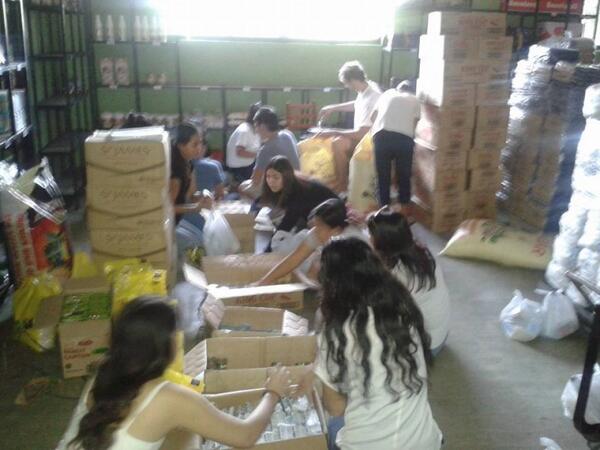
At the time of that tweet the BTC price was roughly $400, so 8.1 BTC was about $3,200. Not a fortune. But the donor count — 61 people — is the part that matters. This was a small community choosing to be visible to itself, in public, on the largest crypto-news channel any of them had.
Why the equivalence mattered
The mainstream Bitcoin narrative in 2013 was a panic narrative. Silk Road had been taken down on October 1, and the FBI's haul of seized BTC was the lead in every story about Bitcoin's "purpose." The Senate Homeland Security hearings on November 18 were structured around the assumption that Bitcoin's main use case was illicit. The price was volatile in ways that fueled both maximalist enthusiasm and outside skepticism. Bitcoin needed examples of what it could do that wasn't crime.
MadBitcoins, by putting Hoodie the Homeless and Philippines relief at the same priority as price updates, was making an editorial argument. Bitcoin's editorial vacuum could have been filled with any story — and Hunt was choosing this one. The hashtag #network1976 — the second-most-used hashtag of the era at 31 occurrences — refers to the same network of grassroots crypto-charity efforts. The third most-used hashtag, #hoodiethehomeless at 15 occurrences, is the campaign itself promoted into a self-referential tag.
None of this changed mainstream coverage. The Senate hearings still focused on what was illegal. The Mt. Gox collapse, three months later, would dominate Bitcoin's narrative for years. But the pattern Hunt set in 2013 — charity drives at the same volume as price news — carried forward. By the time the BitcoinNotBombs Mt. Gox refugee fund ran in 2014, the audience already knew this account was where to look for it.
It also set up something specifically Hunt-shaped: a willingness to use the @MadBitcoins megaphone for things that did not benefit @MadBitcoins. Hoodie the Homeless wasn't his project. Philippines relief wasn't his project. The shoutout to @Fr33Aid, @veeforvoluntary, @BitcoinNotBombs, @rogerkver — all in those early tweets — built the connective tissue between the show and the rest of the crypto-philanthropy world. The 2013 charity tweets are the earliest evidence that MadBitcoins is going to be useful in ways that don't reduce to engagement.
This article is part of a deep-dive series on the @MadBitcoins Twitter archive — 91,295 tweets across 13 years. See all articles → or read the Origin era overview.